
 Developer Tools
Unkey
Open-source API key management and rate limiting platform for modern developers
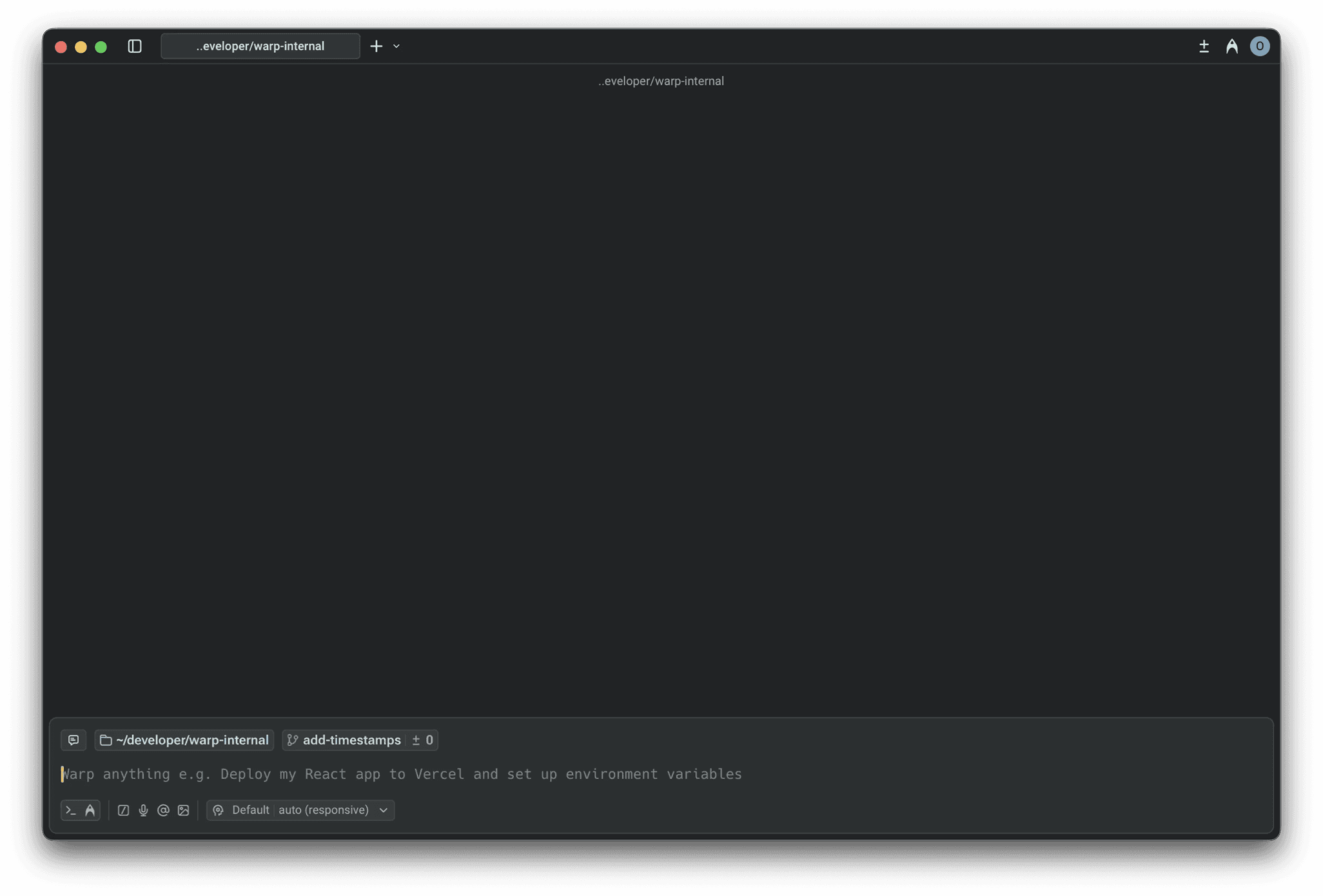
Warp is a modern, GPU-accelerated terminal built in Rust with deep AI integration and cloud-based agent orchestration. Used by 700K+ developers, it replaces legacy terminals with block-based output, AI assistance, and team collaboration features.
Warp is an agentic development environment built around a modern, GPU-accelerated terminal and cloud-based agent orchestration. We rate it 80/100 — the best terminal for developers who want AI deeply integrated into their command line without sacrificing speed or workflow control.
Warp was founded in by Zach Lloyd, a former Principal Engineer at Google and interim CTO at TIME magazine. The core insight: the terminal, unchanged for decades, could be rebuilt from scratch with the same attention developers give to IDEs. Built entirely in Rust for performance, Warp launched publicly on macOS in and reached tens of thousands of users within days.
By 2026, Warp has evolved far beyond a terminal. The platform now includes Oz, a cloud orchestration layer that lets teams run hundreds of parallel coding agents. With $70M+ in funding from Sequoia Capital and GV, and 700,000+ developers on the platform, Warp is one of the few developer tools companies to successfully expand from a single utility into a full development environment.
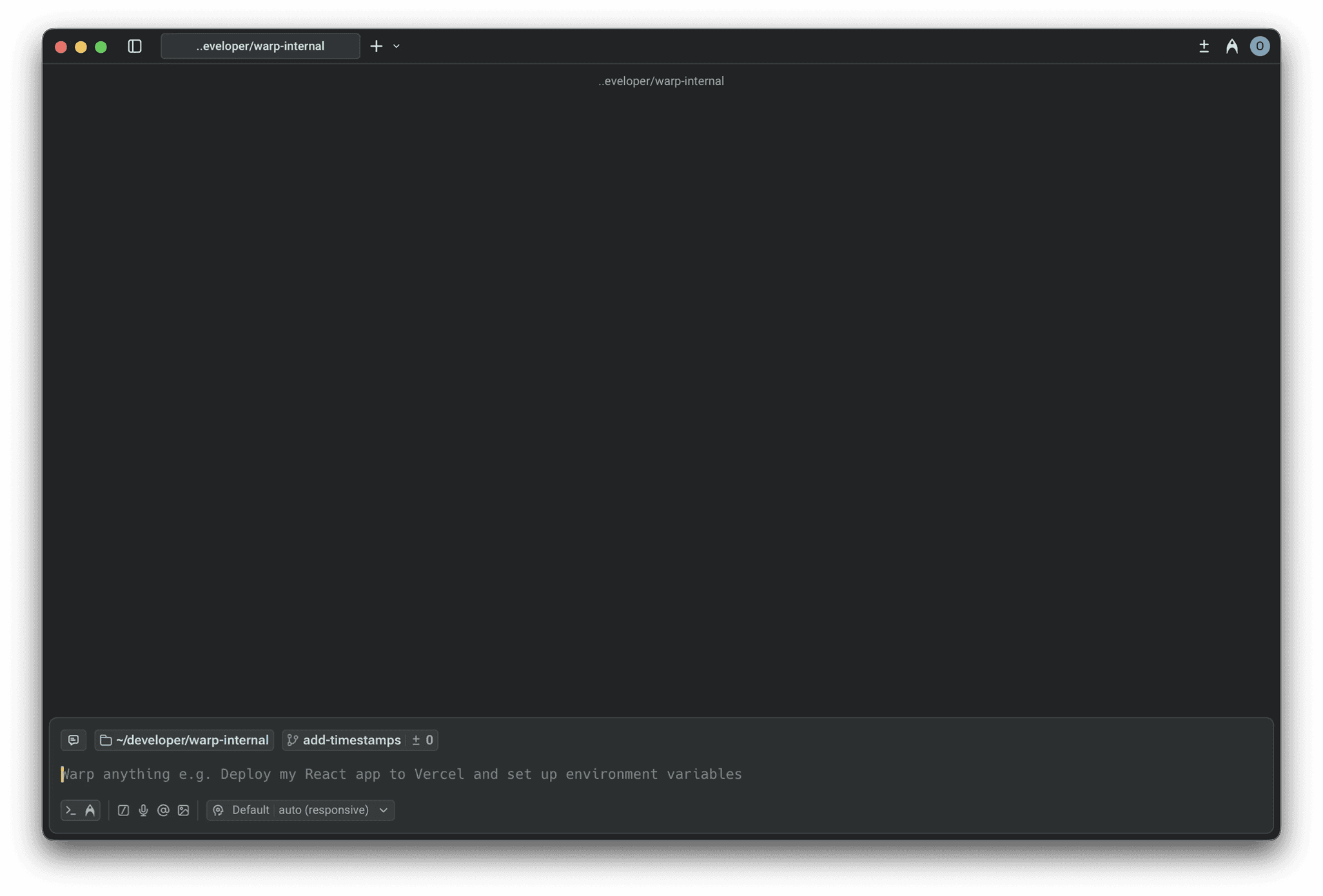
On Product Hunt and independent review sites, the block-based interface and AI integration earn near-universal praise. One developer described it as giving you the IDE experience on the command line you always assumed you would have. The DevOps community highlights Warp AI's ability to generate deployment scripts and infrastructure-as-code templates as a genuine productivity multiplier. Warp earns around 4.7/5 on G2 and review aggregators.
The most consistent criticisms: Warp requires an account to use, a non-starter for developers who prefer tools that do not phone home. The Linux version is considered secondary to macOS in polish. Git subcommand autocomplete is frequently flagged as weaker than native shell completion.
| Plan | Price | Key Limits |
|---|---|---|
| Free | $0/month | 75 AI credits/month, 4 concurrent agents, 3 codebases (3,000 files each) |
| Build | $18/month | 1,500 AI credits, 20 concurrent agents, unlimited indexing (100k files) |
| Max | $180/month | 18,000 AI credits, 40 concurrent agents, 8 vCPUs / 16 GiB RAM |
| Business | $45/user/month | Team Zero Data Retention, SAML SSO, up to 50 seats |
| Enterprise | Custom pricing | Self-hosted agents, custom LLM, white-glove onboarding |
The free tier is genuinely usable for occasional help. Professional daily use warrants the $18 Build plan. The jump to $180/month for Max is steep; most individual developers will not need 40 concurrent cloud agents.
Best for: Full-stack and backend developers, DevOps engineers, and platform teams who live in the terminal. Particularly strong for teams who want to share command knowledge via Warp Drive, and developers exploring agentic coding workflows via the Oz cloud agents.
Not ideal for: Developers who refuse to create an account for a terminal. Those on locked-down corporate networks, or developers whose primary environment is a remote server via basic SSH — Warp's advanced features require the native client.
Pros:
Cons:
iTerm2 (macOS only, free, open source) is the baseline alternative — power without any account requirement. Ghostty, launched in 2024 by HashiCorp founder Mitchell Hashimoto, offers similar performance without cloud features or sign-in. For AI-in-terminal specifically, Claude Code and GitHub Copilot CLI offer agent-level assistance that integrates with any terminal you already use.
Yes — for most developers. Warp's block-based interface alone is worth switching from a legacy terminal, and the AI integration is meaningfully useful rather than a gimmick. The free tier is genuinely functional; the $18/month Build plan offers strong value for daily professional use. The mandatory account and relative weakness of the Linux client prevent a higher score. If you are a macOS developer who has not tried Warp, start with the free tier — there is a good chance you will stay.
Developer ToolsOpen-source API key management and rate limiting platform for modern developers
 Developer Tools
Open-source low-code platform for building internal business applications
 Developer Tools
Git-friendly open-source API client for REST, GraphQL, and gRPC
 Developer Tools
Type-safe HTML templating language for Go with compile-time safety
ServiceNow and Accenture Launch Forward Deployed Engineering Program to Scale Agentic AI in the Enterprise (May 6, 2026)
At Knowledge 2026, ServiceNow and Accenture announced a joint forward deployed engineering program that drops co-located engineer pods into customer environments to ship agentic AI workflows natively on the ServiceNow AI Platform — with access to 300+ pre-built agent skills and the AI Control Tower as the governance backbone.
May 7, 2026
ReFiBuy Raises $13.6M Seed to Help Brands Get Recommended by AI Shopping Agents (May 5, 2026)
ReFiBuy, the Raleigh-based agentic commerce platform from ChannelAdvisor founder Scot Wingo, closed an oversubscribed $13.6M seed led by NewRoad Capital Partners on May 5, 2026 — betting that the next billion-dollar e-commerce moat is being chosen by ChatGPT, Claude and Perplexity.
May 7, 2026
OpenAI Replaces ChatGPT's Default Model With GPT-5.5 Instant — 52.5% Fewer Hallucinations, 30% Shorter Answers (May 5, 2026)
OpenAI on May 5 swapped GPT-5.3 Instant for the new GPT-5.5 Instant as ChatGPT's default model, claiming 52.5% fewer hallucinated claims on high-stakes prompts and 30% more concise answers. The model also rolls into the API as chat-latest and adds personalization from Gmail and past chats for Plus and Pro web users.
May 7, 2026
Is this product worth it?
Built With
Compare with other tools
Open Comparison Tool →