 Developer Tools
Templ
Type-safe HTML templating language for Go with compile-time safety
Zellij is a beginner-friendly, Rust-powered terminal multiplexer with floating and stacked panes, a WebAssembly plugin system, and a built-in web client. It is the strongest modern alternative to tmux in 2026.
Zellij is a modern, Rust-powered terminal workspace — a multiplexer in the tmux/screen lineage, but with a radically friendlier UX, floating and stacked panes, a WebAssembly plugin system, and a built-in web client. We rate it 89/100 — the best default terminal multiplexer for developers who want tmux-class power without the configuration cliff.
Zellij is an open-source terminal multiplexer maintained by zellij-org and lead developer Aram Drevekenin (imsnif). It is written entirely in Rust, licensed under MIT, and has accumulated 31,800+ GitHub stars since its first public release. The current version at time of writing is v0.44.1, shipped on .
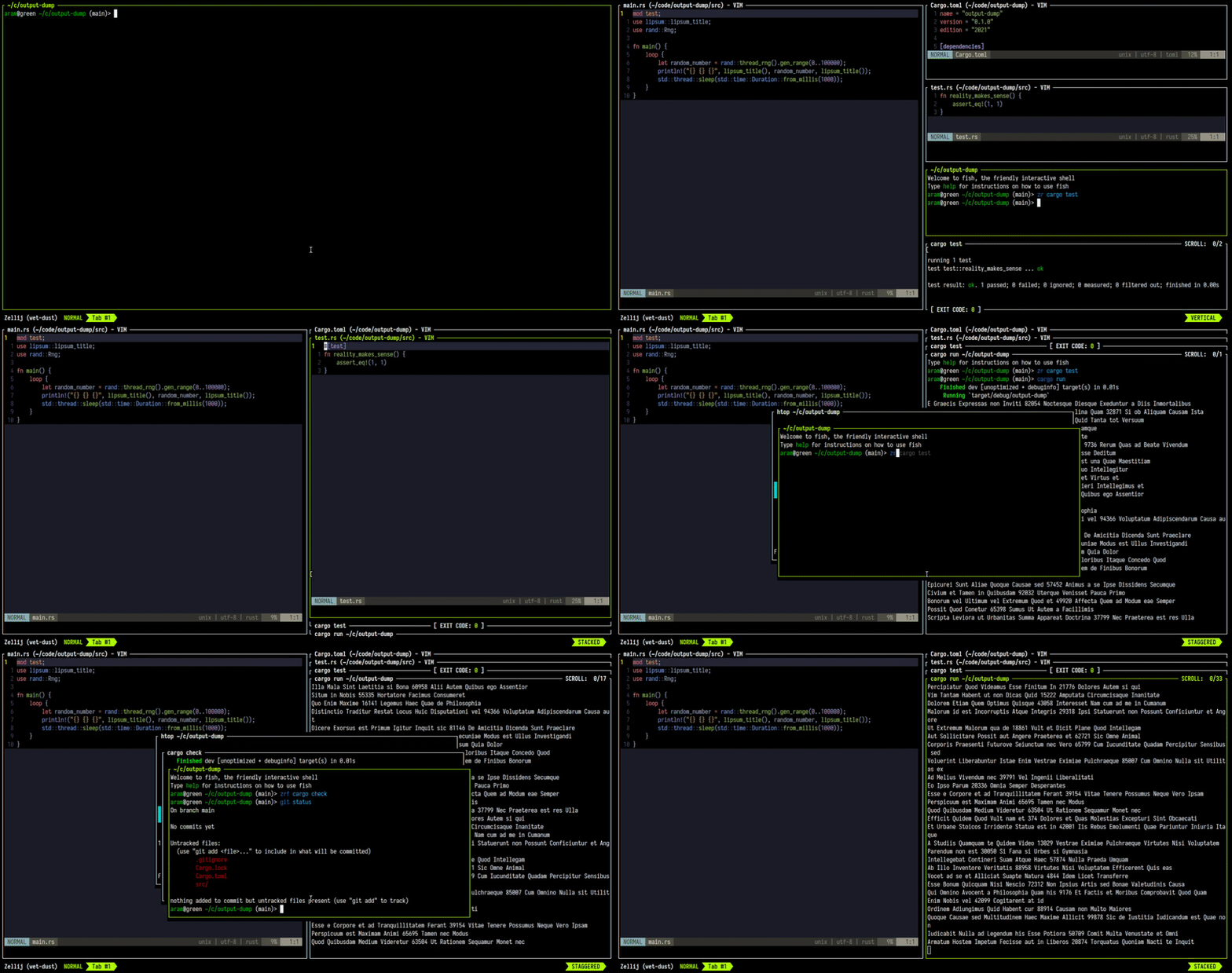
The problem Zellij sets out to solve is the same one tmux and GNU screen have solved for decades — persistent terminal sessions, pane splitting, detach/reattach — but with three crucial differences: every keybinding is visible on screen (no opening the man page at 2am to remember prefix syntax), layouts are declarative KDL files you can check into a repo, and plugins are WebAssembly modules you can write in any language that compiles to WASM.
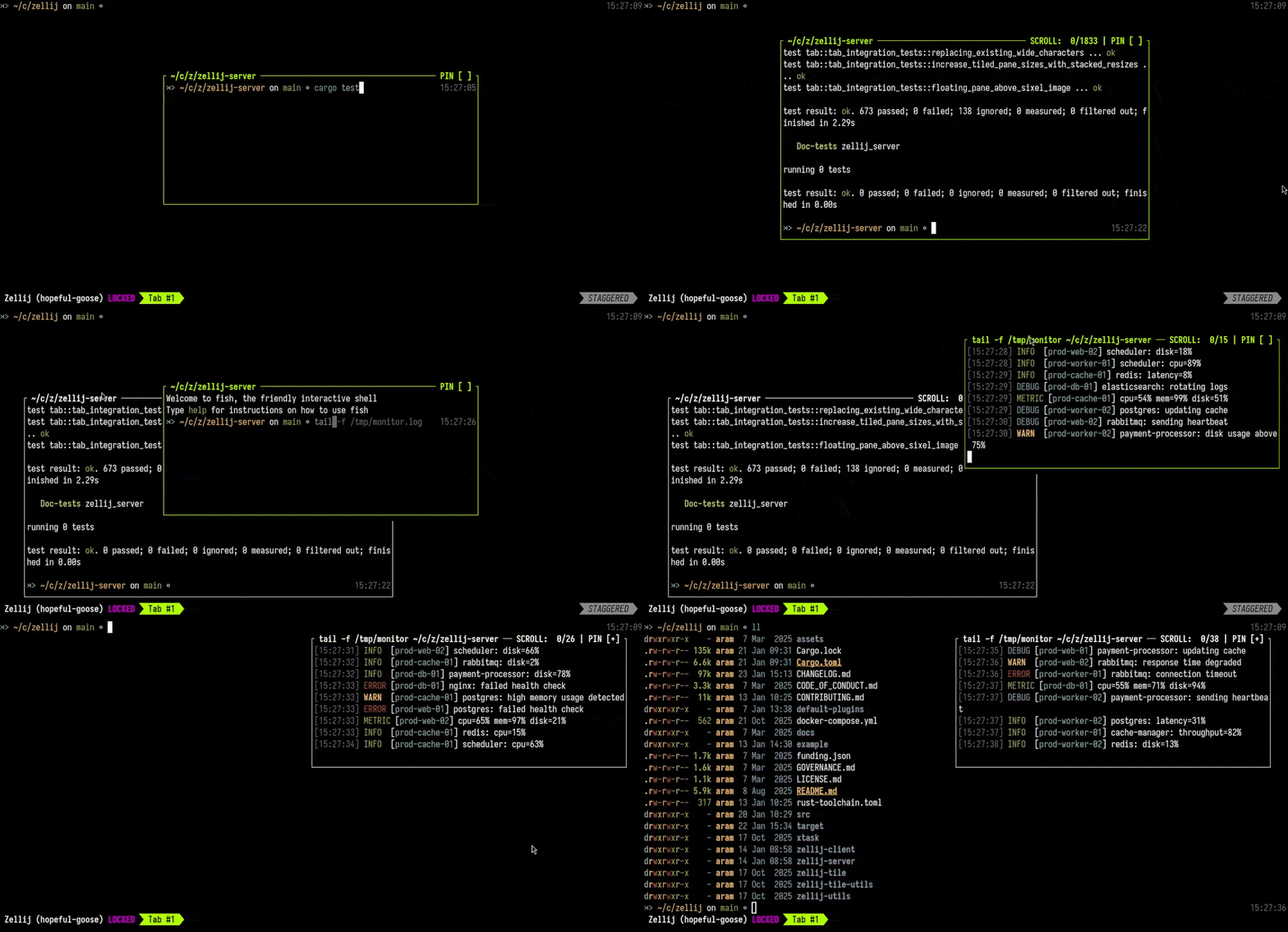
zellij web --start and any session becomes reachable over HTTPS with authentication — share a live terminal with a teammate without SSH or tmate.wasm32-wasip1, sandboxed by default, and can be written in Rust, Go, Python (via componentize-py), or any other WASM-capable language. The first-party SDK is in Rust.zellij -l my-layout.kdl. No more running six commands every morning.$EDITOR: Hit a binding and your terminal output opens in Vim, Helix, or whatever you have configured — the most underrated feature in the entire multiplexer category.src/main.rs:42:8-style paths into clickable links that jump to the line in your editor.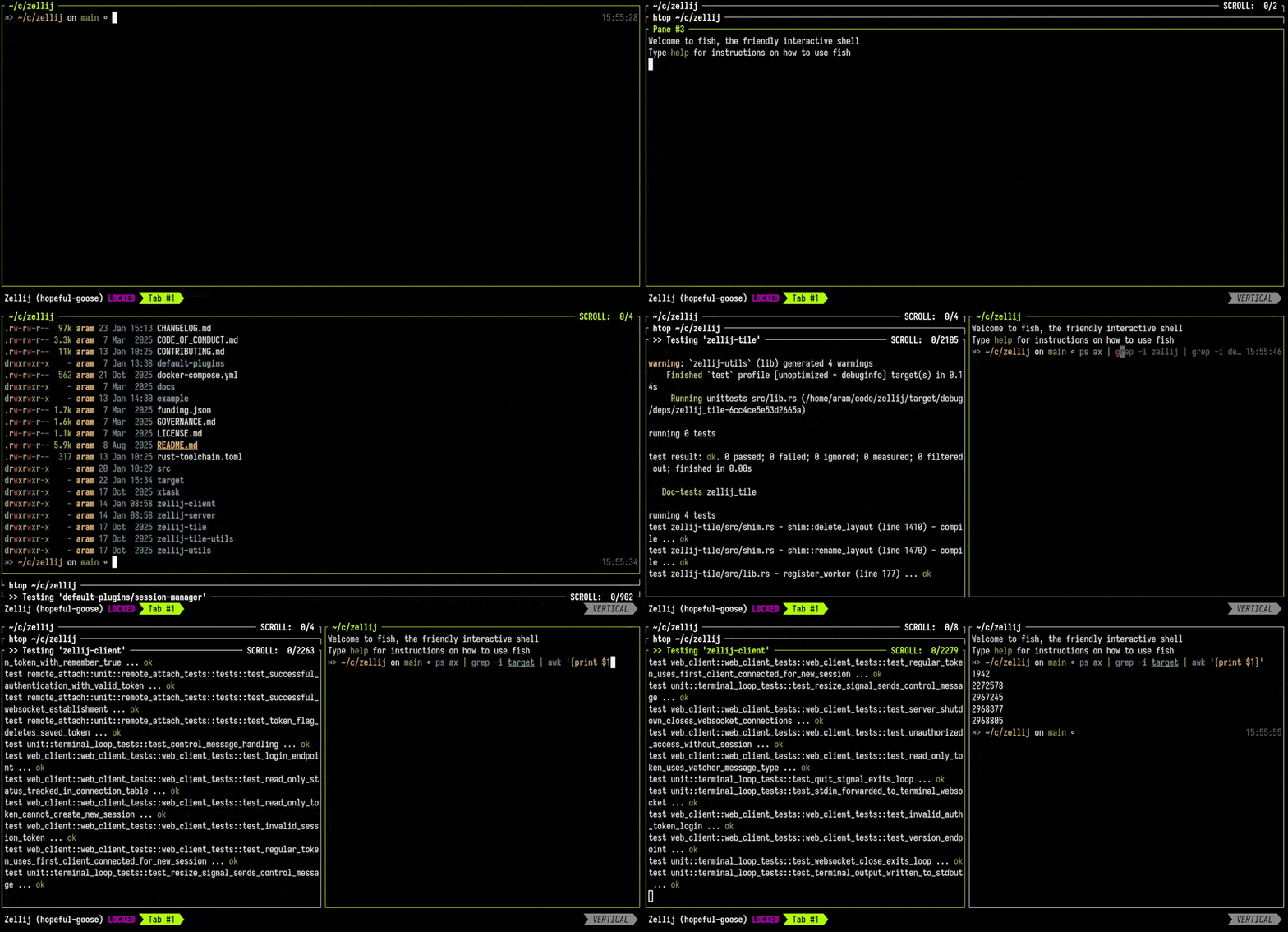
Developer sentiment on Reddit (r/commandline, r/rust) and Hacker News skews strongly positive. The recurring praise centers on the discoverable UI — beginners can get productive in under 10 minutes because every keybinding is drawn at the bottom of the screen, which is the single largest objection to tmux removed. The floating-pane feature also comes up constantly; one popular comment on r/rust described it as "the feature I didn't know I needed until I had it."
The honest complaints, in order of frequency: (1) higher baseline memory than tmux — roughly 60–90 MB for a session versus 15–25 MB for tmux, because Zellij ships its own rendering engine and plugin runtime; (2) smaller plugin ecosystem than tmux's decade of TPM packages, so niche features like statusline widgets often need to be built yourself; and (3) some key combinations differ from tmux enough that muscle-memory refactoring is real. The Ghostty and WezTerm crowds tend to praise Zellij; tmux power-users with 1,000-line config files tend to stay where they are.
Zellij is free and open source under the MIT license — every feature, all platforms, unlimited use, no telemetry. There is no paid tier, no seat cap, and no enterprise edition. The project is funded through GitHub Sponsors and corporate sponsorship from G Research and Terminal Trove.
| Plan | Price | What You Get |
|---|---|---|
| Open source | $0 | Full feature set, all platforms (macOS, Linux, Windows, FreeBSD), plugin system, web client, unlimited sessions — no restrictions |
Best for: Developers who live in the terminal but have never invested the weekend it takes to become truly fluent in tmux, teams that want a shared, reproducible terminal workspace via checked-in KDL layouts, and anyone who wants floating panes or a web client without piling on third-party plugins. Rust and systems engineers especially will appreciate the aesthetic and the native performance.
Not ideal for: Veteran tmux users with a working, tuned configuration and thousands of hours of muscle memory — the gains from switching don't pay back the retraining cost. Also a poor fit for very memory-constrained environments (512 MB VPS, tiny Raspberry Pi) where tmux's lower footprint matters.
Pros:
Cons:
The main alternatives are tmux (the classic, lower RAM, huge plugin catalogue, but steep learning curve), GNU screen (older, simpler, less feature-rich), and WezTerm's multiplexer (baked into the WezTerm terminal emulator — great if you already use WezTerm, less useful if you don't). Users also sometimes compare it to Ghostty, but Ghostty is a terminal emulator rather than a multiplexer — you can run Zellij inside Ghostty.
Yes, for anyone who wants a terminal multiplexer in 2026 and is not already a tmux expert. Zellij gives you roughly 95% of tmux's power with 10% of the onboarding effort, plus floating panes, a web client, and WASM plugins that tmux simply cannot match. The only group that should skip it is veteran tmux users whose existing config is already doing the job — there's no reason to disturb a working setup. For everyone else, Zellij is the new default. We rate it 89/100.
bash <(curl -L https://zellij.dev/launch) downloads and launches a portable binary without touching your system, which is the recommended way to try it before installing.ServiceNow and Accenture Launch Forward Deployed Engineering Program to Scale Agentic AI in the Enterprise (May 6, 2026)
At Knowledge 2026, ServiceNow and Accenture announced a joint forward deployed engineering program that drops co-located engineer pods into customer environments to ship agentic AI workflows natively on the ServiceNow AI Platform — with access to 300+ pre-built agent skills and the AI Control Tower as the governance backbone.
May 7, 2026
ReFiBuy Raises $13.6M Seed to Help Brands Get Recommended by AI Shopping Agents (May 5, 2026)
ReFiBuy, the Raleigh-based agentic commerce platform from ChannelAdvisor founder Scot Wingo, closed an oversubscribed $13.6M seed led by NewRoad Capital Partners on May 5, 2026 — betting that the next billion-dollar e-commerce moat is being chosen by ChatGPT, Claude and Perplexity.
May 7, 2026
OpenAI Replaces ChatGPT's Default Model With GPT-5.5 Instant — 52.5% Fewer Hallucinations, 30% Shorter Answers (May 5, 2026)
OpenAI on May 5 swapped GPT-5.3 Instant for the new GPT-5.5 Instant as ChatGPT's default model, claiming 52.5% fewer hallucinated claims on high-stakes prompts and 30% more concise answers. The model also rolls into the API as chat-latest and adds personalization from Gmail and past chats for Plus and Pro web users.
May 7, 2026
Is this product worth it?
Built With
Compare with other tools