
 Developer Tools
Unkey
Open-source API key management and rate limiting platform for modern developers
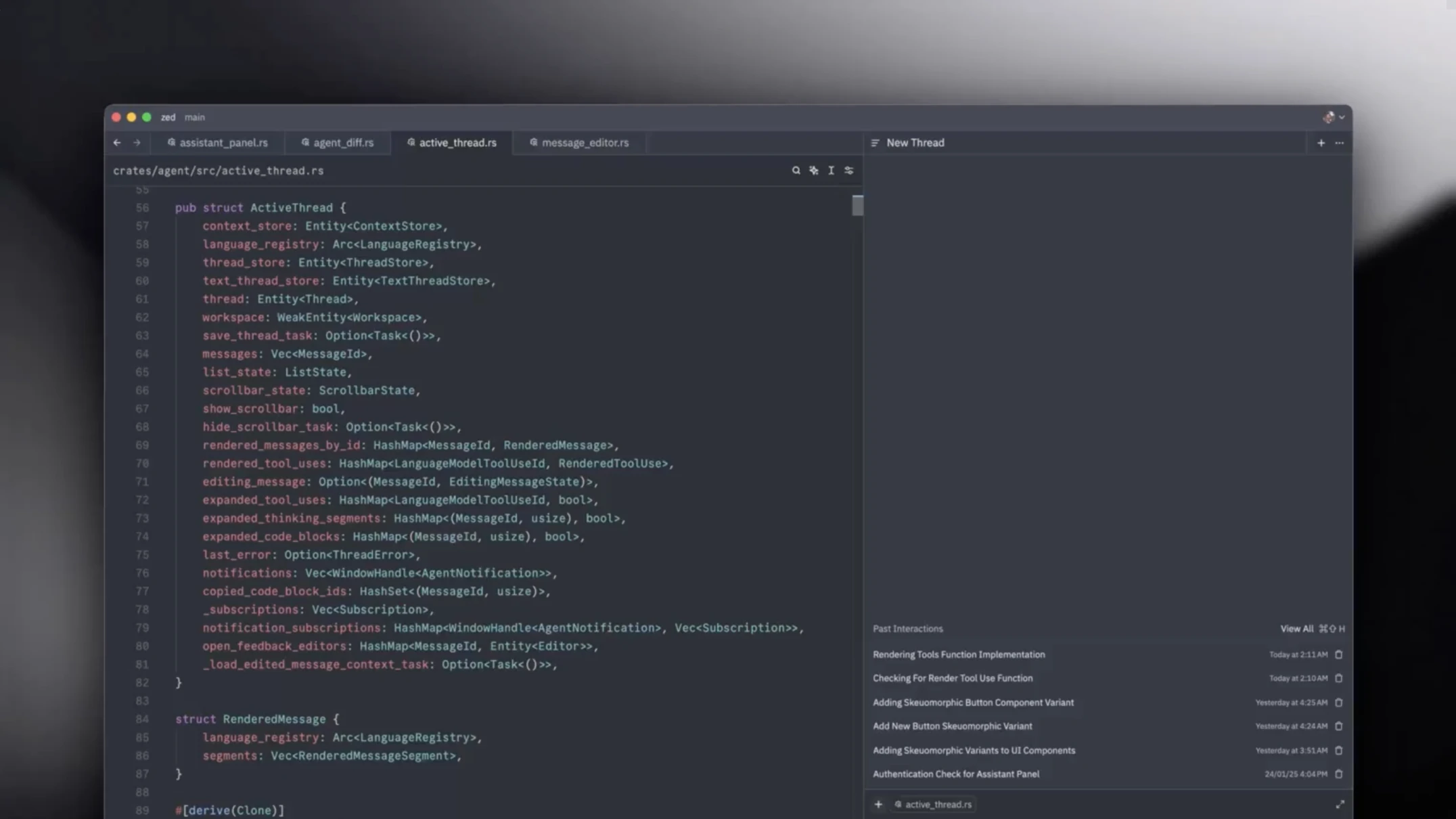
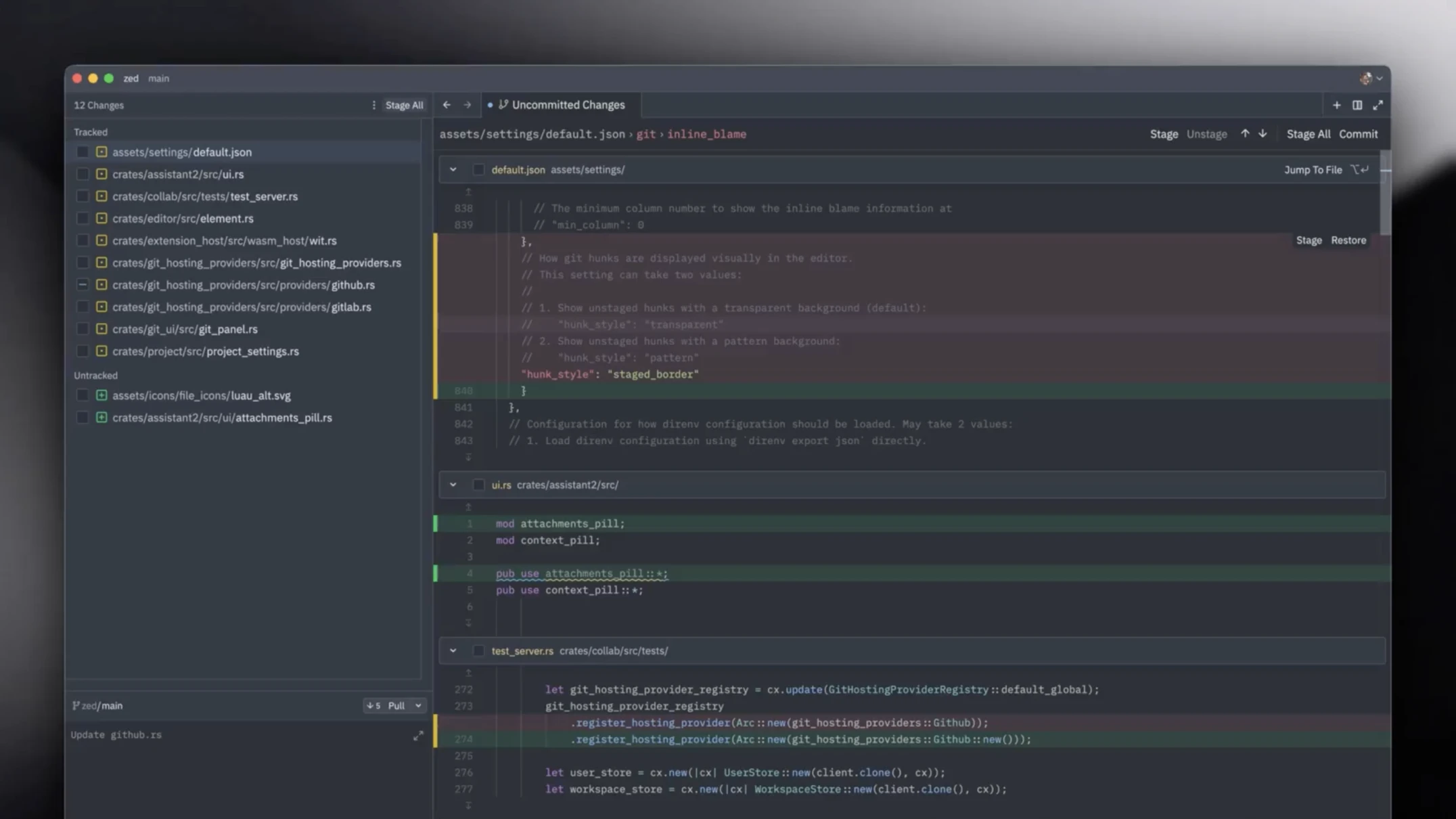
Zed is a blazing-fast, Rust-powered code editor with native AI integration, real-time collaboration, and built-in Git — from the team that created Atom and Tree-sitter. Free for personal use, $10/month for Pro.
Zed is a high-performance code editor built from scratch in Rust by the creators of Atom and Tree-sitter. We rate it 80/100 — a genuinely fast editor with impressive AI integration and real-time collaboration, though still maturing in extension ecosystem and stability.
Zed was created by Nathan Sobo, Antonio Scandurra, and Max Brunsfeld — the same team behind GitHub's Atom editor and the Tree-sitter parsing library used across dozens of editors today. After Atom was discontinued in 2022, the team set out to build the editor they always wanted: one that leverages modern hardware properly by using the GPU for rendering and multiple CPU cores for everything else.
First announced in 2023 as an invite-only beta on macOS, Zed went open source in January 2024 under AGPL/Apache/GPL licenses. In 2025, the project secured $32 million in funding from Sequoia Capital, shipped Windows support, and grew to 78,000+ GitHub stars — making it one of the fastest-growing developer tools on the platform.
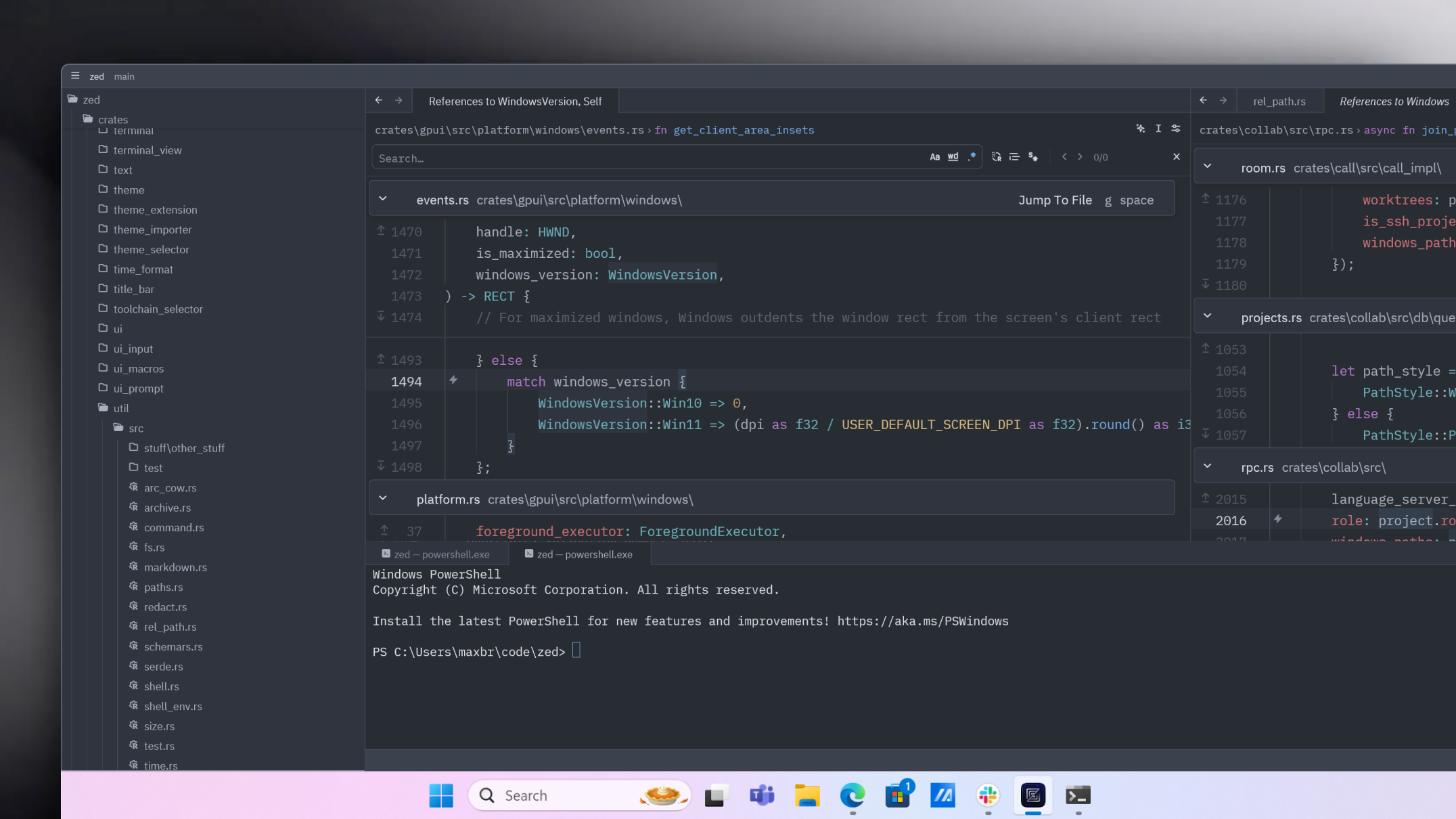
On Hacker News, Zed generates consistently strong discussion. Performance is the most praised aspect — developers report startup times 10x faster than VS Code and significantly lower memory usage. The Vim mode is frequently called the best of any GUI editor. Multiple users describe Zed as making their development flow feel noticeably snappier on everyday tasks.
However, criticism is real. A February 2025 HN thread titled "Zed Has Suddenly Become Terrible" documented CPU spikes, freezes, and broken language server features. Some users have switched back to Neovim citing stability concerns. The decision to gate advanced autocomplete behind a paid plan ($10/month Pro) drew backlash, and a privacy-focused fork called Gram emerged in March 2026 that strips out telemetry and AI features entirely.
On DEV Community, a developer noted Zed felt "like using notepad" due to bugs in autocomplete and auto-import, though they acknowledged its "huge potential." The consensus across platforms: Zed is genuinely the fastest GUI editor available, but the extension ecosystem and stability still trail VS Code.
| Plan | Price | Key Limits |
|---|---|---|
| Personal | Free forever | 2,000 edit predictions/month, unlimited with your own API keys |
| Pro | $10/month | Unlimited edit predictions, $5 of tokens included, usage-based beyond that |
| Enterprise | Custom | SSO, usage analytics, security guarantees, premium support |
Users can also bring their own API keys from Anthropic, OpenAI, Google AI, DeepSeek, Amazon Bedrock, and others — bypassing Zed's billing entirely for AI features.
Best for: Developers who prioritize raw speed and minimal resource usage. Vim users wanting a fast GUI editor. Teams that value real-time collaborative editing. Developers already using AI coding assistants who want native, non-extension-based integration.
Not ideal for: Developers heavily reliant on VS Code's massive extension ecosystem. Teams needing mature debugging workflows across many languages. Anyone requiring rock-solid stability for production work today — Zed is still pre-1.0.
Pros:
Cons:
VS Code remains the dominant editor with the largest extension ecosystem and best language support breadth, but uses significantly more resources. Cursor is the leading AI-first fork of VS Code, offering deeper AI integration at $20/month but inheriting VS Code's Electron weight. Neovim is the best option for terminal-native developers who want maximum customizability and zero bloat, though with a steeper learning curve.
At 80/100, Zed is the fastest GUI code editor available and a legitimate contender to VS Code — but not yet a full replacement. The Rust-powered performance is genuinely game-changing, the AI integration is thoughtfully designed, and the collaboration features are unique. However, the extension gap, occasional stability issues, and pre-1.0 status mean most developers should treat it as a secondary editor or daily driver for specific workflows. If speed matters most to you, Zed already delivers on its promise.
ServiceNow and Accenture Launch Forward Deployed Engineering Program to Scale Agentic AI in the Enterprise (May 6, 2026)
At Knowledge 2026, ServiceNow and Accenture announced a joint forward deployed engineering program that drops co-located engineer pods into customer environments to ship agentic AI workflows natively on the ServiceNow AI Platform — with access to 300+ pre-built agent skills and the AI Control Tower as the governance backbone.
May 7, 2026
ReFiBuy Raises $13.6M Seed to Help Brands Get Recommended by AI Shopping Agents (May 5, 2026)
ReFiBuy, the Raleigh-based agentic commerce platform from ChannelAdvisor founder Scot Wingo, closed an oversubscribed $13.6M seed led by NewRoad Capital Partners on May 5, 2026 — betting that the next billion-dollar e-commerce moat is being chosen by ChatGPT, Claude and Perplexity.
May 7, 2026
OpenAI Replaces ChatGPT's Default Model With GPT-5.5 Instant — 52.5% Fewer Hallucinations, 30% Shorter Answers (May 5, 2026)
OpenAI on May 5 swapped GPT-5.3 Instant for the new GPT-5.5 Instant as ChatGPT's default model, claiming 52.5% fewer hallucinated claims on high-stakes prompts and 30% more concise answers. The model also rolls into the API as chat-latest and adds personalization from Gmail and past chats for Plus and Pro web users.
May 7, 2026
Is this product worth it?
Built With
Compare with other tools


