 Developer Tools
Templ
Type-safe HTML templating language for Go with compile-time safety
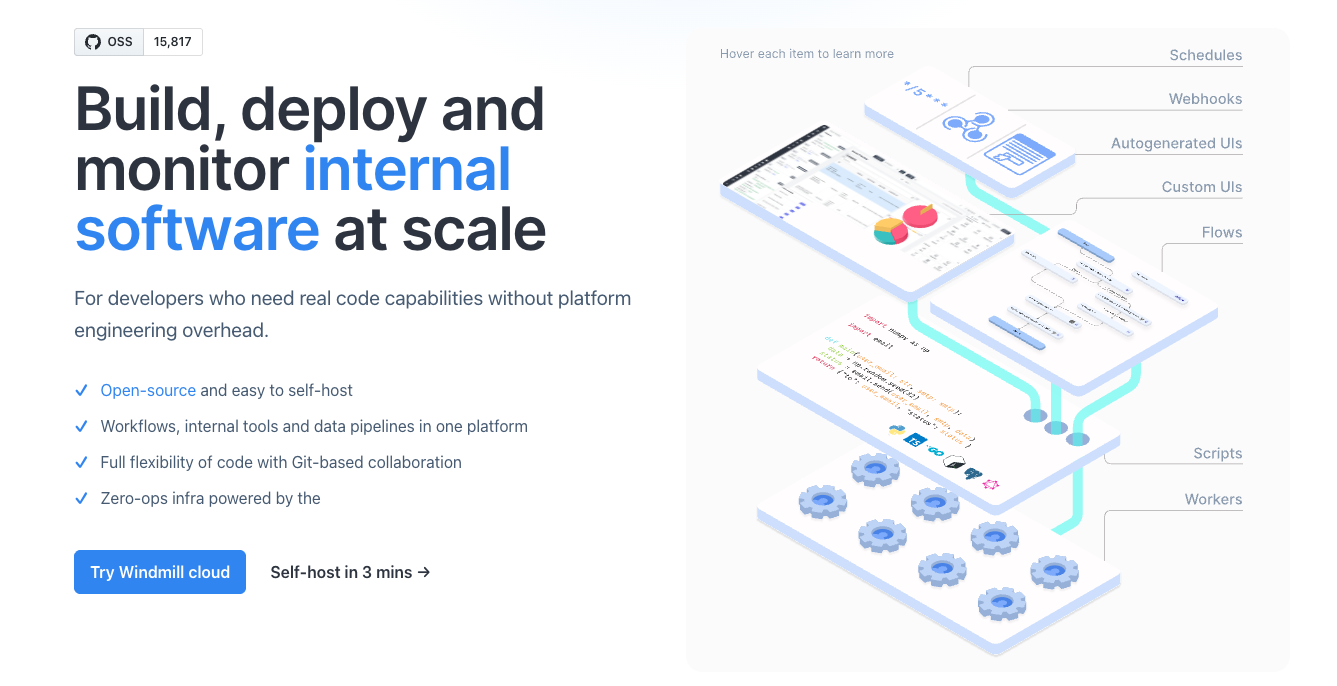
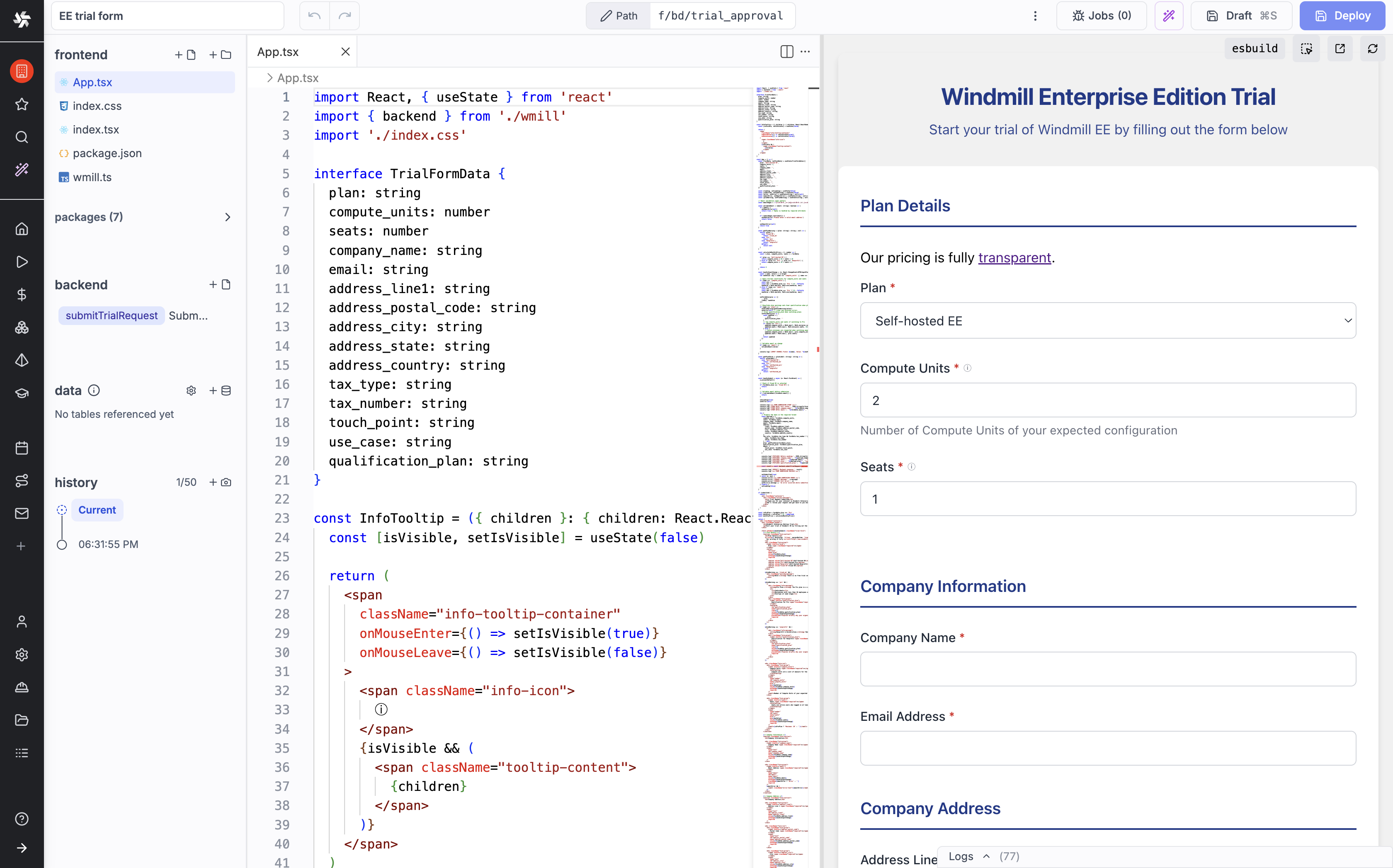
Windmill is an open-source developer platform that turns scripts in Python, TypeScript, Go, Bash, SQL or PHP into webhooks, workflows and auto-generated UIs. One self-hostable binary replaces Retool, Airflow and Temporal.
Windmill is an open-source, self-hostable developer platform that turns ordinary scripts in Python, TypeScript, Go, Bash, SQL or PHP into production-grade webhooks, scheduled jobs, DAG workflows and auto-generated internal UIs. We rate it 87/100 — the strongest open-source alternative to Retool, Airflow and Temporal we have tested in 2026, with the caveat that it bundles so many capabilities that first-time users will spend an afternoon figuring out which one to use.
Windmill is a developer platform built by Windmill Labs, a Y Combinator W22 company founded by Rubén Fiszel (ex-Palantir, Databricks). The project is dual-licensed — core code under AGPLv3 and Apache-2.0, with an optional Enterprise Edition on a proprietary license — and the repository at github.com/windmill-labs/windmill holds 16,300+ stars. The current release at time of writing is v1.687.0, shipped on .
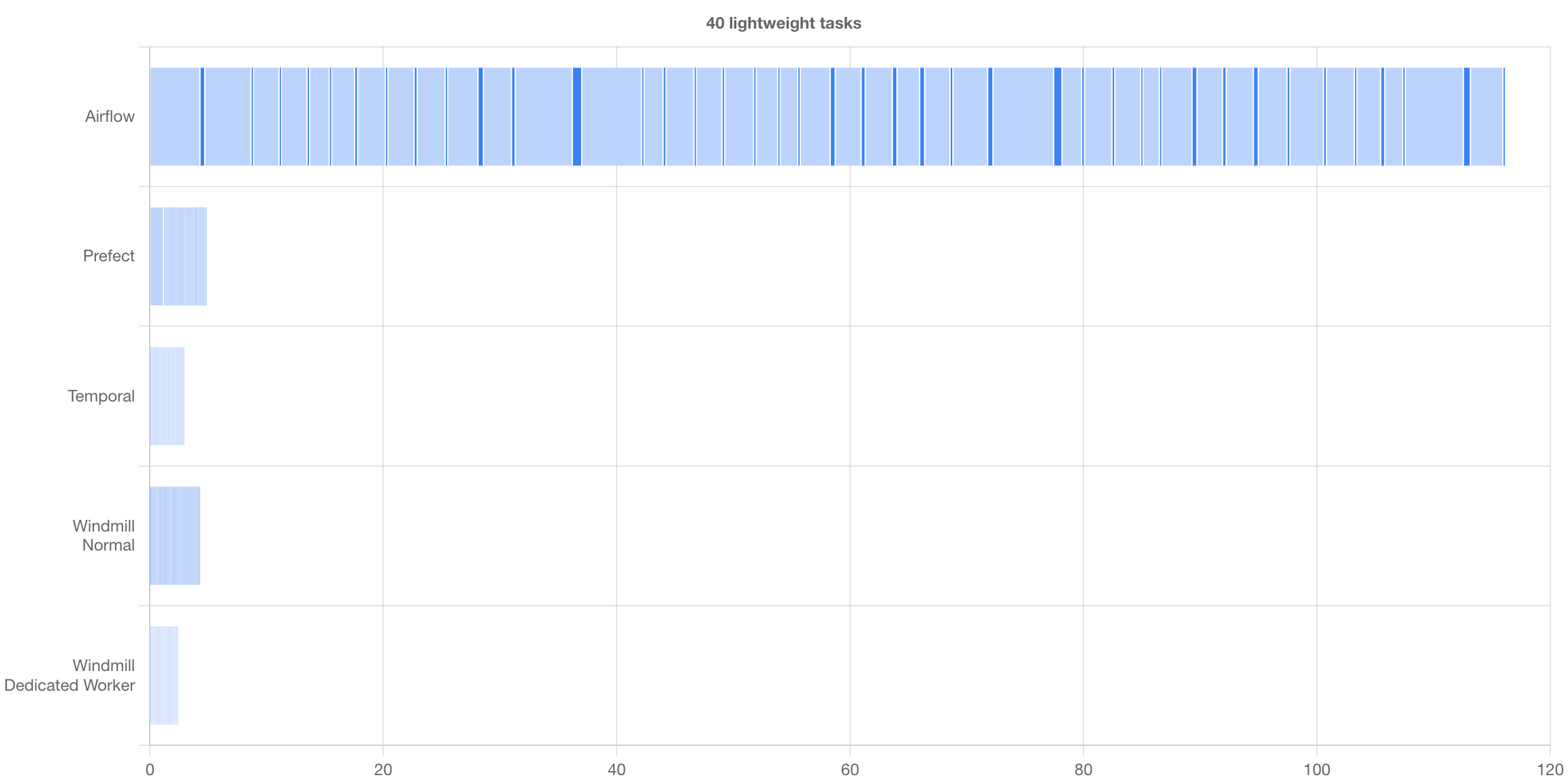
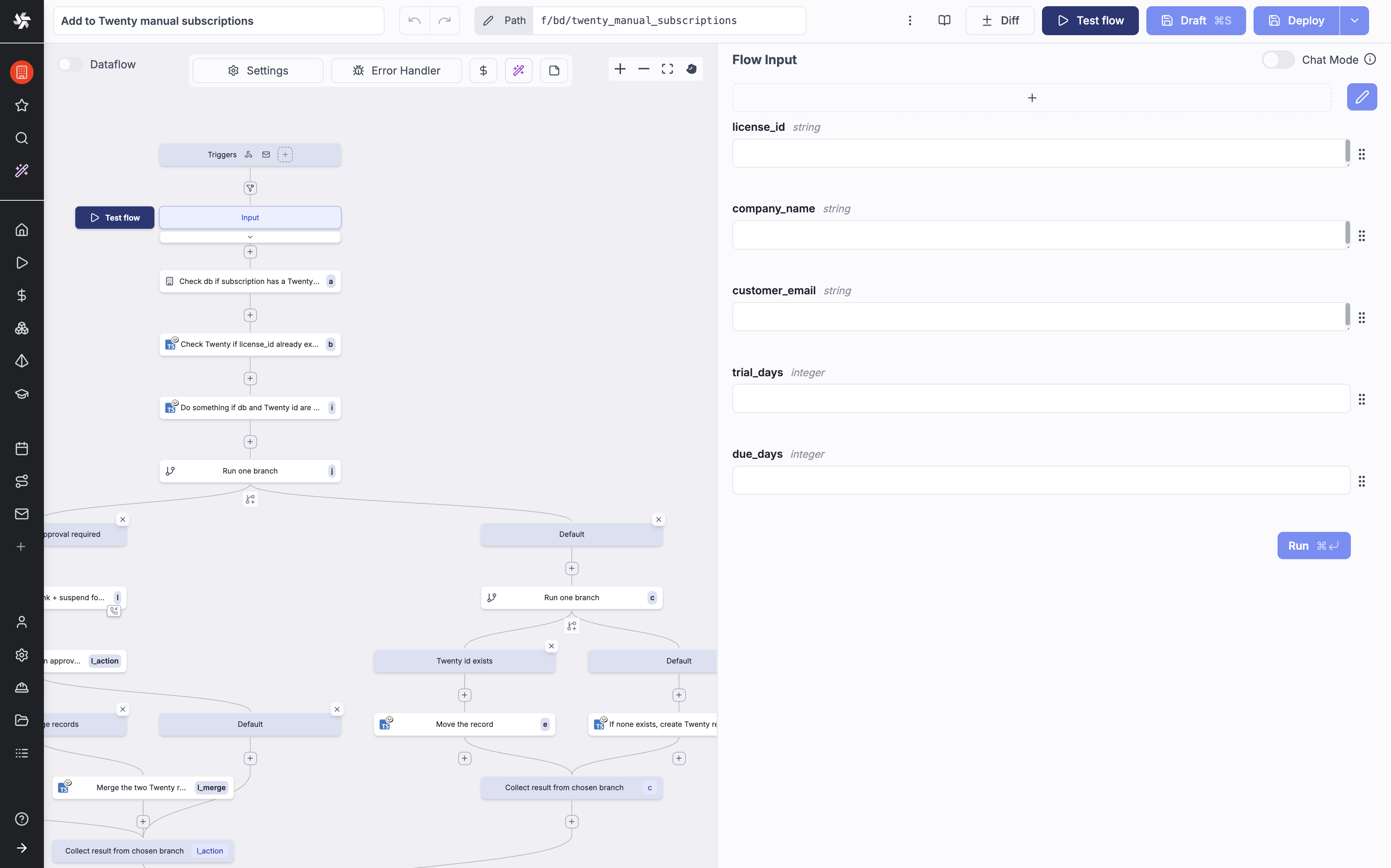
The core pitch is simple: instead of running Retool and Airflow and Temporal and a serverless platform and an internal cron runner, you run a single Windmill binary. You paste a script in your language of choice, Windmill instantly derives a typed form from the function signature, exposes a webhook, drops it into a DAG or cron schedule, and gives you a drag-and-drop app builder on top. The team benchmarks the engine at roughly 13× the throughput of Apache Airflow for identical pipelines, which matches what independent testers have reported on Hacker News.

dict, an int and an Optional[str], hit save, and Windmill renders the form — no templating code, no frontend.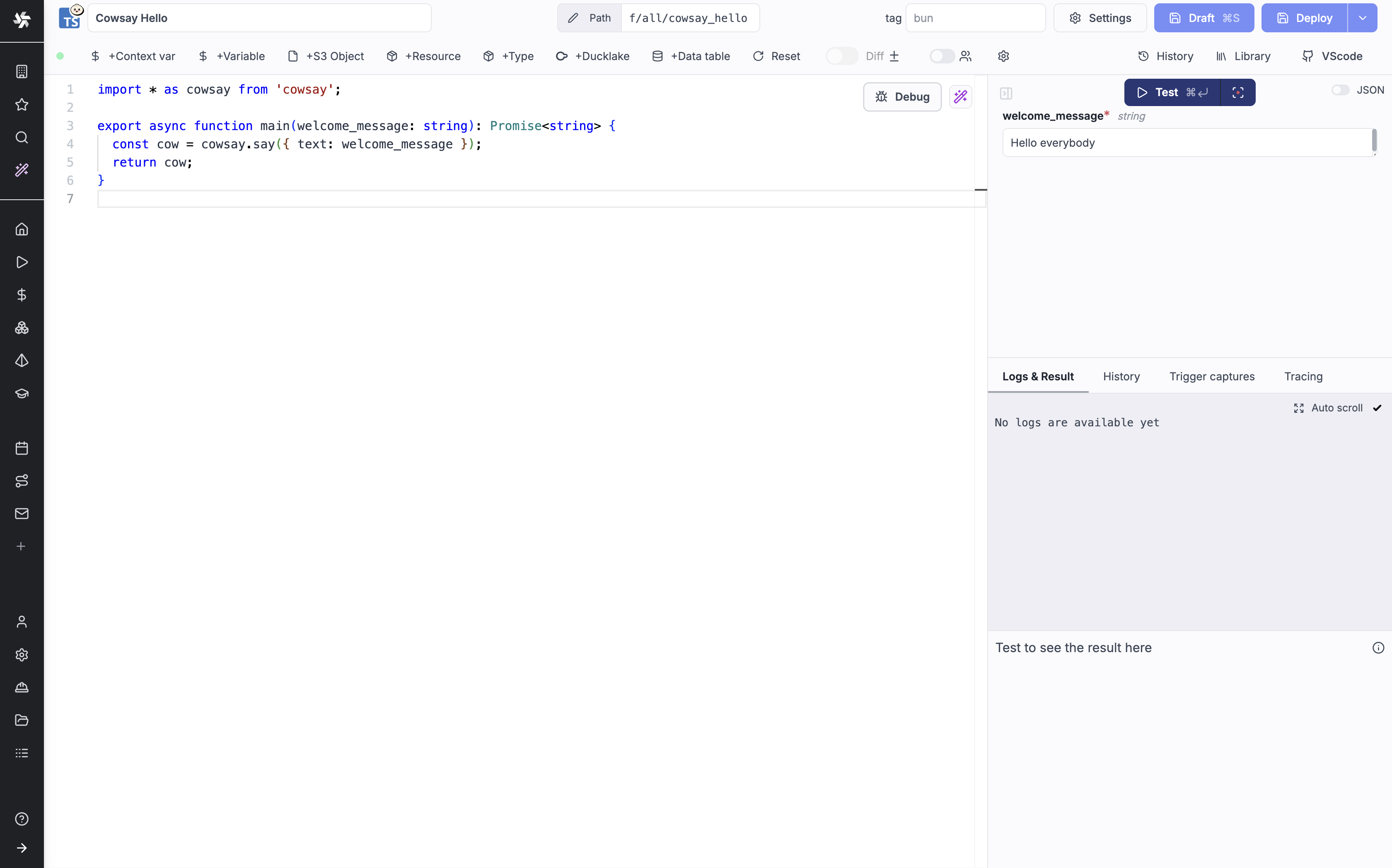
Developer sentiment on Hacker News, r/selfhosted and r/dataengineering is strongly positive on performance and scope, more measured on onboarding. The single most common piece of praise is the auto-generated UI: multiple HN commenters describe it as “the first internal-tool framework where the fastest path is actually writing a plain function.” The 13×-vs-Airflow claim has held up in informal tests posted to r/dataengineering, where a user ran a fan-out pipeline and reported roughly 10–15× throughput with far lower memory use.
The honest complaints, in order of frequency: (1) the product surface is huge — scripts, flows, apps, triggers, resources, variables, schedules — and new users often don’t know where to start; (2) the AGPLv3 core license is a non-starter for some companies that embed it; (3) the Enterprise Edition price jumps quickly once you need SAML, audit logs and more than a handful of workers; and (4) the Windows developer experience is usable but clearly a second-class citizen compared to macOS and Linux. On Product Hunt, founder Rubén Fiszel received hundreds of upvotes over the project’s multiple launches, with recurring comments asking for deeper observability — a gap the project has steadily closed with its Prometheus and OpenTelemetry exporters.
Windmill has a genuinely usable free tier on both self-hosted and cloud, with a paid Enterprise Edition for teams that need SSO, audit logs, and priority support. Exact tiers:
| Plan | Price | Key Limits / What You Get |
|---|---|---|
| Community (self-hosted) | $0 | Unlimited executions, up to 10 users with SSO, 3 workspaces, basic triggers (Postgres, WebSocket), 30-day job retention |
| Cloud Free | $0 | Same as Community, hosted by Windmill, with a monthly compute-unit cap |
| Enterprise Cloud | from $120/month | Add-ons: $20/developer, $10/operator, $50/standard or native worker. Unlimited audit logs, SAML, S3 cache, 24/7 priority support with 3-hour SLA |
| Enterprise Self-Hosted | Custom | Same feature set as Enterprise Cloud, deployed in your Fargate, Docker or Kubernetes environment |
Best for: Small-to-mid engineering teams that currently glue together Airflow + Retool + a cron runner and want to consolidate onto one stack; data platform teams that need a faster, simpler orchestrator than Airflow; startups that want an internal-tools platform they can self-host on a single VM. Python and TypeScript shops will feel most at home.
Not ideal for: Organizations whose legal team rejects AGPLv3 without an Enterprise contract; teams that only need basic SaaS automations (Zapier or n8n will be simpler); and very large enterprises that already run a dedicated Airflow + dbt + Temporal stack — the migration cost isn’t justified by feature parity alone.
Pros:
Cons:
The main alternatives fall into three camps. For internal tools, Appsmith is the closest open-source peer — it’s more UI-first and less code-first than Windmill. For workflow orchestration, Airflow is the incumbent but slower and heavier, while Temporal is more powerful for long-running durable workflows but has no UI builder or scheduler. For automation, n8n and Activepieces are easier for non-developers but lack Windmill’s code-first depth. If you primarily want a Retool replacement without the orchestrator, ToolJet is a narrower fit.
Yes — for any team currently juggling an orchestrator, an internal-tools framework and a scheduler, Windmill consolidates them into one platform that’s faster than Airflow, simpler than Temporal, and code-first in a way Retool is not. The caveat is that the product is broad, so you will spend your first day learning which primitive (script, flow or app) fits the job. For teams that just need a Zapier alternative or a narrow Retool replacement, a more focused tool will be easier. For everyone else, this is the open-source platform we’d pick for internal engineering in 2026. We rate it 87/100.
Developer ToolsType-safe HTML templating language for Go with compile-time safety
 Developer Tools
Open-source API key management and rate limiting platform for modern developers
 Developer Tools
Open-source low-code platform for building internal business applications
 Developer Tools
Git-friendly open-source API client for REST, GraphQL, and gRPC
ServiceNow and Accenture Launch Forward Deployed Engineering Program to Scale Agentic AI in the Enterprise (May 6, 2026)
At Knowledge 2026, ServiceNow and Accenture announced a joint forward deployed engineering program that drops co-located engineer pods into customer environments to ship agentic AI workflows natively on the ServiceNow AI Platform — with access to 300+ pre-built agent skills and the AI Control Tower as the governance backbone.
May 7, 2026
ReFiBuy Raises $13.6M Seed to Help Brands Get Recommended by AI Shopping Agents (May 5, 2026)
ReFiBuy, the Raleigh-based agentic commerce platform from ChannelAdvisor founder Scot Wingo, closed an oversubscribed $13.6M seed led by NewRoad Capital Partners on May 5, 2026 — betting that the next billion-dollar e-commerce moat is being chosen by ChatGPT, Claude and Perplexity.
May 7, 2026
OpenAI Replaces ChatGPT's Default Model With GPT-5.5 Instant — 52.5% Fewer Hallucinations, 30% Shorter Answers (May 5, 2026)
OpenAI on May 5 swapped GPT-5.3 Instant for the new GPT-5.5 Instant as ChatGPT's default model, claiming 52.5% fewer hallucinated claims on high-stakes prompts and 30% more concise answers. The model also rolls into the API as chat-latest and adds personalization from Gmail and past chats for Plus and Pro web users.
May 7, 2026
Is this product worth it?
Built With
Compare with other tools
Open Comparison Tool →