 Developer Tools
Templ
Type-safe HTML templating language for Go with compile-time safety
uv is Astral's Rust-based Python package manager that replaces pip, pip-tools, pipx, poetry, pyenv, twine and virtualenv with a single binary that runs 10-100x faster. As of 2026, with Astral now joining OpenAI's Codex team, uv has become the de facto standard for modern Python projects.
uv is an extremely fast Python package and project manager written in Rust by Astral — the same team behind Ruff — that consolidates pip, pip-tools, pipx, poetry, pyenv, twine, and virtualenv into a single binary running 10-100× faster than the tools it replaces. We rate it 94/100 — if you write Python in 2026, you should already be using uv, and if you aren't, you are paying a real CI tax for no good reason.
uv is an open-source Python package and project manager built in Rust on top of the same resolver internals that power pip-tools, but rewritten for speed and ergonomics. It was first announced by Astral founder Charlie Marsh on as a drop-in replacement for pip and pip-tools, then expanded across 2024 and 2025 into a full project manager that handles Python version installation, virtual environments, lockfiles, workspaces, and tool execution. The repository at github.com/astral-sh/uv has crossed 84,000 stars, the latest stable release is 0.11.8 shipped on , and uv now serves hundreds of millions of downloads per month across PyPI, Homebrew, and Astral's own installer mirror.
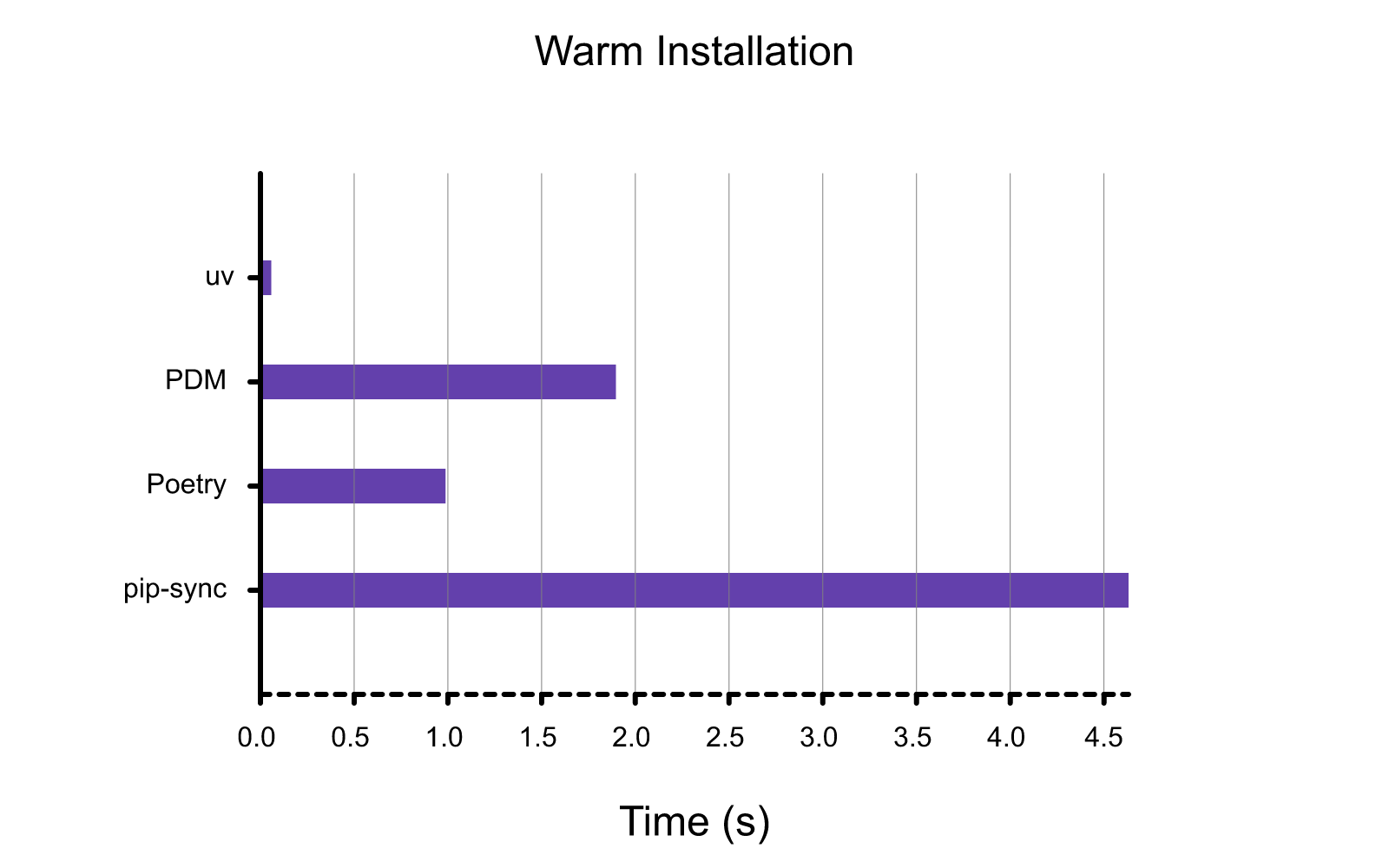
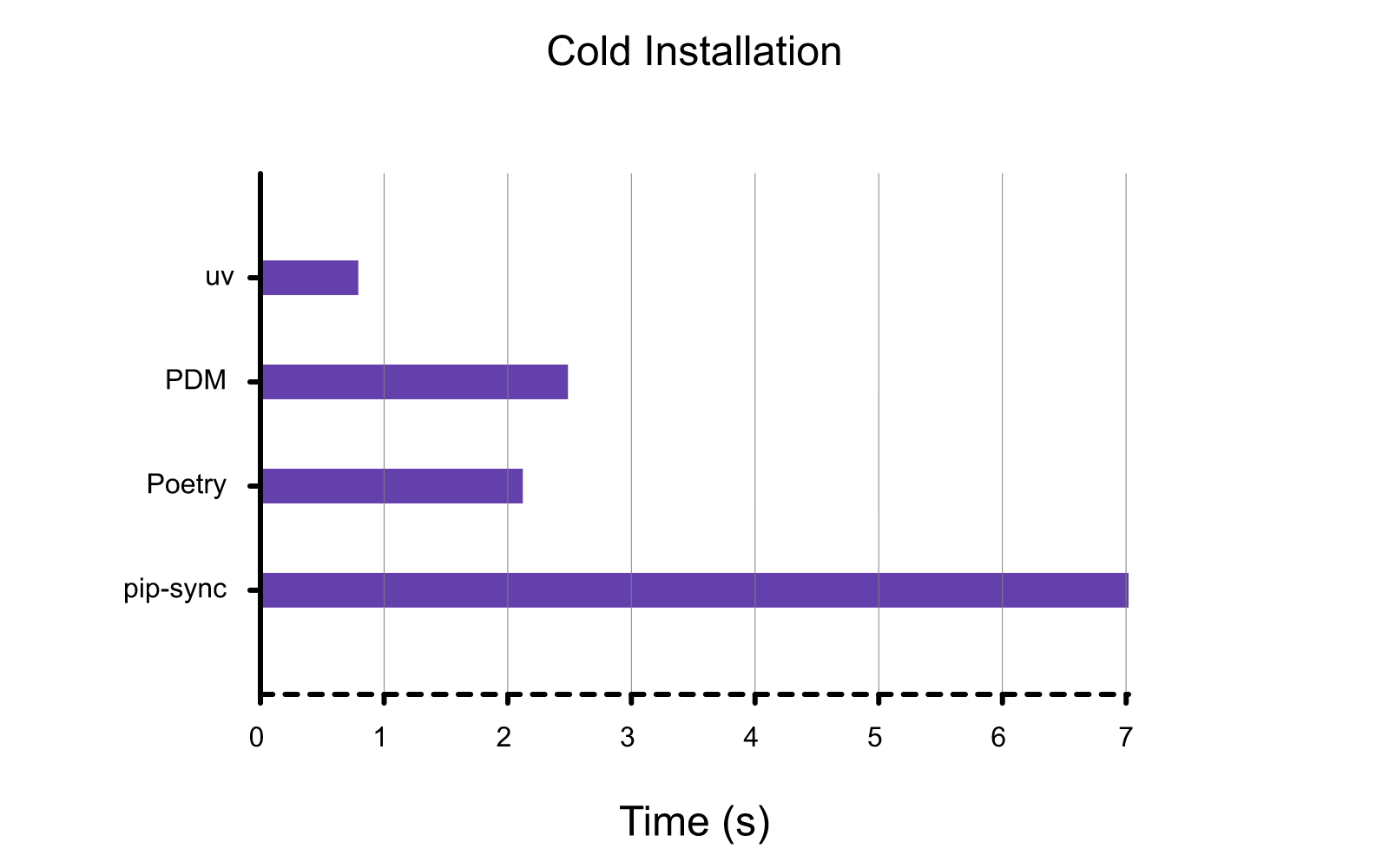
The specific problem uv solves is the historical fragmentation of Python tooling: a typical project in 2023 needed pyenv to manage interpreters, virtualenv to create environments, pip to install packages, pip-tools to lock them, pipx to run CLI tools, twine to publish, and poetry or hatch sitting on top of all of it. uv ships every one of those concerns in a single 30MB binary, runs roughly 10× faster than pip on warm caches and 80-115× faster on cold installs, and uses globally deduplicated package storage that recovers gigabytes of disk space across projects. On , OpenAI announced it was acquiring Astral as part of the Codex team — with Charlie Marsh and the rest of the Astral engineering team joining OpenAI while continuing to build uv, Ruff, and ty in the open.
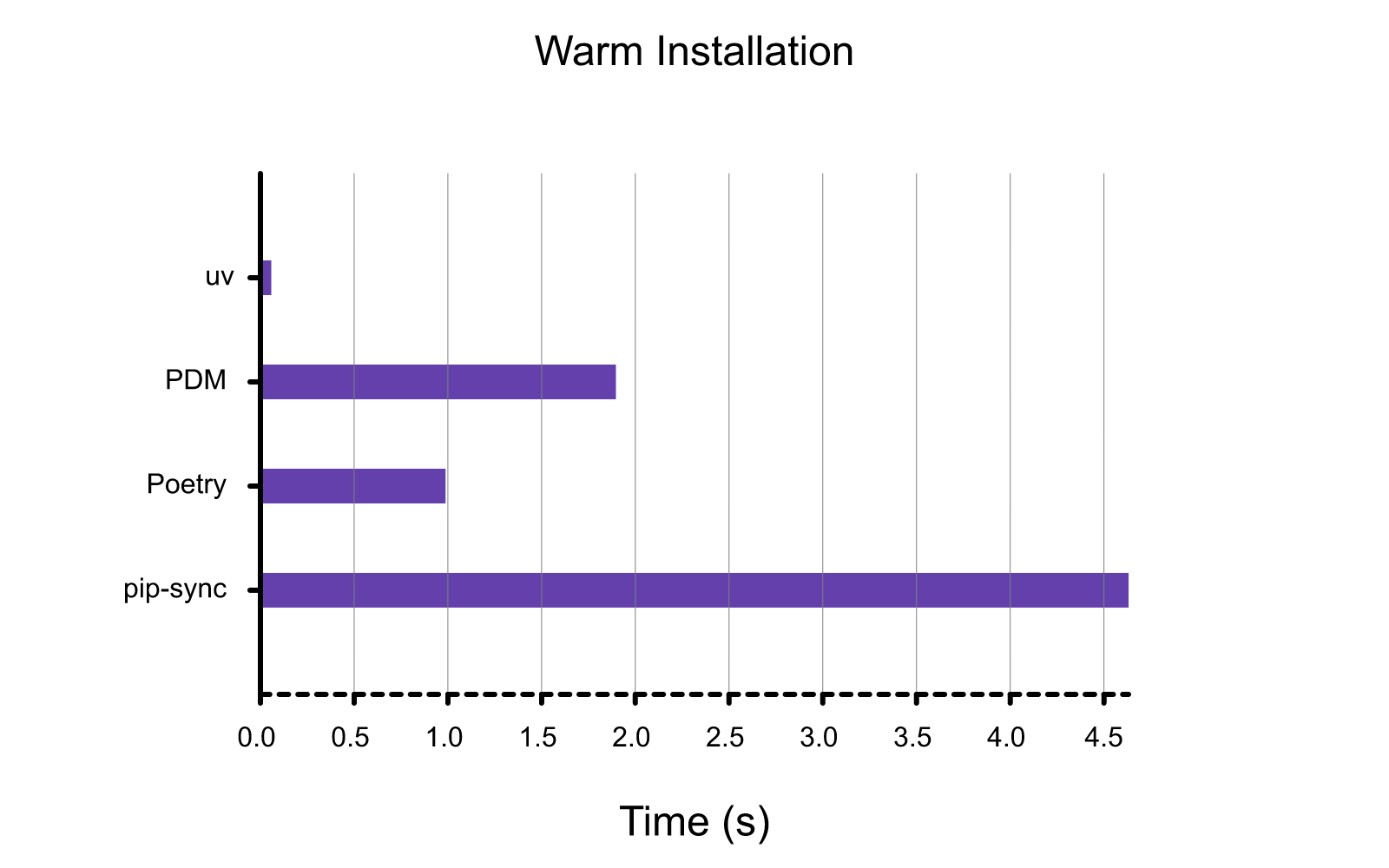
uv command covers what pip, pip-tools, pipx, poetry, pyenv, twine, and virtualenv used to do. uv pip install, uv venv, uv tool run, uv python install 3.12, uv lock, uv publish — all from the same binary, all sharing the same global cache.uv python install 3.12 downloads a portable interpreter from the python-build-standalone project and registers it — no system pyenv required and no compilation. Useful in CI containers where installing pyenv was always an extra step.members field in pyproject.toml that mirrors how Rust's Cargo and JavaScript's pnpm workspaces operate.uv cache prune reclaims unused entries on demand.uv pip install -r requirements.txt works identically to pip, with the same flags and the same exit codes — you can swap uv into existing CI pipelines by changing one line.uv.lock is a cross-platform, deterministic lockfile that pins every transitive dependency by hash. Unlike Poetry, it is portable across operating systems and CPU architectures by default.uv audit command with --ignore-until-fixed for tracking known CVEs.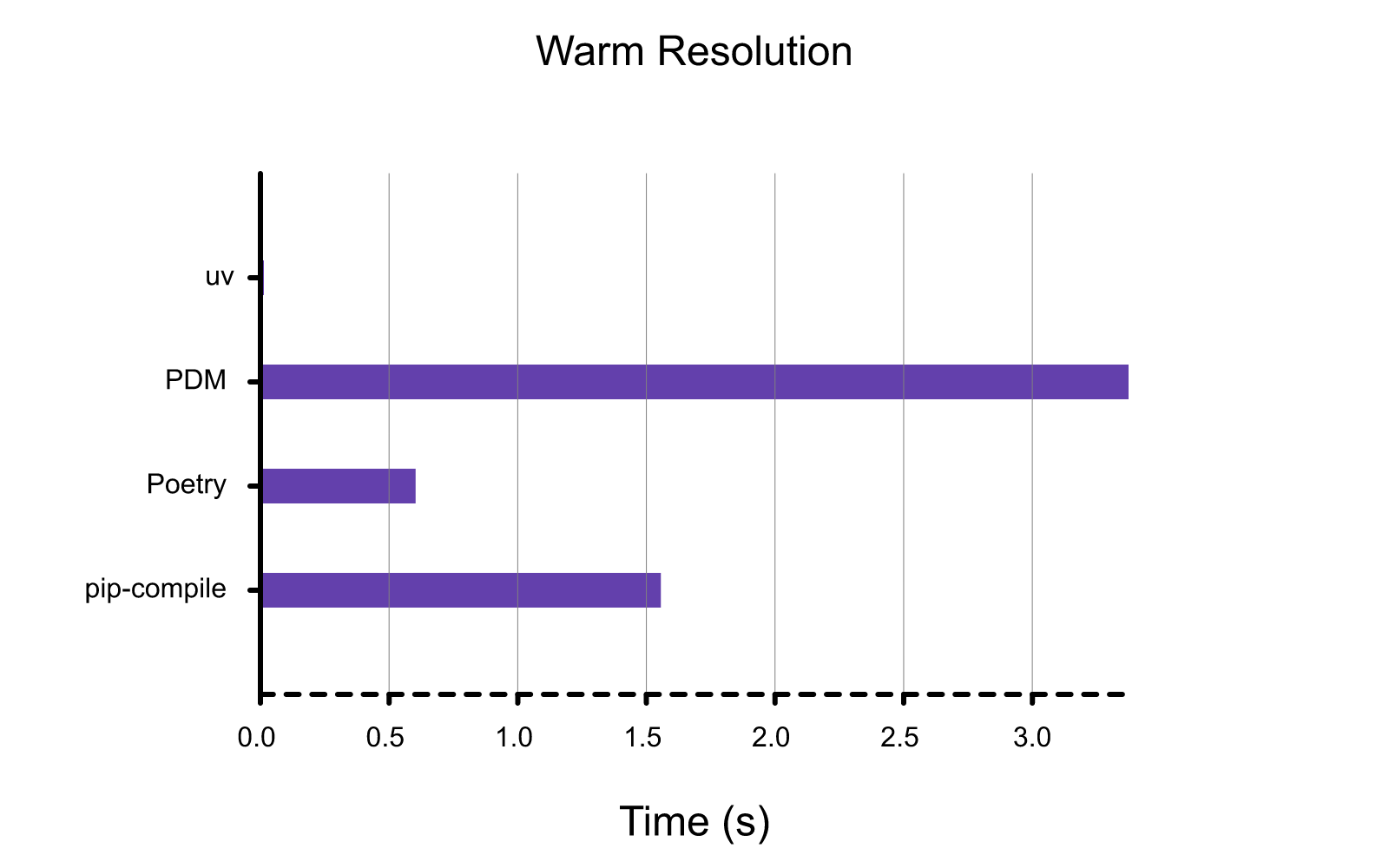
On Hacker News, the recurring sentiment is bluntly captured by an April 2026 "Why would anyone still use Poetry now that uv exists?" thread — the most-upvoted comment praises uv's speed and the elimination of dependency-management as its own specialization, while a recurring complaint is that the project's API surface is still moving fast and breaking changes between minor versions occasionally bite. On Reddit's r/Python, a Wagtail community post showing uv overtaking Poetry in download share went viral. The consistent praise across HN, Reddit, and the Real Python blog is the developer experience: it is fast enough that it removes a class of friction from Python development. The most common honest criticism is that some niche workflows — editable installs of packages with C++ build hooks, conda-only scientific stacks — still require dropping back to pip or pixi. Production users include Anthropic, Hugging Face, Replicate, Modal, Vercel, and the Python infrastructure teams at Bloomberg and Meta, alongside the FastAPI, Pydantic, and PyTorch projects' CI pipelines.
uv is dual-licensed under the MIT and Apache 2.0 licenses and is free for commercial and personal use. There is no paid tier and no enterprise license — uv is purely open source.
| Plan | Price | Key Limits |
|---|---|---|
| Open Source | $0 | MIT/Apache-2.0 dual license — unlimited use, no telemetry, no signup required |
Best for: Any team or individual writing modern Python, especially if you are using poetry, pip-tools, or rye today and tired of slow CI. Particularly compelling for monorepos with multiple Python packages, Docker builds where image-build time matters, and ML pipelines where waiting 5 minutes for pip install torch is killing your iteration loop.
Not ideal for: Workflows that require conda's binary distribution channel for scientific packages without PyPI wheels — uv does not replace conda — or projects deeply tied to setup.py-based editable installs with custom C++ hooks. Pixi or conda remain the right call for those niches.
Pros:
Cons:
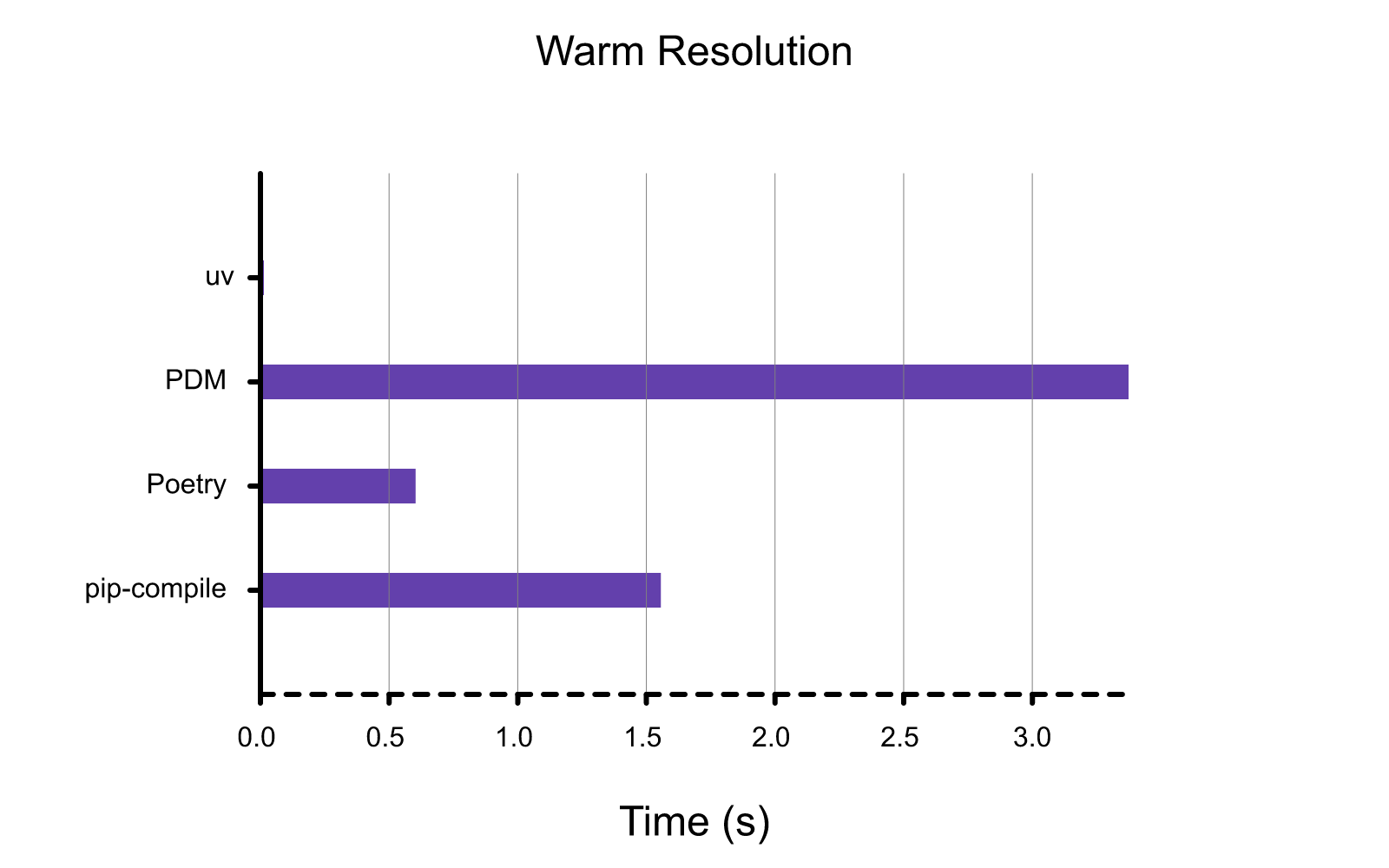
Poetry remains the default for many existing projects but is roughly 30× slower on resolve and lacks Python interpreter management. PDM is a feature-rich PEP-582 alternative with similar ergonomics but slower than uv. Pixi from Prefix.dev is the right call when you need conda-style scientific packages and is built on the same uv resolver internals. Plain pip + venv still works for simple scripts where pulling in a project manager is overkill.
Yes — without qualification. uv is the rare tool where the speed improvement is so large it changes how you work: pre-commit hooks become free, Docker builds shrink by minutes, and CI pipelines that took 4 minutes finish in 30 seconds. The only legitimate reason not to adopt uv in 2026 is if your project is fundamentally a conda-flavored scientific stack, in which case Pixi is a better fit. For everything else — web services, CLIs, ML training pipelines, internal tools, libraries published to PyPI — uv has won the Python packaging argument. We rate it 94/100; the missing six points are entirely about the pre-1.0 churn and the conda gap, both of which are solvable problems on Astral's roadmap.
ServiceNow and Accenture Launch Forward Deployed Engineering Program to Scale Agentic AI in the Enterprise (May 6, 2026)
At Knowledge 2026, ServiceNow and Accenture announced a joint forward deployed engineering program that drops co-located engineer pods into customer environments to ship agentic AI workflows natively on the ServiceNow AI Platform — with access to 300+ pre-built agent skills and the AI Control Tower as the governance backbone.
May 7, 2026
ReFiBuy Raises $13.6M Seed to Help Brands Get Recommended by AI Shopping Agents (May 5, 2026)
ReFiBuy, the Raleigh-based agentic commerce platform from ChannelAdvisor founder Scot Wingo, closed an oversubscribed $13.6M seed led by NewRoad Capital Partners on May 5, 2026 — betting that the next billion-dollar e-commerce moat is being chosen by ChatGPT, Claude and Perplexity.
May 7, 2026
OpenAI Replaces ChatGPT's Default Model With GPT-5.5 Instant — 52.5% Fewer Hallucinations, 30% Shorter Answers (May 5, 2026)
OpenAI on May 5 swapped GPT-5.3 Instant for the new GPT-5.5 Instant as ChatGPT's default model, claiming 52.5% fewer hallucinated claims on high-stakes prompts and 30% more concise answers. The model also rolls into the API as chat-latest and adds personalization from Gmail and past chats for Plus and Pro web users.
May 7, 2026
Is this product worth it?
Built With
Compare with other tools