

 Productivity
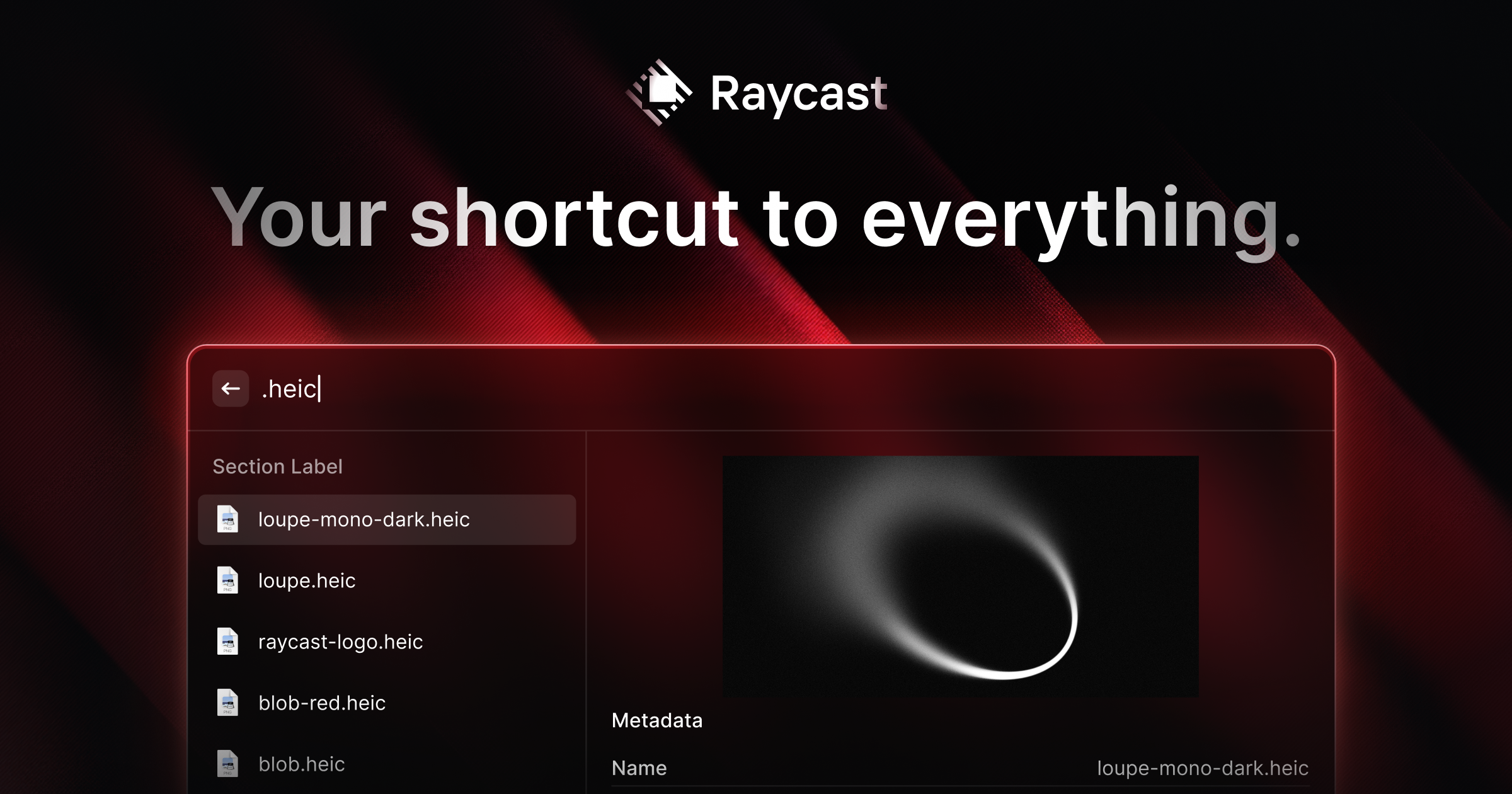
Raycast
Powerful macOS launcher and productivity platform — 7.3K GitHub stars for extensions
Tana is an AI-native workspace where supertags turn freeform notes into queryable, structured data and agents act on the resulting knowledge graph. It rewards power users with the steepest learning curve in note-taking — and the best payoff if you stick with it.
Tana is an AI-native workspace built around a single bet: every note you write should also be structured data your agents can use. We rate it 82/100 — the most ambitious knowledge tool on the market for power users, with a learning curve that will frustrate casual note-takers.
Tana is an outliner crossed with a database crossed with an AI agent runtime. Founded by Tarjei Vassbotn, Olav Sindre Kriken and Emil Ahlbäck, it began as an invite-only beta in 2022 and opened public access in May 2024. In April 2026 the team announced a new agentic meeting product at tana.inc while the original outliner moved to outliner.tana.inc — the product this review covers.
The defining idea is the supertag: attach a tag to any outline node and that node instantly inherits structured fields (text, dates, references, dropdowns) defined for that tag. A line that says “coffee with Lisa about Q3 roadmap” can become a Meeting with attendees, a Project link and a follow-up date — without ever leaving the outline.

On Reddit’s r/Tana and r/PKMS, the most upvoted threads consistently call supertags “life-changing for research” while complaining about the onboarding cliff. On Hacker News, the recurring praise is for the model-agnostic agent design; the recurring complaint is mobile parity — the desktop web app is the source of truth, mobile feels read-mostly. Software Advice and Capacities-vs-Tana comparisons highlight that the free plan’s 500 AI credits and 0.5 GB storage barely cover an evaluation period, so most serious users end up on Plus within a week.
| Plan | Price | Key Limits |
|---|---|---|
| Free | $0/month | 500 AI credits, 0.5 GB storage, 3 workspaces |
| Plus | $10/month ($8 annual) | 2,000 AI credits, Google Calendar sync, mobile + desktop, workspace sharing |
| Pro | $18/month ($14 annual) | 5,000 AI credits, unlimited workspaces, AI model selection, advanced integrations, password-protected publishing |
Students and verified NGOs get a 50% discount, dropping Plus to $5/month and Pro to $9/month.
Best for: Researchers, founders, consultants and PKM enthusiasts who already think in tags, databases and queries — and who run enough meetings to make the agent earn its keep.
Not ideal for: Casual note-takers who want to jot down a thought and move on, or teams that need offline-first writing. Apple Notes, Bear or Obsidian will be less painful.
Pros:
Cons:
The closest alternatives are Obsidian (local-first, plugin ecosystem, weaker AI), Capacities (similar object model, gentler curve), Anytype (open-source, end-to-end encrypted) and Logseq (open-source outliner, no native AI agents). Notion remains the volume leader if you want something the whole team will actually open.
Yes, if you genuinely live inside your notes and want them to do more than sit there. The combination of supertags, a queryable graph and model-agnostic agents is a real category of one. If you need a quick scratchpad, Tana will feel like overkill and the $10–$18 monthly cost will sting. We rate it 82/100 — held back from the 90s only by the learning curve and the thin free tier.
ServiceNow and Accenture Launch Forward Deployed Engineering Program to Scale Agentic AI in the Enterprise (May 6, 2026)
At Knowledge 2026, ServiceNow and Accenture announced a joint forward deployed engineering program that drops co-located engineer pods into customer environments to ship agentic AI workflows natively on the ServiceNow AI Platform — with access to 300+ pre-built agent skills and the AI Control Tower as the governance backbone.
May 7, 2026
ReFiBuy Raises $13.6M Seed to Help Brands Get Recommended by AI Shopping Agents (May 5, 2026)
ReFiBuy, the Raleigh-based agentic commerce platform from ChannelAdvisor founder Scot Wingo, closed an oversubscribed $13.6M seed led by NewRoad Capital Partners on May 5, 2026 — betting that the next billion-dollar e-commerce moat is being chosen by ChatGPT, Claude and Perplexity.
May 7, 2026
OpenAI Replaces ChatGPT's Default Model With GPT-5.5 Instant — 52.5% Fewer Hallucinations, 30% Shorter Answers (May 5, 2026)
OpenAI on May 5 swapped GPT-5.3 Instant for the new GPT-5.5 Instant as ChatGPT's default model, claiming 52.5% fewer hallucinated claims on high-stakes prompts and 30% more concise answers. The model also rolls into the API as chat-latest and adds personalization from Gmail and past chats for Plus and Pro web users.
May 7, 2026
Is this product worth it?
Built With
Compare with other tools