
 Developer Tools
Templ
Type-safe HTML templating language for Go with compile-time safety
Strapi is the leading open-source headless CMS — Node.js, MIT-licensed, with auto-generated REST and GraphQL APIs. We rate it 84/100 and explain who it's right for, and who should pick a SaaS instead.
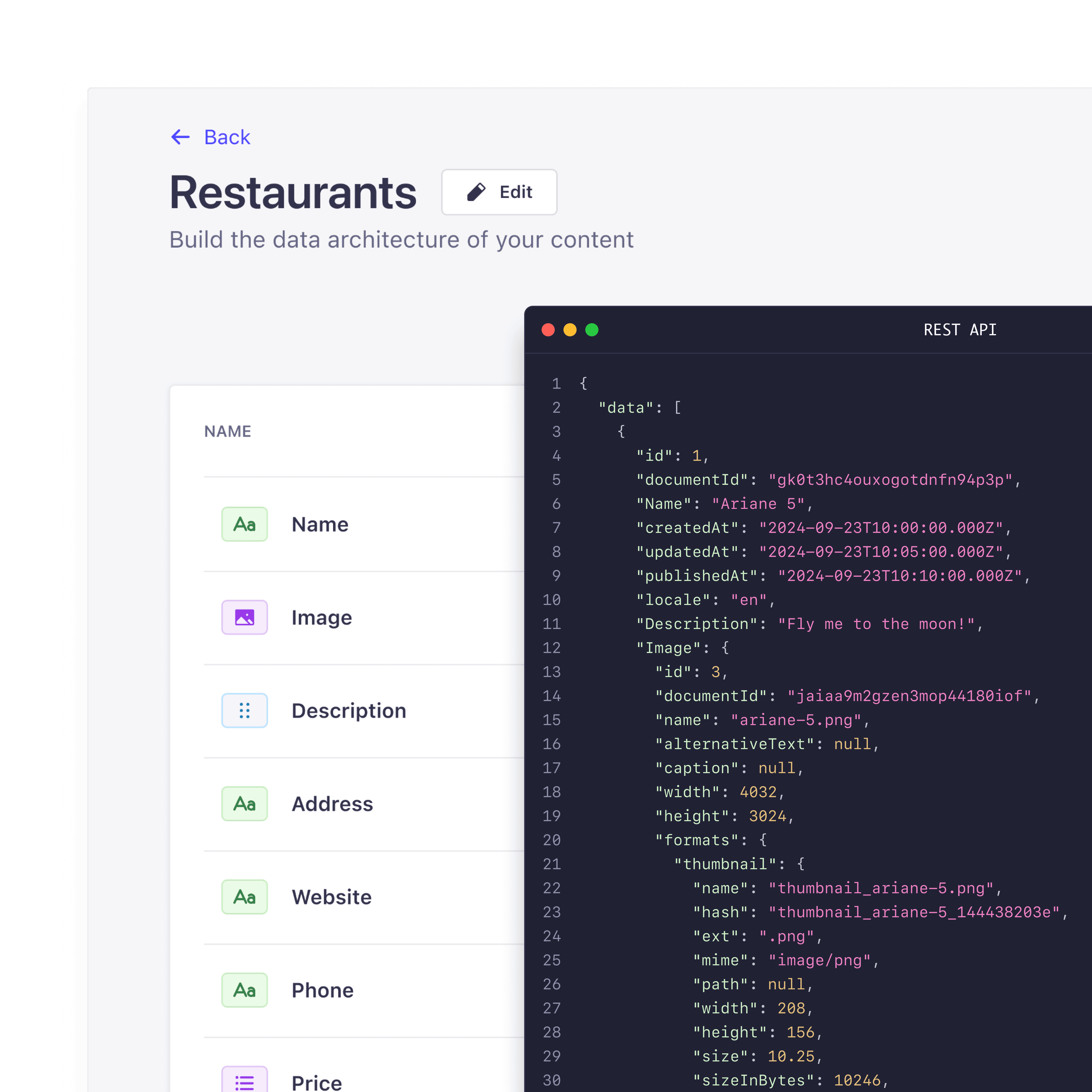
Strapi is the leading open-source headless CMS — a Node.js + TypeScript content platform that auto-generates REST and GraphQL APIs from your content models, ships with a polished editing UI for non-developers, and runs anywhere from a $5 VPS to its managed Strapi Cloud. We rate it 84/100 — the safest open-source default for teams that want a customizable headless CMS without committing to a SaaS like Contentful or Sanity.
Strapi was created in by Pierre Burgy, Aurélien Georget and Jim Laurie, and is developed today by a Paris-based company of the same name. It is the most popular open-source headless CMS on GitHub, with 72,000+ stars, 9,600+ forks, and an MIT-licensed core. The latest stable release is v5.43.0, shipped on , and the project ships a steady cadence of minor releases roughly every two weeks.
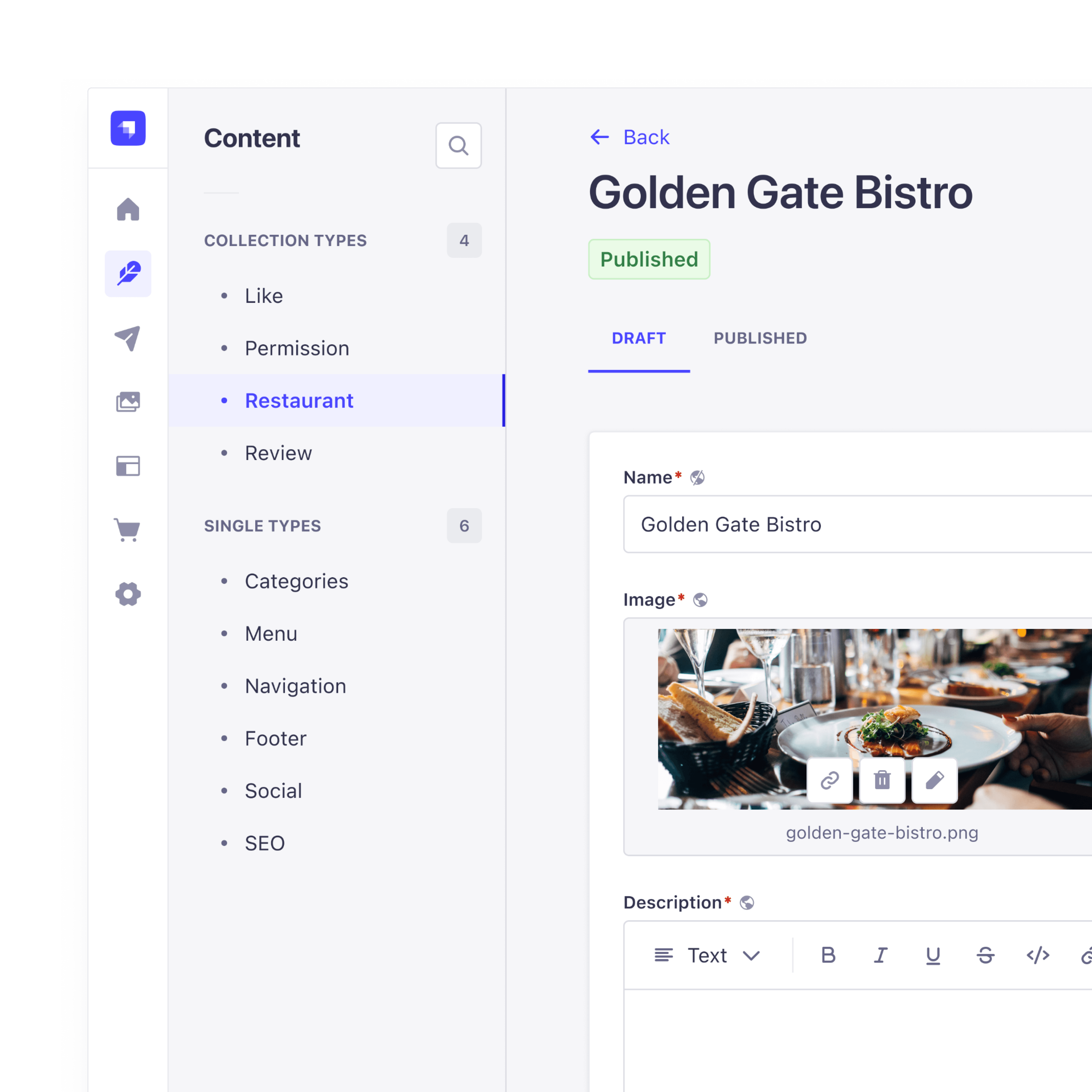
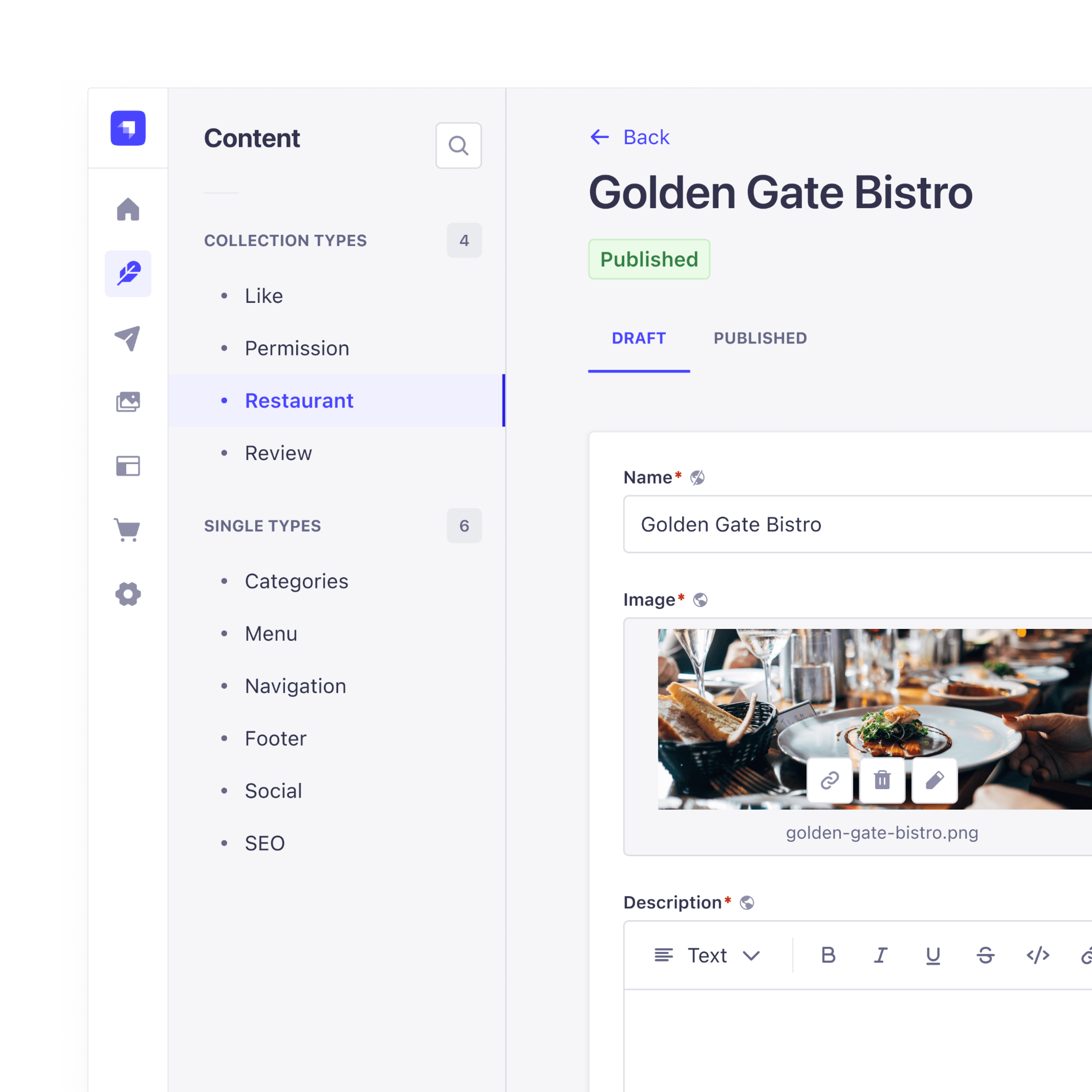
The core idea is simple: define your content types visually in the Content-Type Builder, and Strapi instantly generates a REST and GraphQL API around them, plus an admin UI that editors can use without writing a line of code. You self-host the open-source Community Edition for free, or pay for Strapi Cloud — the official managed hosting — when you do not want to babysit Node processes, databases and CDN configuration.

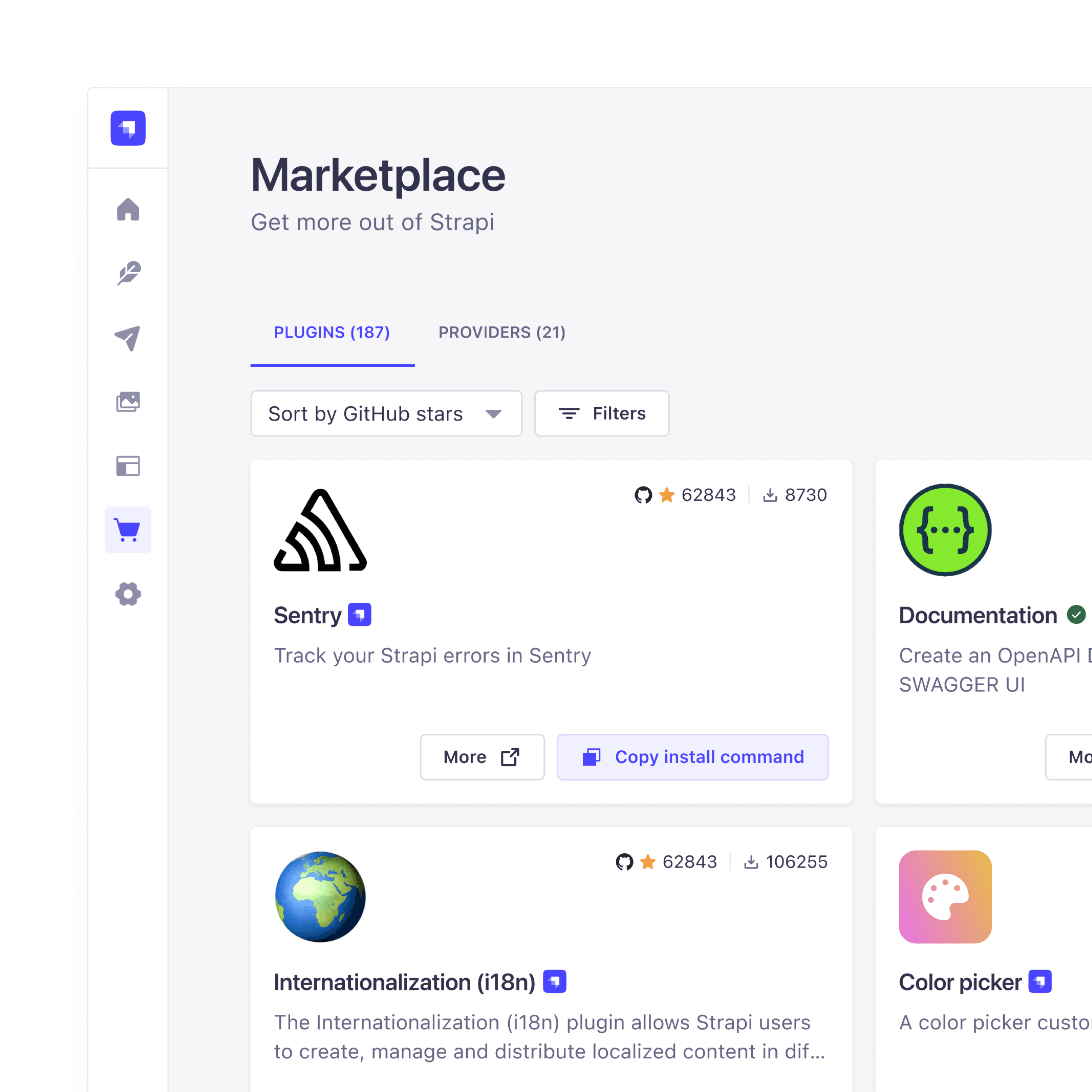
On G2 and Capterra, Strapi consistently scores 4.5+ across thousands of reviews, with users praising the auto-generated APIs, the polished admin UI and the freedom of being able to self-host. On Reddit's r/webdev and r/node, the most upvoted threads call out the speed of prototyping — "I had a working blog API in twenty minutes" is a recurring quote — and the community plugin ecosystem on the Strapi Marketplace.
The recurring complaints are equally consistent: deployment is harder than it should be (you have to bring your own Dockerfile and database), and major version upgrades — particularly the v3-to-v4 and v4-to-v5 jumps — required serious refactoring for projects that leaned on custom plugins. Several Hacker News threads also flag that the admin panel becomes sluggish on very large content sets, and that some advanced customizations still require dropping into core source.
Strapi's Community Edition is free and MIT-licensed — you can run it forever on your own infrastructure with no telemetry and no feature gates beyond the Enterprise extras (SSO, SLA support, audit logs). Strapi Cloud is the official managed offering and replaced per-seat billing in 2025 with a usage-based model focused on hosting limits.
| Plan | Price | Key Limits |
|---|---|---|
| Community (self-hosted) | $0/month | Full CMS, MIT-licensed. You bring the server and database. |
| Cloud Free (non-commercial) | $0/month | 2,500 API requests/month, cold starts, sandbox use. |
| Cloud Essential | $18/month (or $15/mo annual) | Hosting-only plan, increased API requests, storage and bandwidth. |
| Cloud Pro | $90/month | Higher limits, daily backups, custom domain, log retention. |
| Cloud Scale | $450/month | 10 seats, 1M CMS entries, audit logs, review workflows, releases, 99% uptime SLA. |
| Enterprise (self-hosted) | Contact sales | SSO, advanced audit logs, dedicated CSM, technical SLAs. |
Best for: Front-end and full-stack teams building Next.js, Nuxt, Astro or React Native apps that need a content backend their non-developer colleagues can actually use; agencies running many client projects on the same stack; and any team that wants to keep the option to migrate hosting providers without a migration nightmare.
Not ideal for: Teams without anyone comfortable operating a Node.js process, a database and a reverse proxy — Strapi Cloud helps, but real production deploys still demand DevOps muscle. Also a poor fit if you need WYSIWYG page-builder features out of the box; Strapi is structured-content-first, and the admin is not a Webflow-style visual builder.
Pros:
Cons:
Payload CMS is the closest open-source competitor, code-first instead of click-through, with a reputation for tighter TypeScript ergonomics. Directus wraps your existing SQL database directly and is a great fit when the schema already exists. Sanity and Contentful are SaaS-only, more polished out of the box, but lock you into their hosting and pricing.
Strapi remains the safest open-source default for any team that wants a serious headless CMS without writing the admin panel themselves. It is not the prettiest editor on the market, and it is not the easiest to deploy, but the combination of MIT licensing, mature plugin ecosystem, REST + GraphQL out of the box, and a managed Cloud option for when self-hosting gets old makes it the option that most projects will not regret picking. The 84/100 reflects how strong the core product is, with a few points held back for the deployment friction and the admin performance complaints. If you can stand up a Postgres database, you can ship Strapi.
npx create-strapi@latest.Developer ToolsType-safe HTML templating language for Go with compile-time safety
 Developer Tools
Open-source API key management and rate limiting platform for modern developers
 Developer Tools
Open-source low-code platform for building internal business applications
 Developer Tools
Git-friendly open-source API client for REST, GraphQL, and gRPC
ServiceNow and Accenture Launch Forward Deployed Engineering Program to Scale Agentic AI in the Enterprise (May 6, 2026)
At Knowledge 2026, ServiceNow and Accenture announced a joint forward deployed engineering program that drops co-located engineer pods into customer environments to ship agentic AI workflows natively on the ServiceNow AI Platform — with access to 300+ pre-built agent skills and the AI Control Tower as the governance backbone.
May 7, 2026
ReFiBuy Raises $13.6M Seed to Help Brands Get Recommended by AI Shopping Agents (May 5, 2026)
ReFiBuy, the Raleigh-based agentic commerce platform from ChannelAdvisor founder Scot Wingo, closed an oversubscribed $13.6M seed led by NewRoad Capital Partners on May 5, 2026 — betting that the next billion-dollar e-commerce moat is being chosen by ChatGPT, Claude and Perplexity.
May 7, 2026
OpenAI Replaces ChatGPT's Default Model With GPT-5.5 Instant — 52.5% Fewer Hallucinations, 30% Shorter Answers (May 5, 2026)
OpenAI on May 5 swapped GPT-5.3 Instant for the new GPT-5.5 Instant as ChatGPT's default model, claiming 52.5% fewer hallucinated claims on high-stakes prompts and 30% more concise answers. The model also rolls into the API as chat-latest and adds personalization from Gmail and past chats for Plus and Pro web users.
May 7, 2026
Is this product worth it?
Built With
Compare with other tools
Open Comparison Tool →