
 Developer Tools
Templ
Type-safe HTML templating language for Go with compile-time safety
Storybook is the open-source UI workshop trusted by 88,000+ GitHub stargazers and over 4.6 million weekly npm installs. With Storybook 9 it now ships interaction, accessibility and visual tests in one component-test widget — and a 48% leaner install.
Storybook is the open-source frontend workshop for building, documenting, and testing UI components in isolation — the de-facto standard tool the React, Vue, Svelte, Angular and React Native ecosystems share. We rate it 89/100: with Storybook 9 it has finally folded interaction, accessibility, visual and coverage testing into the same UI you already use to develop components, which makes it the right pick for any team that ships a design system or non-trivial component library in 2026.
Storybook is a sandboxed dev environment for UI components. Each component renders inside its own iframe, with a sidebar of stories that capture every interesting state — loading, empty, error, mobile, dark mode — so you can build, review, document and test a component without booting your full app. It was originally created in 2016 as React Storybook by Arunoda Susiripala at Kadira, generalised to other frameworks, and is now stewarded by Chromatic alongside an active community of maintainers. The codebase is MIT-licensed at github.com/storybookjs/storybook, where it has accumulated 88,000+ stars and around 4.6 million weekly downloads on npm at the time of writing.
The current major line is Storybook 9, which shipped on and reached 9.1 in July 2025. Storybook 9 is positioned as a testing-first release: the project ate three formerly separate products — the test runner, accessibility addon and visual-test addon — and put a single Component Test widget at the bottom of the sidebar that runs all of them in one click via a Vitest-based runner.

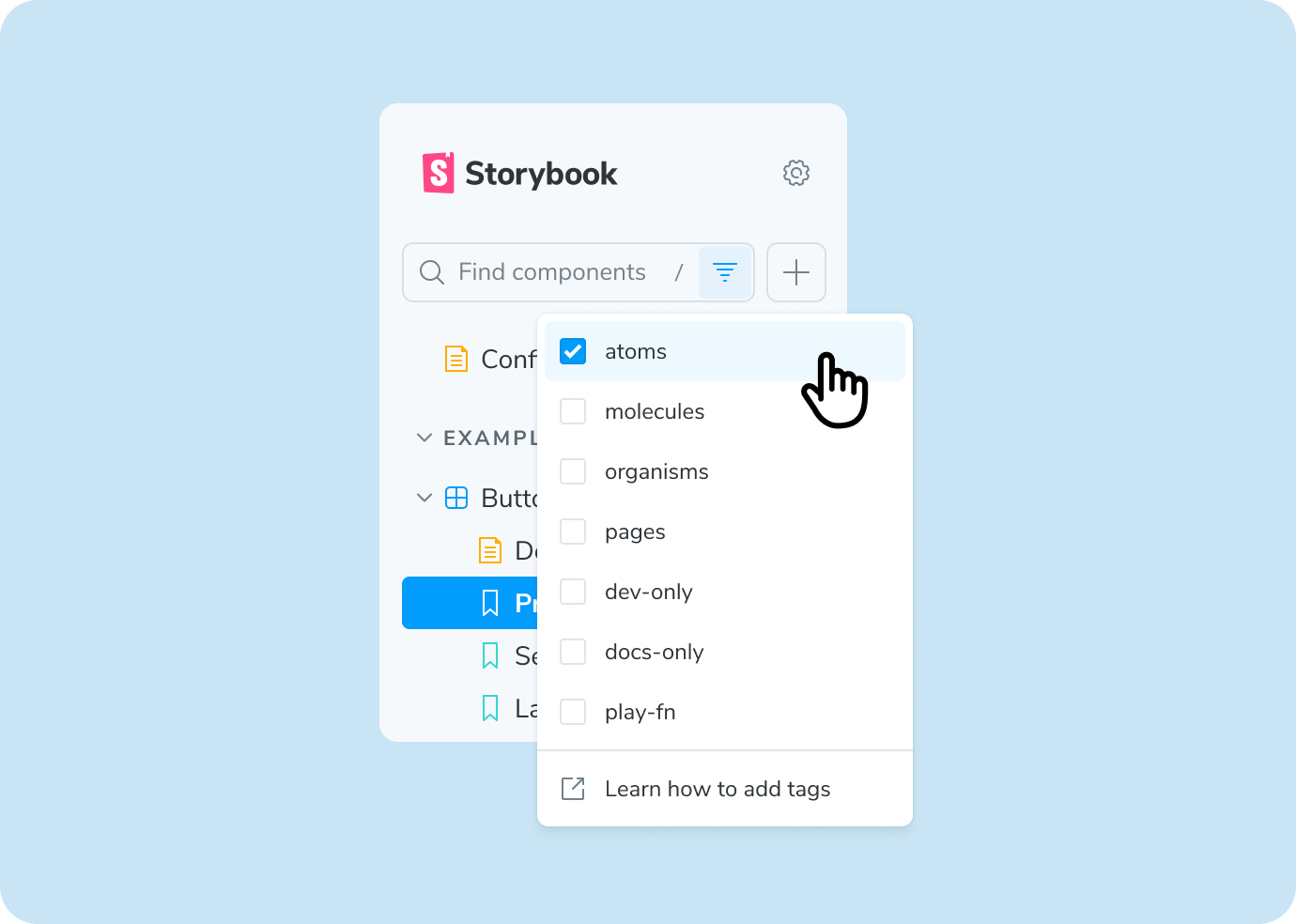
node_modules footprint by roughly half versus 8.x. Cold installs and CI cache hits both feel noticeably faster.alpha, team:platform, state:wip) for filtering large libraries.storybook build produces a static SPA you can deploy to GitHub Pages, Vercel, Netlify or Chromatic for design-system documentation that designers, PMs and QA actually open.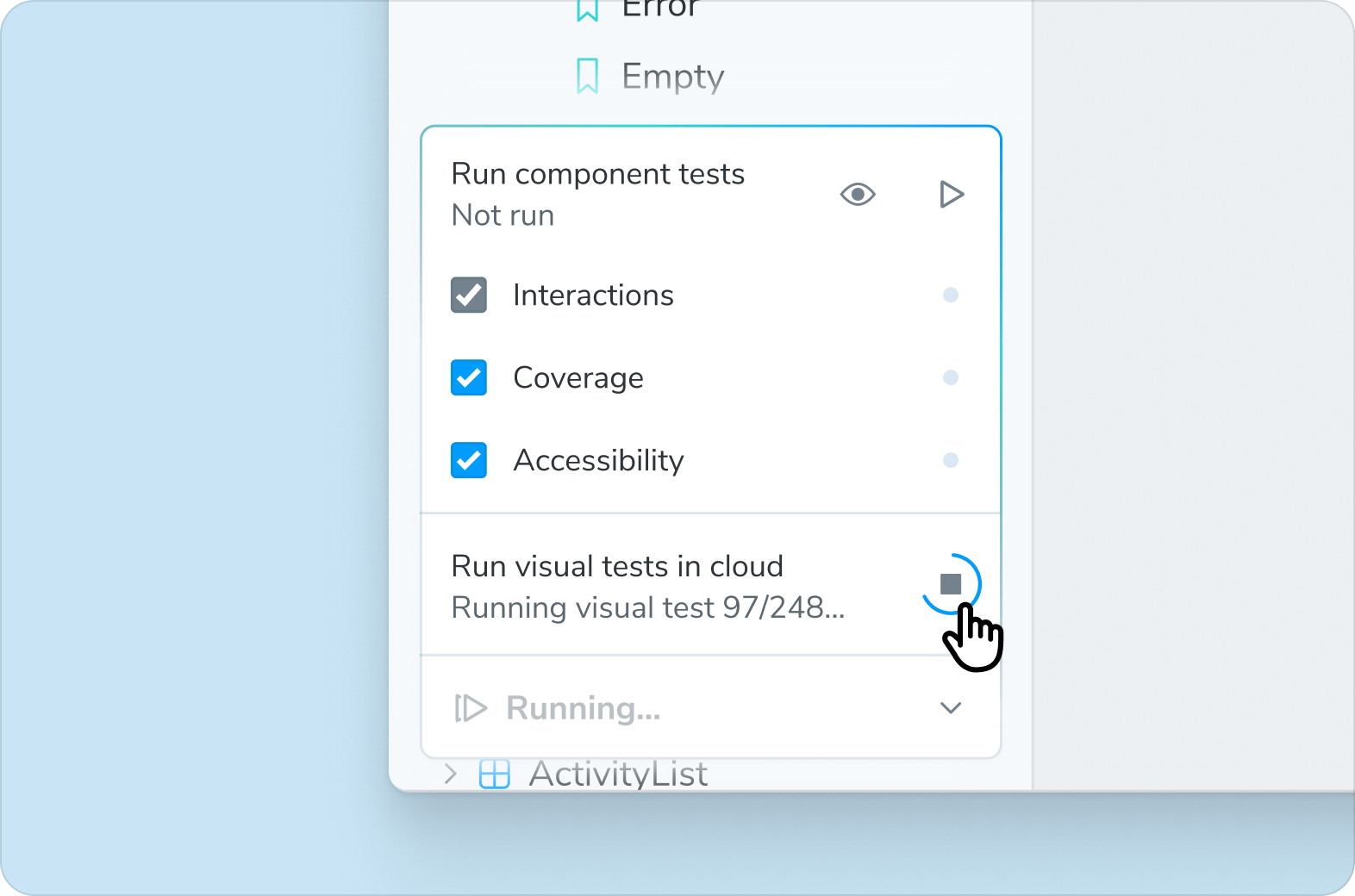
Among frontend engineers Storybook is, after eight years, treated less like a tool you choose and more like part of the React/Vue/Svelte stack. On r/reactjs and r/Frontend the consistent praise is that it is the place to build design systems — especially the ability to share a deployed Storybook URL with designers and PMs — and that the testing consolidation in 9.0 finally removes the “four addons that don’t agree with each other” pain. InfoQ’s coverage of the 9.0 launch summarised community sentiment as “the most developer-centric release yet.”
The recurring complaints are honest. Cold starts on large monorepos remain the most-cited pain point: GitHub issue #32567 in late 2025 documents a project where Storybook took more than two minutes to boot, and the ghost of storyStoreV7 regressions still haunts older threads. Configuration complexity is the second — with a build step, a manager UI, framework presets, addons and a separate test runner, getting Storybook tuned for a Next.js or Vite app is real work the first time. Finally, the addon ecosystem still has stragglers from the 8.x era; check the addon migration guide before upgrading.
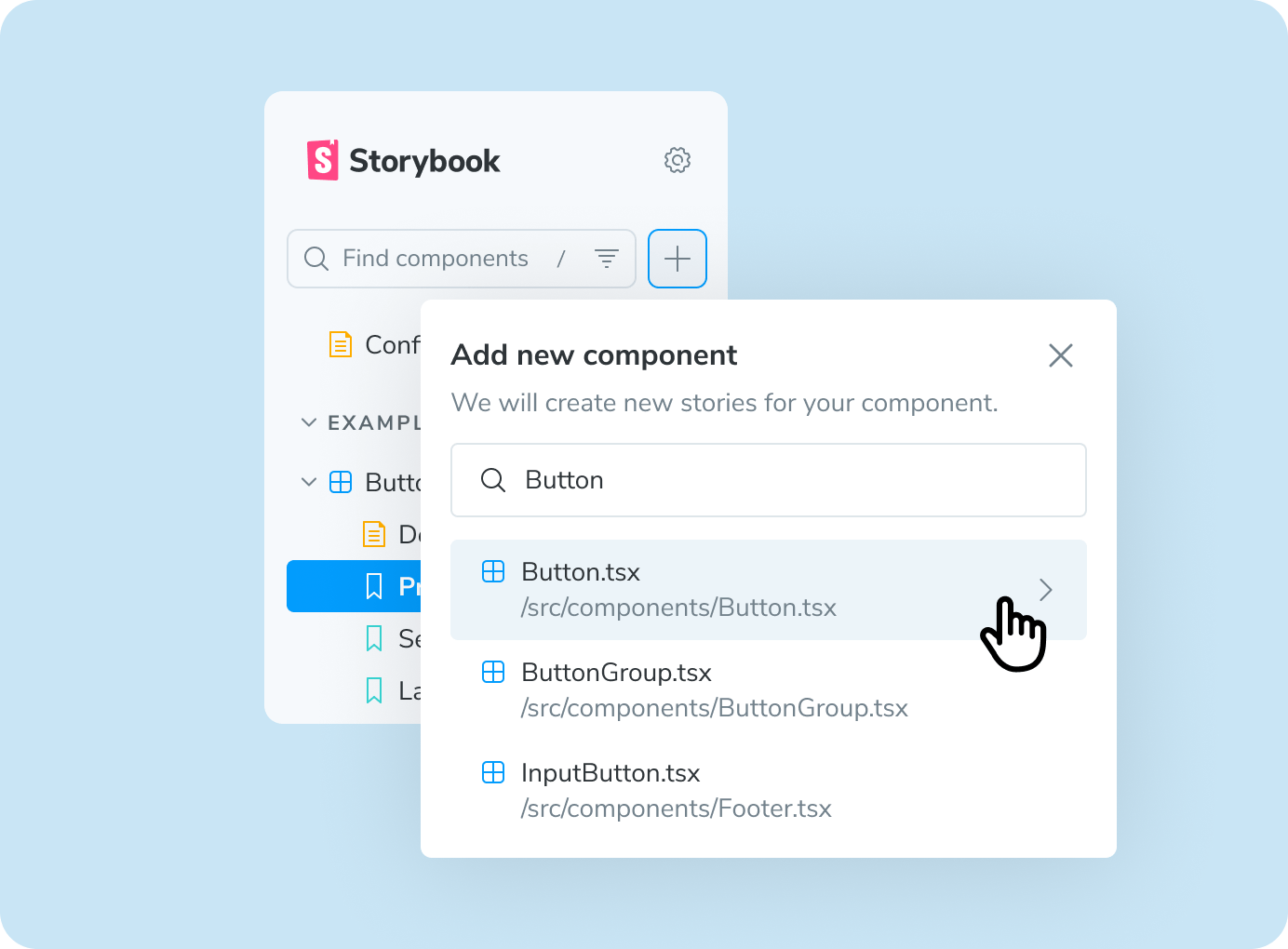
.stories.ts file for you.Storybook itself is free and open source under the MIT license — no seats, no telemetry-paywall, no community-vs-enterprise split. The cost only enters when you bolt on Chromatic, the paid SaaS built by the same team for hosting, visual review and CI integration. Chromatic has a free tier and three paid plans:
| Plan | Price | Snapshots / month |
|---|---|---|
| Storybook (self-hosted) | $0 forever | Unlimited — static SPA you deploy yourself |
| Chromatic Free | $0 | 5,000 snapshots |
| Chromatic Starter | $149/month | 35,000 snapshots |
| Chromatic Pro | $349/month | 100,000 snapshots |
| Chromatic Enterprise | Contact sales | SSO, SAML, audit logs, custom snapshot volume |
Most teams can run Storybook entirely free indefinitely, deploy the static build to GitHub Pages or Vercel, and only consider Chromatic when they want hosted visual diffs against every PR.
Best for: frontend teams that maintain a design system, component library or marketing site with more than 20 reusable components; agencies that need a shared review surface for designers, PMs and QA; React Native teams that finally have a first-class device + web target in Storybook 9; and any open-source UI library author publishing an interactive playground.
Not ideal for: tiny apps with fewer than 10 components — the setup cost outweighs the benefit; legacy CRA projects on outdated Node versions — 9.x targets modern Node 20+ and Vite/Webpack 5; or teams whose primary need is full end-to-end testing — that is still Playwright’s job.
Pros:
storybook build output deploys anywhere; designers and PMs actually open it.Cons:
Histoire — Vue-first, Vite-native and dramatically faster to start, but the addon ecosystem is a fraction of Storybook’s and React support is limited. Ladle — a tiny Vite-only React alternative from Uber that boots in under a second; great for solo apps, lacking for design-system work. Playwright Component Testing — if you want pure CT-style tests with no UI surface, Playwright covers that better than Storybook ever will, but you lose the doc / review / browse experience.
If you ship a design system, a component library, or any frontend with more than ~20 reusable components, Storybook is still the most defensible default in 2026. Storybook 9 closes its biggest historical weakness — testing scattered across mismatched addons — and trims half a node_modules out of the deal. We dock points only for cold-start times on big monorepos and the genuine ramp-up cost. 89/100 — recommended. Skip it only if your project is too small to amortise the configuration, or if you are squarely in the React Native + on-device camp and were already running an RN-specific tool that 9.0 has now caught up to anyway.
Developer ToolsType-safe HTML templating language for Go with compile-time safety
 Developer Tools
Open-source API key management and rate limiting platform for modern developers
 Developer Tools
Open-source low-code platform for building internal business applications
 Developer Tools
Git-friendly open-source API client for REST, GraphQL, and gRPC
ServiceNow and Accenture Launch Forward Deployed Engineering Program to Scale Agentic AI in the Enterprise (May 6, 2026)
At Knowledge 2026, ServiceNow and Accenture announced a joint forward deployed engineering program that drops co-located engineer pods into customer environments to ship agentic AI workflows natively on the ServiceNow AI Platform — with access to 300+ pre-built agent skills and the AI Control Tower as the governance backbone.
May 7, 2026
ReFiBuy Raises $13.6M Seed to Help Brands Get Recommended by AI Shopping Agents (May 5, 2026)
ReFiBuy, the Raleigh-based agentic commerce platform from ChannelAdvisor founder Scot Wingo, closed an oversubscribed $13.6M seed led by NewRoad Capital Partners on May 5, 2026 — betting that the next billion-dollar e-commerce moat is being chosen by ChatGPT, Claude and Perplexity.
May 7, 2026
OpenAI Replaces ChatGPT's Default Model With GPT-5.5 Instant — 52.5% Fewer Hallucinations, 30% Shorter Answers (May 5, 2026)
OpenAI on May 5 swapped GPT-5.3 Instant for the new GPT-5.5 Instant as ChatGPT's default model, claiming 52.5% fewer hallucinated claims on high-stakes prompts and 30% more concise answers. The model also rolls into the API as chat-latest and adds personalization from Gmail and past chats for Plus and Pro web users.
May 7, 2026
Is this product worth it?
Built With
Compare with other tools
Open Comparison Tool →