 Developer Tools
Templ
Type-safe HTML templating language for Go with compile-time safety
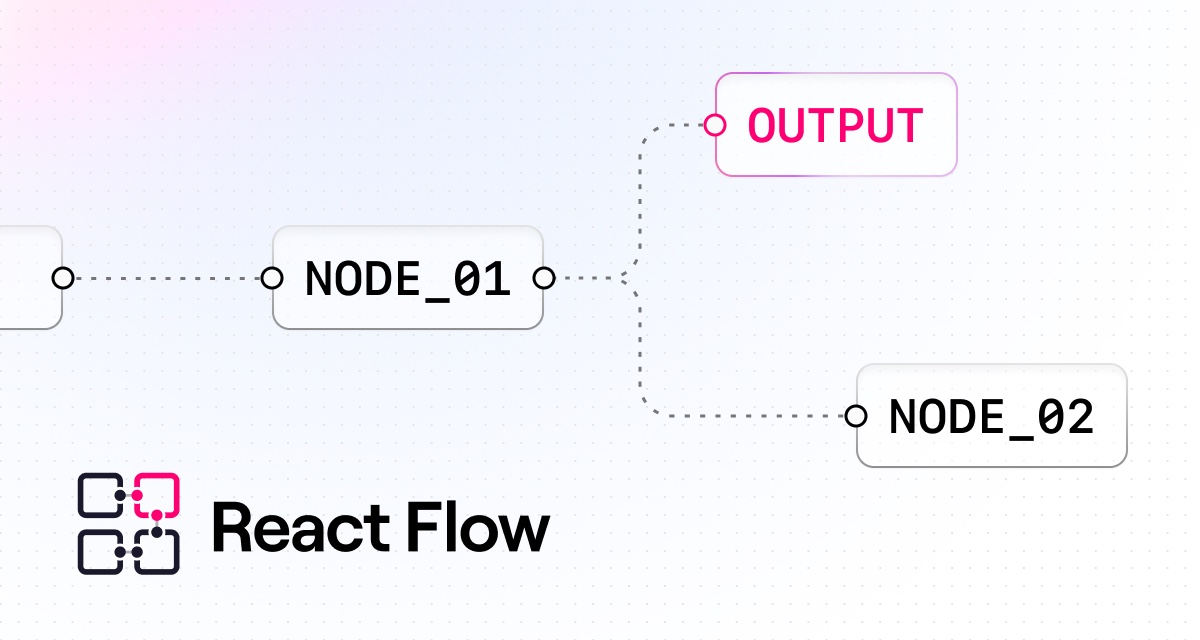
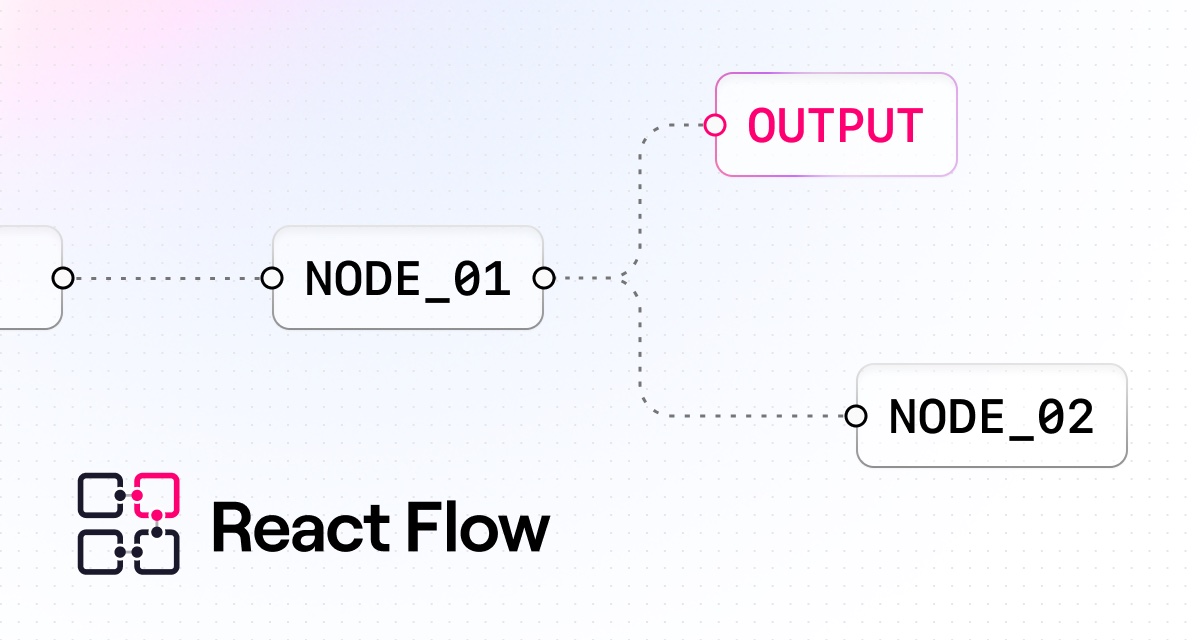
React Flow is the open-source MIT-licensed React library for building node-based UIs — workflow editors, AI agent graphs, no-code apps. Real React components as nodes, with interactions wired up out of the box.
React Flow is an open-source MIT-licensed React library for building node-based UIs — workflow builders, no-code editors, AI agent graphs, mind maps, and ETL pipelines. We rate it 92/100 — it is the de facto standard if you are shipping a node editor in a React app and you want every node to be a real React component.
React Flow is built and maintained by xyflow, the team behind both React Flow and Svelte Flow. The library was first published in and has grown into one of the most-starred React diagramming libraries on GitHub, with 36,400+ stars and 2,390+ forks as of May 2026. The repo was last pushed on , which is consistent with the multi-times-per-week cadence the team has kept up since v11.
The reason teams reach for React Flow rather than Cytoscape.js, vis-network, or a Konva canvas is simple: every node is a normal React component. You drop your JSX inside a node and React Flow handles dragging, panning, zooming, edge routing, multi-select, snap-to-grid, undo points, and viewport persistence. That trade-off — DOM nodes instead of canvas rendering — costs you raw performance on huge graphs, but it buys you the entire React ecosystem inside each node: Tailwind classes, shadcn/ui components, form inputs, charts, anything you can put on a page.
React.memo / useNodes selector pattern keeps re-renders predictable on graphs of a few thousand nodes.On Hacker News and the GitHub discussions board, the most consistent praise is for the API design — developers repeatedly say it took them under an afternoon to build a working node editor, which is rare in this space. The xyflow Developer Survey 2023 collected feedback from real users, and even the largely positive results surfaced two recurring complaints we hear elsewhere: it can be hard to understand the inner workings when you start customizing deeply, and large graphs (5,000+ nodes) hit a wall unless you carefully memoize custom nodes. The team has been responsive — DevTools, the layouting examples, and the v12 store rewrite all came out of that survey.
The React Flow library itself is free under the MIT license for any use, including commercial products. xyflow makes money through React Flow Pro, a paid subscription that gives you access to advanced examples and templates (drag-and-drop, computed flows, expandable nodes, copy/paste, save and restore), prioritized GitHub issues, and direct support from the xyflow team. There are three Pro tiers — Starter, Professional, and Enterprise — and pricing is shown on the Pro pricing page; Enterprise is contact-for-quote.
| Plan | Cost | Best for |
|---|---|---|
| React Flow (OSS) | Free, MIT | Anyone — full library, no attribution required for commercial use |
| Pro Starter | Paid subscription | Startups shipping a commercial product on React Flow |
| Pro Professional | Paid subscription | Teams that want monthly support hours and an internal Discord channel |
| Enterprise | Custom quote | Large companies needing perpetual access and procurement support |
Best for: React teams building workflow editors, AI agent graphs (LangGraph-style UIs), n8n/Zapier-style automation builders, BPMN editors, ETL pipeline visualizers, and node-based image processing tools. It is also the right pick when each node needs to be interactive — forms, charts, dropdowns, drag handles inside the node body.
Not ideal for: Teams rendering 10,000+ nodes at once where you cannot virtualize aggressively, force-directed scientific network visualizations (use Cytoscape.js or Sigma.js), or non-React stacks. If you are on Svelte, the same team ships Svelte Flow.
Pros:
Cons:
Cytoscape.js — the right call for large network graphs and scientific visualizations; better raw performance, less React-native ergonomics. Reagraph — WebGL-rendered, faster on huge graphs, but rawer API surface and a smaller community. D3 + custom SVG — maximum control, maximum work; a fine pick if you have a D3 specialist on the team and a very specific visualization in mind.
Yes, almost unconditionally, if you are building a node editor in React. The library does the boring 80% (interactions, viewport, edges) so well that you can spend your budget on the part that actually makes your product distinctive — what each node does. We rate it 92/100: the only reasons it is not higher are the DOM-rendering performance ceiling and the fact that very deep customization still requires reading the source. For 95% of node-based UIs we have shipped or reviewed in the last year, this is the first thing we would reach for.
ServiceNow and Accenture Launch Forward Deployed Engineering Program to Scale Agentic AI in the Enterprise (May 6, 2026)
At Knowledge 2026, ServiceNow and Accenture announced a joint forward deployed engineering program that drops co-located engineer pods into customer environments to ship agentic AI workflows natively on the ServiceNow AI Platform — with access to 300+ pre-built agent skills and the AI Control Tower as the governance backbone.
May 7, 2026
ReFiBuy Raises $13.6M Seed to Help Brands Get Recommended by AI Shopping Agents (May 5, 2026)
ReFiBuy, the Raleigh-based agentic commerce platform from ChannelAdvisor founder Scot Wingo, closed an oversubscribed $13.6M seed led by NewRoad Capital Partners on May 5, 2026 — betting that the next billion-dollar e-commerce moat is being chosen by ChatGPT, Claude and Perplexity.
May 7, 2026
OpenAI Replaces ChatGPT's Default Model With GPT-5.5 Instant — 52.5% Fewer Hallucinations, 30% Shorter Answers (May 5, 2026)
OpenAI on May 5 swapped GPT-5.3 Instant for the new GPT-5.5 Instant as ChatGPT's default model, claiming 52.5% fewer hallucinated claims on high-stakes prompts and 30% more concise answers. The model also rolls into the API as chat-latest and adds personalization from Gmail and past chats for Plus and Pro web users.
May 7, 2026