
 Hosting & Infrastructure
Caddy
The open-source Go web server with automatic HTTPS by default — no Certbot, no cron, no excuses.
Pi-hole is a free, open-source DNS sinkhole that blocks ads, trackers, and malicious domains across every device on your network. We rate it 94/100 — still the gold standard for self-hosted ad blocking in 2026.
Pi-hole is a free, open-source DNS sinkhole that blocks ads, trackers, and malicious domains across every device on your home or office network — phones, smart TVs, IoT toys, and laptops alike — without installing any client software. We rate it 94/100 — if you want one self-hosted weekend project that pays back every single day, install Pi-hole.
Pi-hole was created in by Jacob Salmela as a small Raspberry Pi project to block ads at the DNS level. Twelve years later it is one of the most beloved open-source projects in self-hosting: 57,700+ GitHub stars, 3,070+ forks, and an active maintainer team that just shipped v6.4.2 on . Pi-hole is licensed under the European Union Public Licence (EUPL 1.2) and runs happily on a $15 Raspberry Pi Zero 2 W, a refurbished thin client, a corner of your NAS, or any Linux box with 2 GB of RAM and 256 MB of free disk.
Mechanically, Pi-hole acts as the recursive DNS server for your network. Devices ask it to resolve doubleclick.net or google-analytics.com, and Pi-hole answers with 0.0.0.0 — the request never leaves your house, the ad never loads, and the page renders faster. Because the block happens at the DNS layer, it works in mobile apps, smart TVs, set-top boxes, gaming consoles, and any other device where you cannot install uBlock Origin.
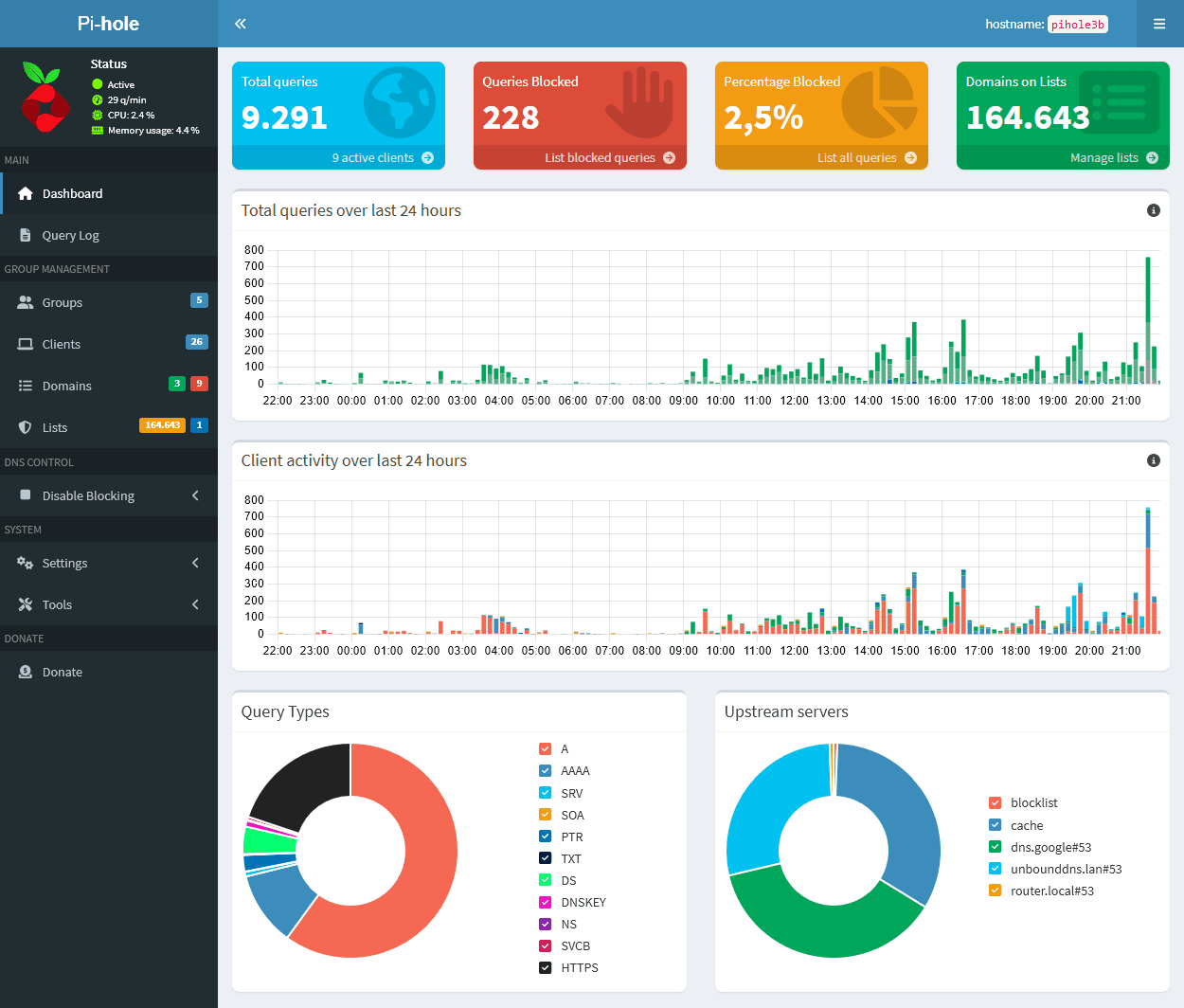
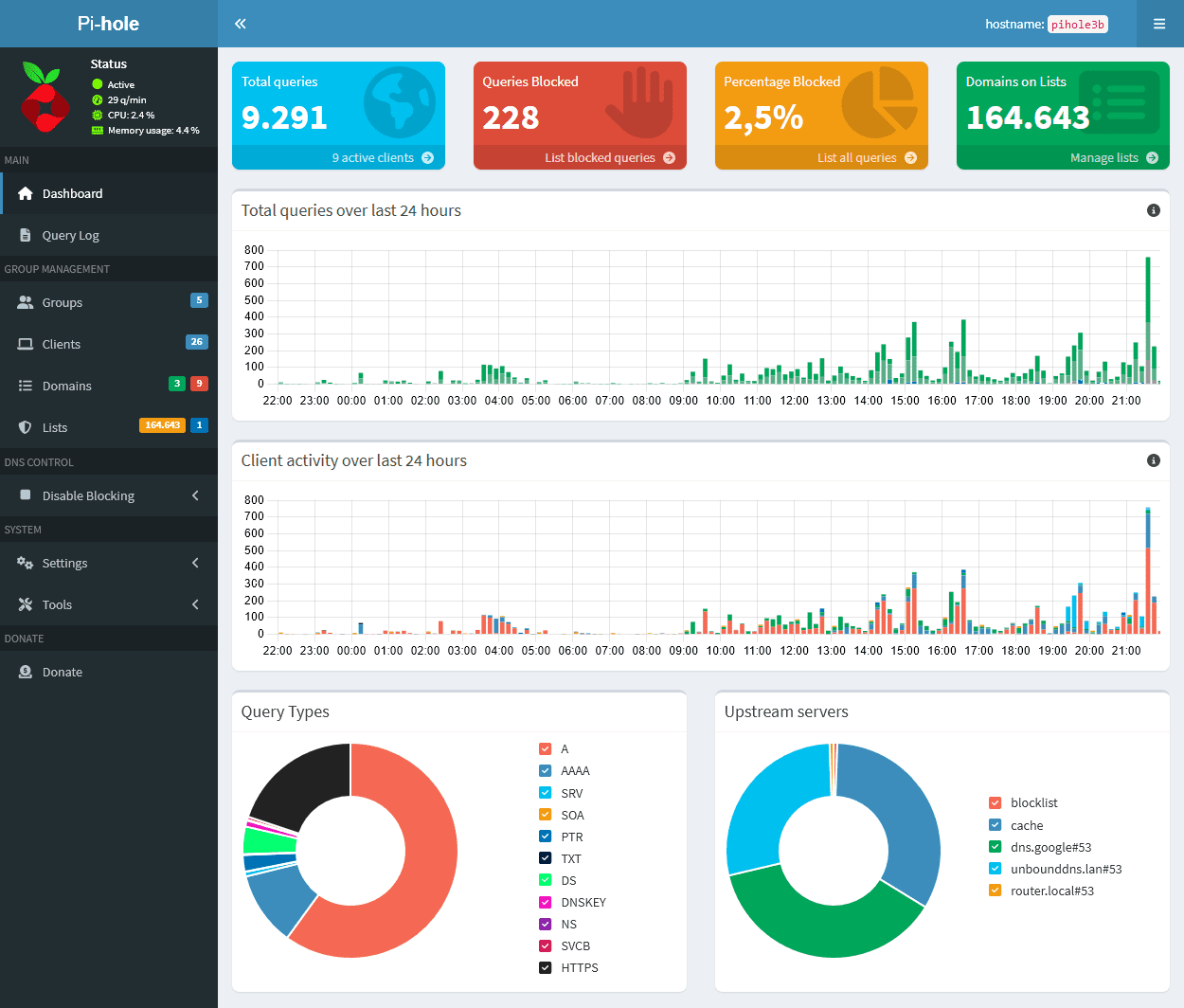
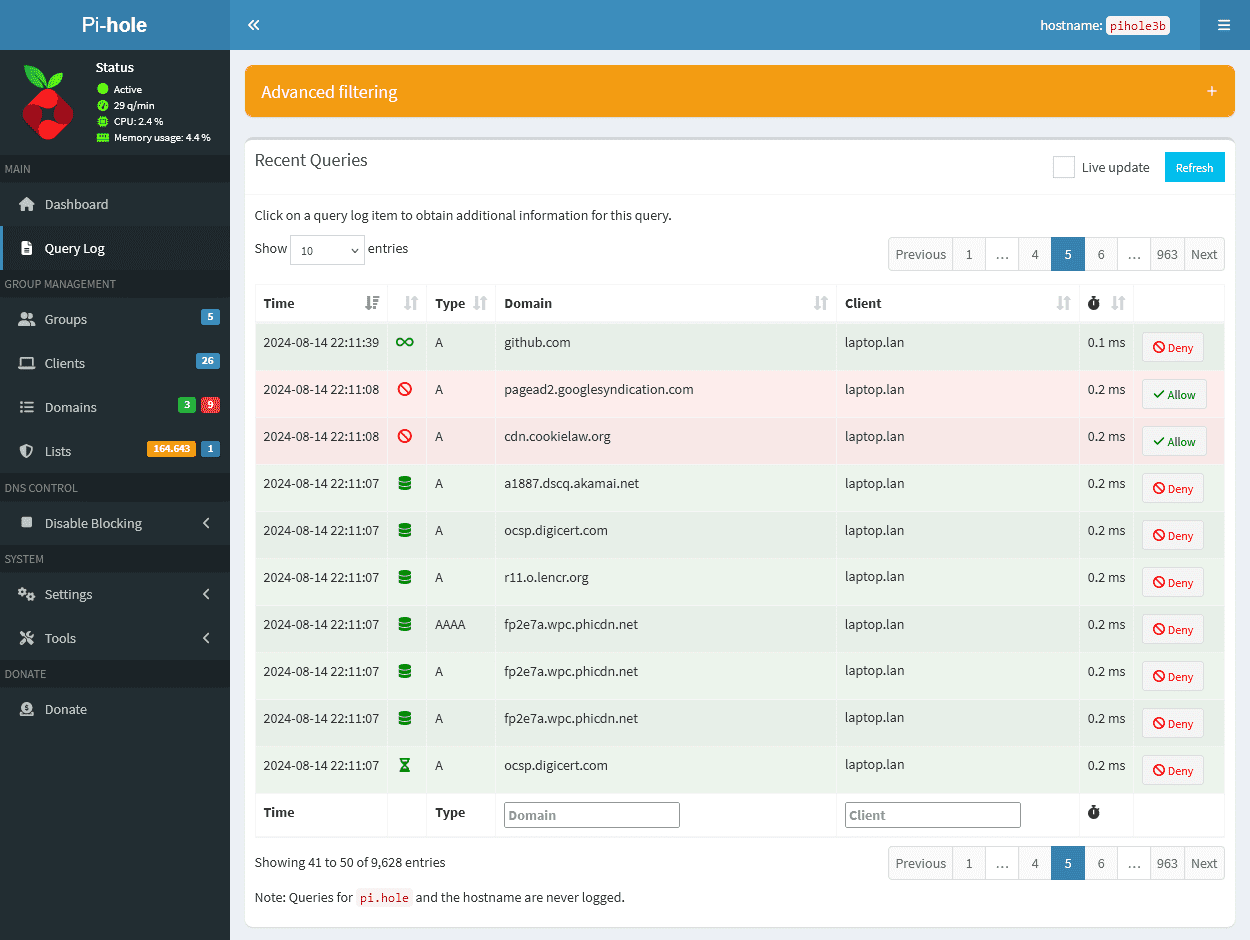
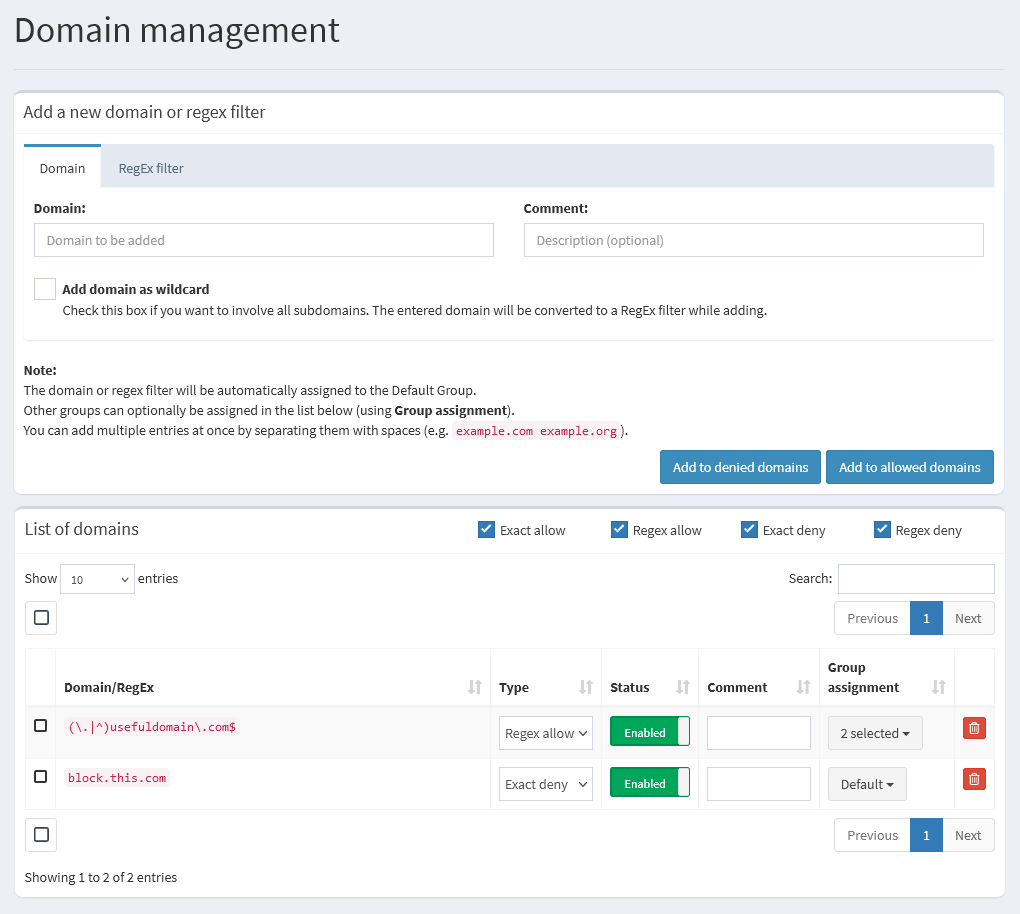
http://pi.hole/admin/: live query stats, blocked percentage, top permitted and blocked domains, and per-client breakdowns.pihole command exposes everything the dashboard does — allowlist, denylist, regex, gravity refresh, query log tail, debug bundle generation. Full automation friendly.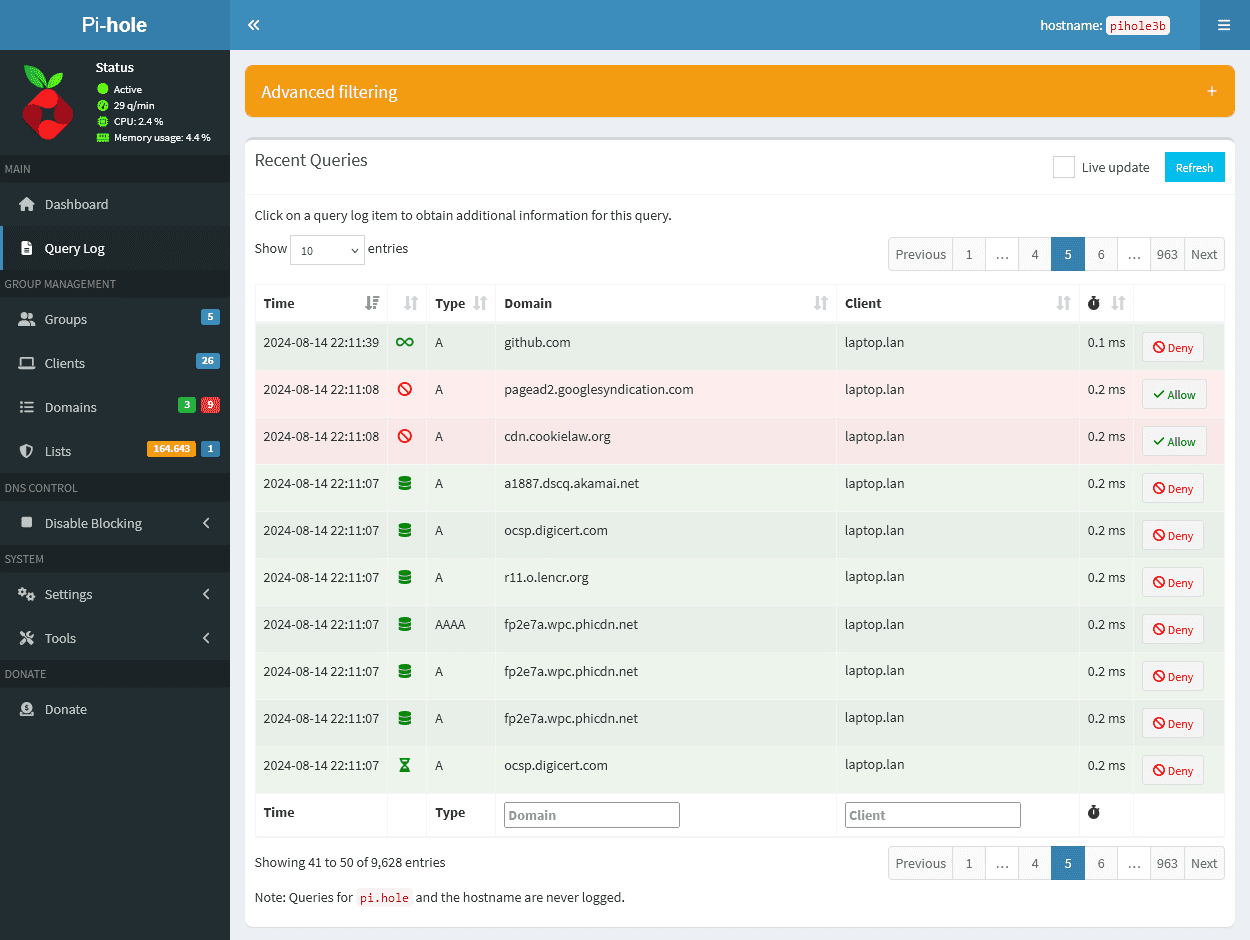
On r/pihole (over 250,000 subscribers) and r/selfhosted, the dominant sentiment is delight: people post weekly screenshots of "30% of my home traffic just disappeared" alongside Grafana dashboards plotting blocked queries. The most consistent praise centres on three points — it just works, it speeds up the network (DNS caching is a real performance win), and it makes the WAF spend less money on ad-supported app trials kids accidentally tap.
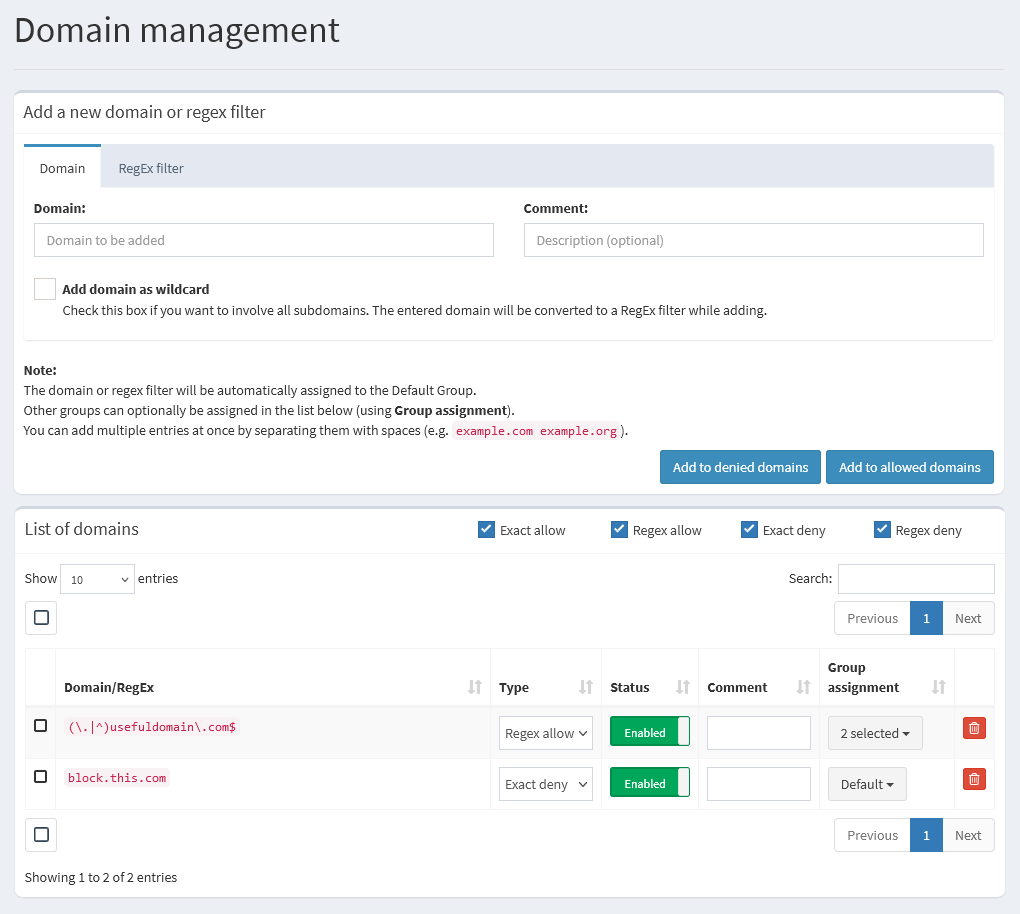
The honest complaints are also consistent. First, the YouTube ad arms race: Google serves YouTube ads from the same domain as the videos, so Pi-hole alone cannot block them — you still need SponsorBlock or an alternative client. Second, over-blocking: aggressive lists routinely break Microsoft Teams reactions, banking app push notifications, and login flows that rely on telemetry endpoints; users have to maintain a small allowlist. Third, the v6 upgrade from v5 in February 2025 broke a number of unofficial dashboards (PADD, Grafana exporters) until they caught up. On Hacker News, the technical critique is that Pi-hole is still a bash-installed system service rather than a true container-first product, although the official Docker image is excellent.
Pi-hole is 100% free, open source, and EUPL-1.2 licensed. There is no paid tier, no commercial edition, no telemetry, and no signup. The project is funded entirely by donations through pi-hole.net/donate, GitHub Sponsors, and a small set of affiliate links to Hetzner Cloud, Digital Ocean, and Stickermule.
| Plan | Price | Includes |
|---|---|---|
| Self-hosted (binary) | $0 | All features, unlimited queries, no telemetry — install via curl -sSL https://install.pi-hole.net | bash |
| Official Docker image | $0 | Multi-arch (amd64, arm64, arm/v7), ideal for Synology, Unraid, TrueNAS, and docker-compose |
| GitHub Sponsors (optional) | From $1/mo | Support the maintainers — no paywalled features |
Best for: Privacy-conscious households, home labbers, small offices, and anyone who already runs a Raspberry Pi, Synology NAS, or single-board Linux device. It is also the most cost-effective network upgrade a parent can make for a household full of ad-supported tablets and smart TVs.
Not ideal for: Users who do not control their router or DNS settings (e.g., university dorms, ISP-locked CPE without DNS override). YouTube-ad-only users will be disappointed because YouTube's ad-on-the-same-domain trick defeats DNS blocking. Enterprises that need per-user authentication, Active Directory integration, or centralised policy management should look at NextDNS or Control D instead.
Pros:
/api/docs — finally first-class for automationCons:
AdGuard Home is the closest direct competitor — a single-binary, Go-based DNS sinkhole with a built-in encrypted DNS server, parental controls, and a slightly more polished default UI. NextDNS is a hosted SaaS variant ($1.99/month) that gives you the same blocking capability without running a server, plus a global Anycast network and per-device profiles. Control D is the same pitch with a stronger enterprise story. For pure browser ad blocking, uBlock Origin remains complementary, not a replacement — run both.
Yes — emphatically. Pi-hole is the best return on a weekend afternoon you can earn in self-hosting. It blocks ads on every device, speeds up the perceived feel of your network, gives you a remarkable amount of visibility into what your devices actually talk to, and costs $0. The 94/100 rating reflects a mature, actively maintained, lovingly documented project with one significant practical limit — YouTube — and a honest set of operational trade-offs (single-point-of-failure DNS, occasional over-blocking) that any home-lab owner can manage. If you have ever sworn at an ad on a smart TV or watched your kid's iPad burn through cellular data on banner ads, install Pi-hole today.
Hosting & InfrastructureThe open-source Go web server with automatic HTTPS by default — no Certbot, no cron, no excuses.
 Hosting & Infrastructure
The free software media system — a 100% open-source, ad-free, self-hosted alternative to Plex and Emby.
 Hosting & Infrastructure
A fancy self-hosted monitoring tool with 86k GitHub stars, 13 monitor types and 90+ alert integrations.
 Hosting & Infrastructure
AI-native observability and incident management — one bill for logs, metrics, uptime, and on-call, 30x cheaper than Datadog
ServiceNow and Accenture Launch Forward Deployed Engineering Program to Scale Agentic AI in the Enterprise (May 6, 2026)
At Knowledge 2026, ServiceNow and Accenture announced a joint forward deployed engineering program that drops co-located engineer pods into customer environments to ship agentic AI workflows natively on the ServiceNow AI Platform — with access to 300+ pre-built agent skills and the AI Control Tower as the governance backbone.
May 7, 2026
ReFiBuy Raises $13.6M Seed to Help Brands Get Recommended by AI Shopping Agents (May 5, 2026)
ReFiBuy, the Raleigh-based agentic commerce platform from ChannelAdvisor founder Scot Wingo, closed an oversubscribed $13.6M seed led by NewRoad Capital Partners on May 5, 2026 — betting that the next billion-dollar e-commerce moat is being chosen by ChatGPT, Claude and Perplexity.
May 7, 2026
OpenAI Replaces ChatGPT's Default Model With GPT-5.5 Instant — 52.5% Fewer Hallucinations, 30% Shorter Answers (May 5, 2026)
OpenAI on May 5 swapped GPT-5.3 Instant for the new GPT-5.5 Instant as ChatGPT's default model, claiming 52.5% fewer hallucinated claims on high-stakes prompts and 30% more concise answers. The model also rolls into the API as chat-latest and adds personalization from Gmail and past chats for Plus and Pro web users.
May 7, 2026
Is this product worth it?
Built With
Compare with other tools
Open Comparison Tool →