 AI Tools
Aider
AI pair programming in your terminal—free, open-source, any LLM
OpenHands (formerly OpenDevin) is an open-source autonomous AI software engineer with a top-of-leaderboard SWE-bench score, a free cloud tier, and a fully MIT-licensed core. The right pick for engineers who want a transparent, model-agnostic alternative to Devin and Cursor agents.
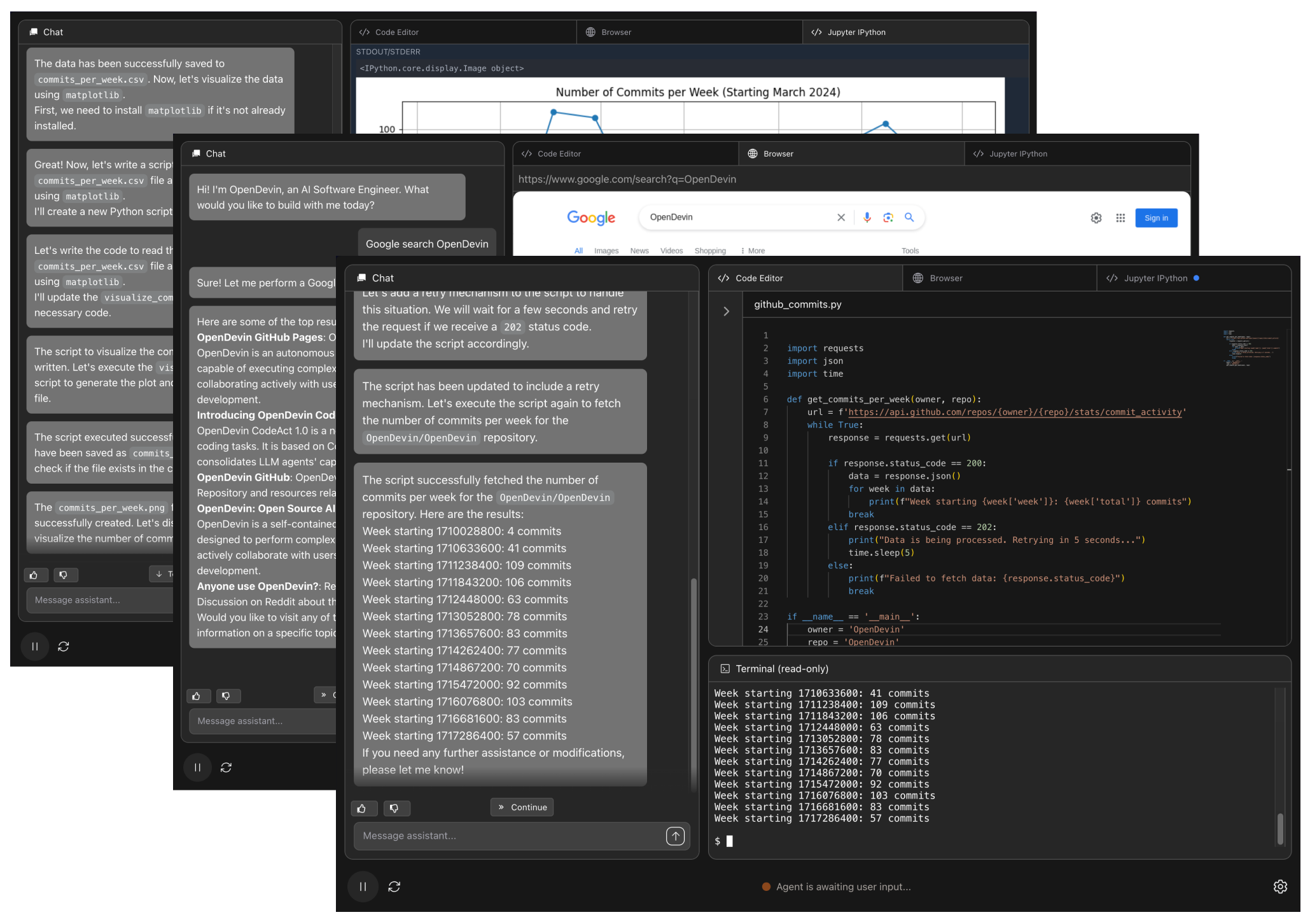
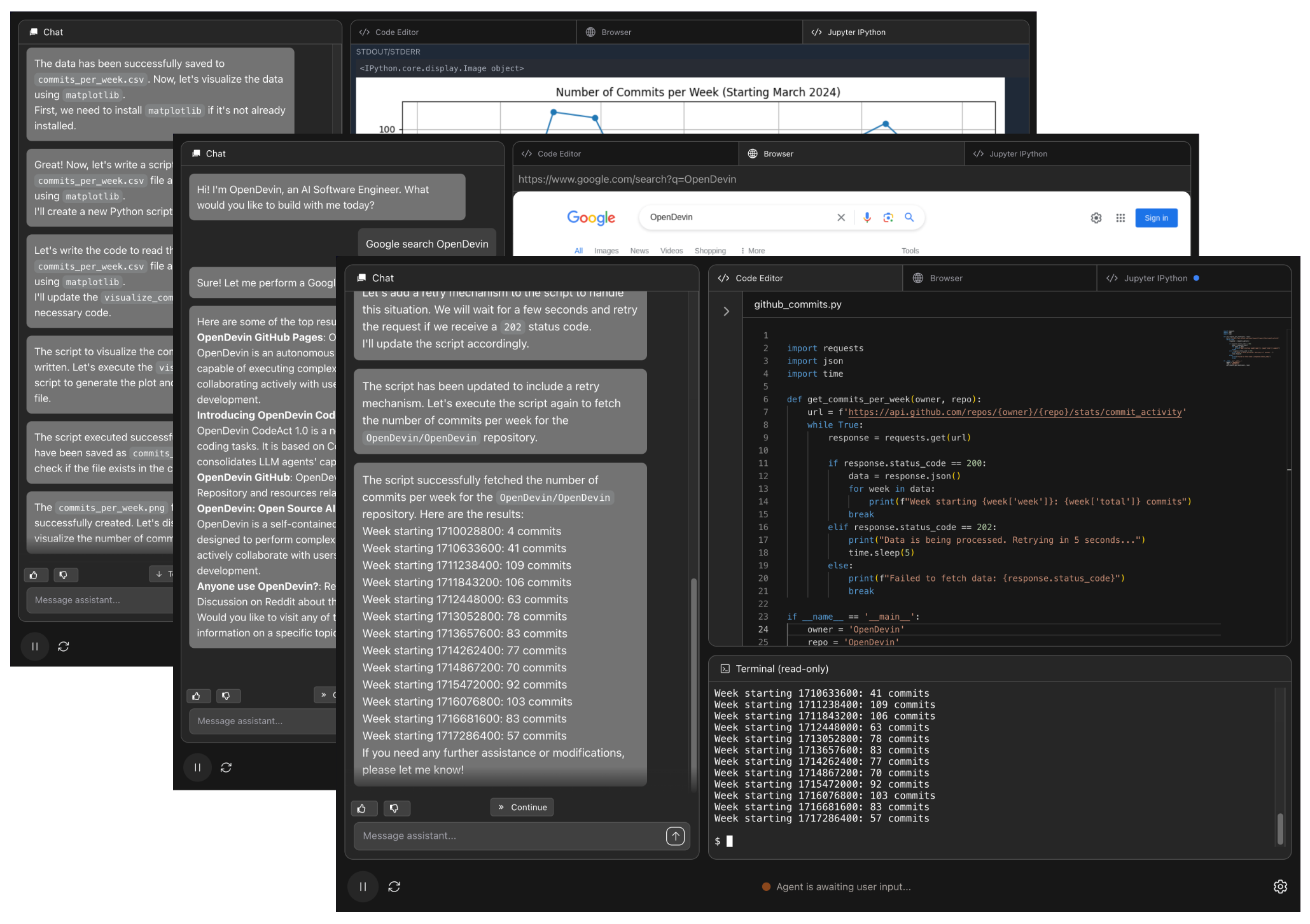
OpenHands is an open-source AI software engineer that runs autonomous coding agents in real sandboxed environments — modifying code, executing commands, browsing the web, and shipping pull requests against your GitHub or GitLab repos. We rate it 87/100 — the strongest open alternative to Devin or Cursor agents if you can tolerate Docker setup and want full control over the model and runtime.
OpenHands is built by All Hands AI, a startup co-founded by Carnegie Mellon professor Graham Neubig and engineer Robert Brennan. The project began life as OpenDevin — a community-driven response to Cognition Labs' closed-source Devin demo — and rebranded to OpenHands in late 2024 once All Hands AI was incorporated. The team has since raised an $18.8M Series A, and the GitHub repo at OpenHands/OpenHands has crossed 65,000 stars.
The product is unusually broad for an open-source project. There is a Python Software Agent SDK for embedding agents in your own systems, an OpenHands CLI that competes with Claude Code and Codex CLI, a Local GUI Docker image you can run on your laptop, an OpenHands Cloud hosted SaaS, and a self-hostable Enterprise tier that ships into your own VPC via Kubernetes. The core is fully MIT-licensed; only the enterprise/ directory is source-available rather than open source.
@openhands on a GitHub issue and the cloud agent will pick it up, write a fix in a feature branch, and open a PR for review.openhands-sdk library lets you define agents in code, register custom tools, and run thousands of them in parallel — the same engine that powers the CLI and Cloud.Sentiment across Hacker News, Reddit's r/LocalLLaMA, and the project's own Slack is broadly positive but pragmatic. The most upvoted Hacker News thread on the recent $18.8M raise praised the team for keeping the core MIT-licensed and for shipping a real CLI rather than only a demo. Reviewers on the OpenHands subreddit and Vibe Coding consistently call out the same strength — the agent actually runs your tests and iterates until they pass, instead of guessing like a chat-only assistant.
The recurring complaints are equally consistent. Docker-in-Docker is the biggest friction point: corporate laptops with restricted Docker setups often need an hour of troubleshooting before the first run. Token spend is the second — long autonomous tasks routinely burn $0.15–$0.60 per task on Claude Sonnet 4.5, and the agent will occasionally loop on a hard issue. A March 2026 GitHub issue (#12377) flagged the Microagent Management UI as outdated relative to the new AGENTS.md conventions, and the team has acknowledged it.
The core software is free under the MIT license. OpenHands Cloud and Enterprise add hosted runtime, integrations, and team features:
| Plan | Price | Includes |
|---|---|---|
| Self-hosted (CLI / SDK / Local GUI) | $0 | Full agent capabilities, MIT license, bring your own LLM keys, unlimited tasks |
| Cloud Free | $0 | 2,000 free completions per month with the Minimax model, GitHub + GitLab login |
| Cloud Pro | $20 / month | Bring your own LLM keys, included runtime compute, priority queues |
| Enterprise | Contact sales | Self-hosted in your VPC via Kubernetes, RBAC, SSO, dedicated support |
If you bring your own model API keys, the only marginal cost is whatever the underlying LLM provider charges. Local models via Ollama are effectively free.
Best for: Backend and platform engineers who want an autonomous coding agent they can audit, self-host, and point at private repos. Especially valuable for teams with regulatory constraints (healthcare, finance, government) that cannot send code to a closed SaaS like Devin or Cursor agents. Also a strong fit for solo developers who want to swap models freely between Claude, GPT, DeepSeek, and local Llamas.
Not ideal for: Non-technical users — the setup assumes Docker, Git, and an LLM API key. Designers or PMs looking for a chat-style assistant should use v0 by Vercel or Lovable instead.
Pros:
Cons:
The closest closed-source competitor is Devin from Cognition Labs — better polish, but $20+/month per seat and no self-host option. Aider is the leading terminal-only AI pair programmer, simpler than OpenHands but without a sandbox or browser. Continue is a strong IDE-embedded option, while SWE-agent (from Princeton) is a research-grade alternative that pioneered many of the agent-computer interface patterns OpenHands now uses.
Yes, with caveats. If you are an engineer comfortable with Docker and an LLM key, OpenHands is the most credible open-source autonomous coding agent on the market today. The combination of a top-3 SWE-bench score, an MIT license on the core, and the ability to point it at your own repos and infrastructure is something no closed competitor matches. Less technical users will find Devin or Cursor's agent mode faster to set up — but they will pay for that polish in lock-in and per-seat fees. We score it 87/100, with most of the lost points going to Docker friction and the variable-cost token spend.
enterprise/ directory is source-available under a commercial license.ServiceNow and Accenture Launch Forward Deployed Engineering Program to Scale Agentic AI in the Enterprise (May 6, 2026)
At Knowledge 2026, ServiceNow and Accenture announced a joint forward deployed engineering program that drops co-located engineer pods into customer environments to ship agentic AI workflows natively on the ServiceNow AI Platform — with access to 300+ pre-built agent skills and the AI Control Tower as the governance backbone.
May 7, 2026
ReFiBuy Raises $13.6M Seed to Help Brands Get Recommended by AI Shopping Agents (May 5, 2026)
ReFiBuy, the Raleigh-based agentic commerce platform from ChannelAdvisor founder Scot Wingo, closed an oversubscribed $13.6M seed led by NewRoad Capital Partners on May 5, 2026 — betting that the next billion-dollar e-commerce moat is being chosen by ChatGPT, Claude and Perplexity.
May 7, 2026
OpenAI Replaces ChatGPT's Default Model With GPT-5.5 Instant — 52.5% Fewer Hallucinations, 30% Shorter Answers (May 5, 2026)
OpenAI on May 5 swapped GPT-5.3 Instant for the new GPT-5.5 Instant as ChatGPT's default model, claiming 52.5% fewer hallucinated claims on high-stakes prompts and 30% more concise answers. The model also rolls into the API as chat-latest and adds personalization from Gmail and past chats for Plus and Pro web users.
May 7, 2026
Is this product worth it?
Built With
Compare with other tools
Open Comparison Tool →