
 Developer Tools
Templ
Type-safe HTML templating language for Go with compile-time safety
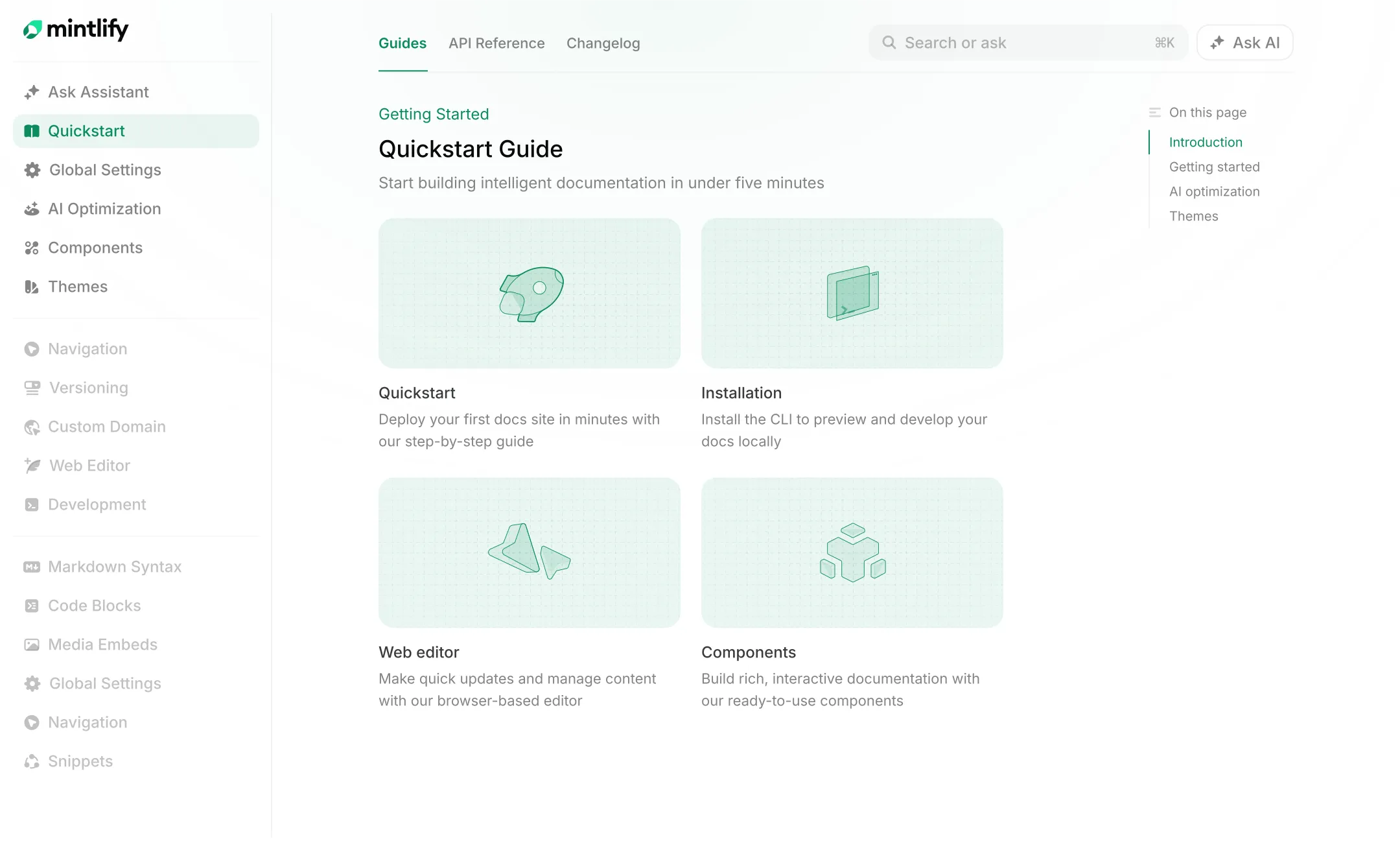
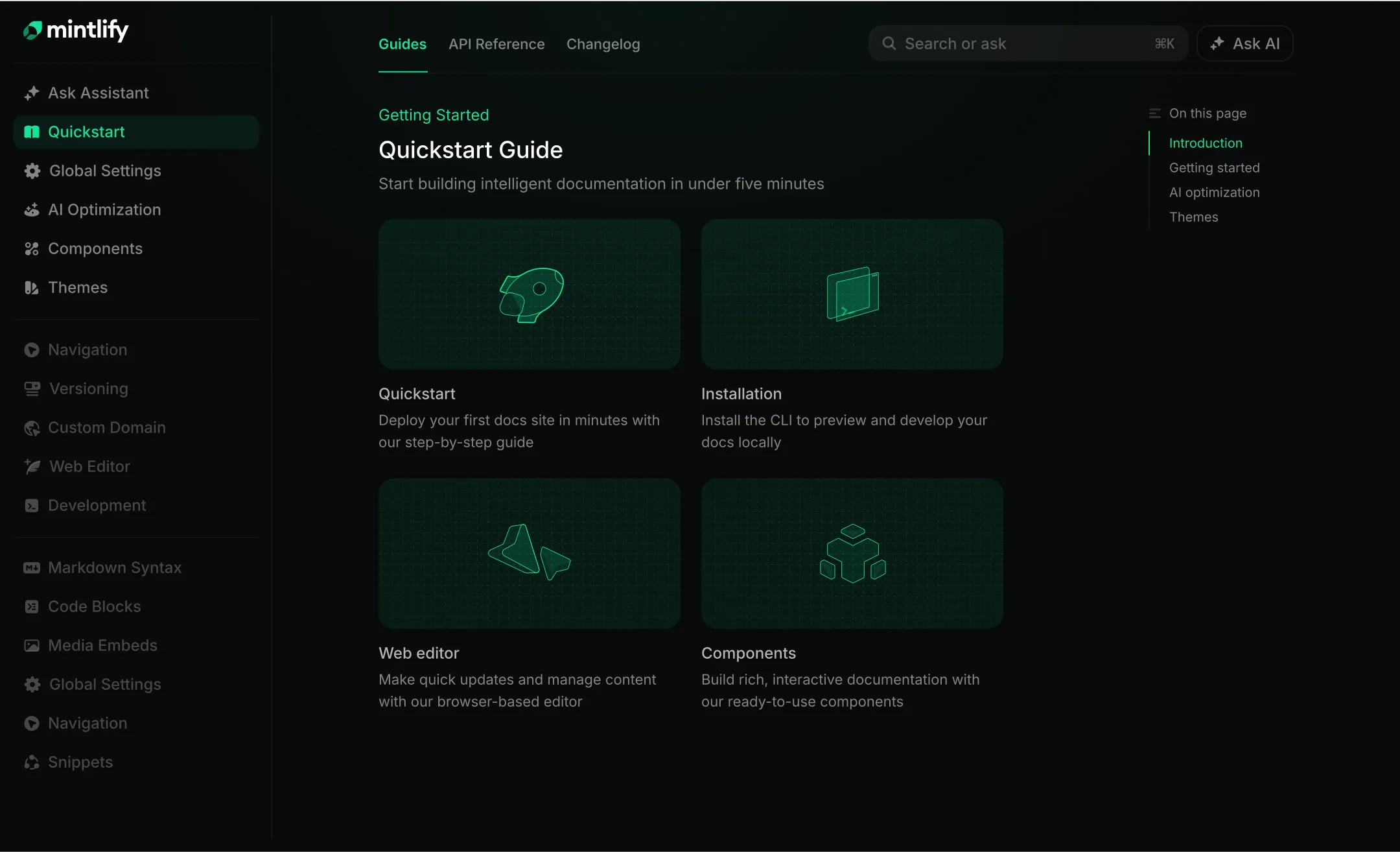
Mintlify is a documentation platform built for modern development teams, combining a beautiful editor with AI-powered automation to keep docs accurate and current. It's the go-to choice for developer-facing documentation at companies like Anthropic, HubSpot, and Coinbase.
Mintlify is a documentation platform purpose-built for software teams, combining a polished, developer-friendly editor with AI-driven automation that keeps your docs synchronized with your codebase. We rate it 82/100 — an excellent choice for developer-focused documentation teams willing to pay for a premium experience.
Mintlify was founded by Han Wang and Hahnbee Lee, launched on as a Y Combinator W22 company. The platform has grown from a documentation builder into what it calls an "intelligent knowledge platform" — one that understands your codebase context and helps both your human readers and AI agents find the right information quickly.
The core insight behind Mintlify is that documentation debt is a maintenance problem, not a writing problem. Engineers write great docs at launch, then the codebase evolves while the docs stay frozen. Mintlify addresses this with an AI agent that monitors code changes and surfaces stale documentation before it causes confusion.
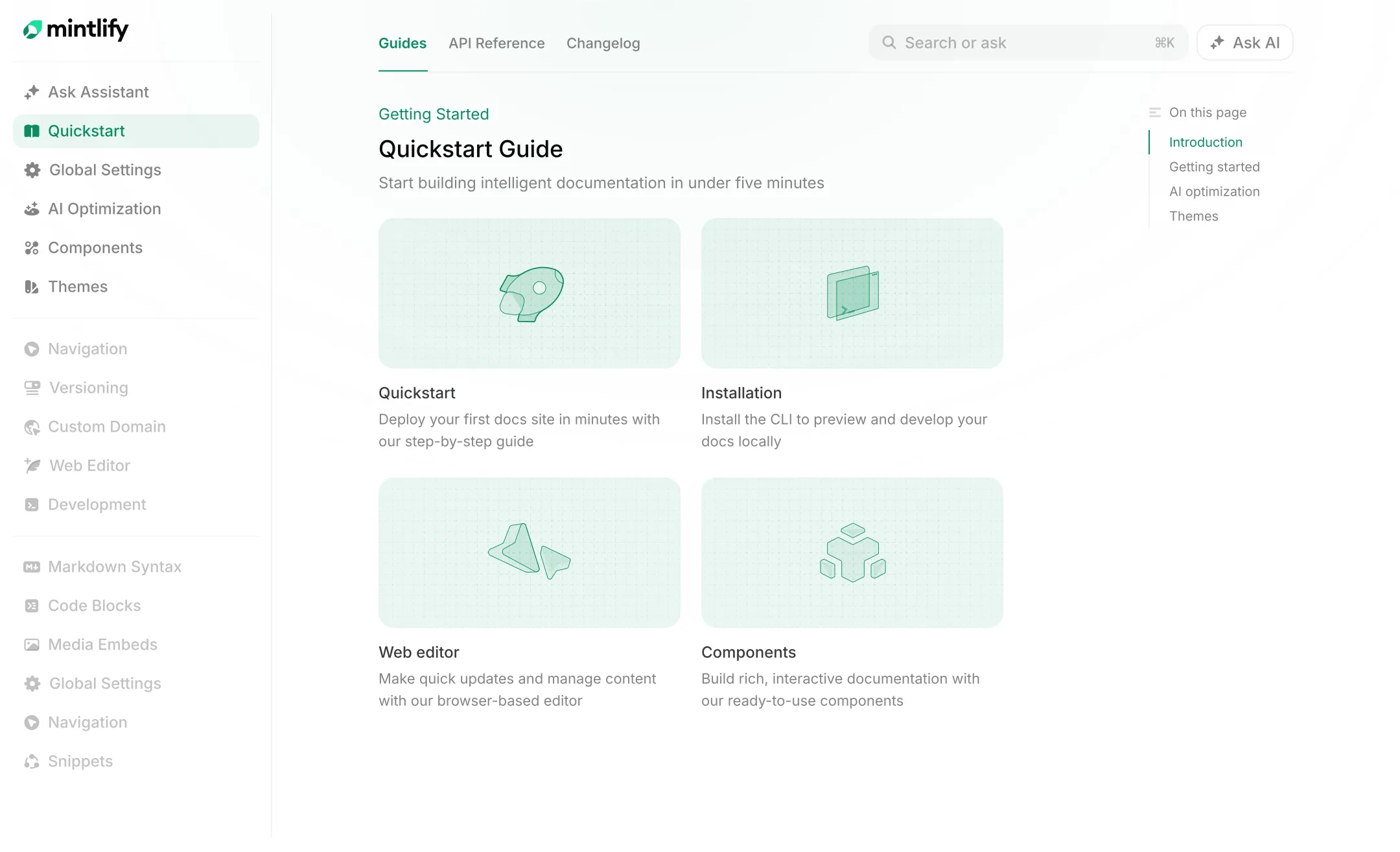
llms.txt file and an MCP (Model Context Protocol) server endpoint for your docs, making your knowledge base natively accessible to AI coding assistants like Cursor and Claude Code.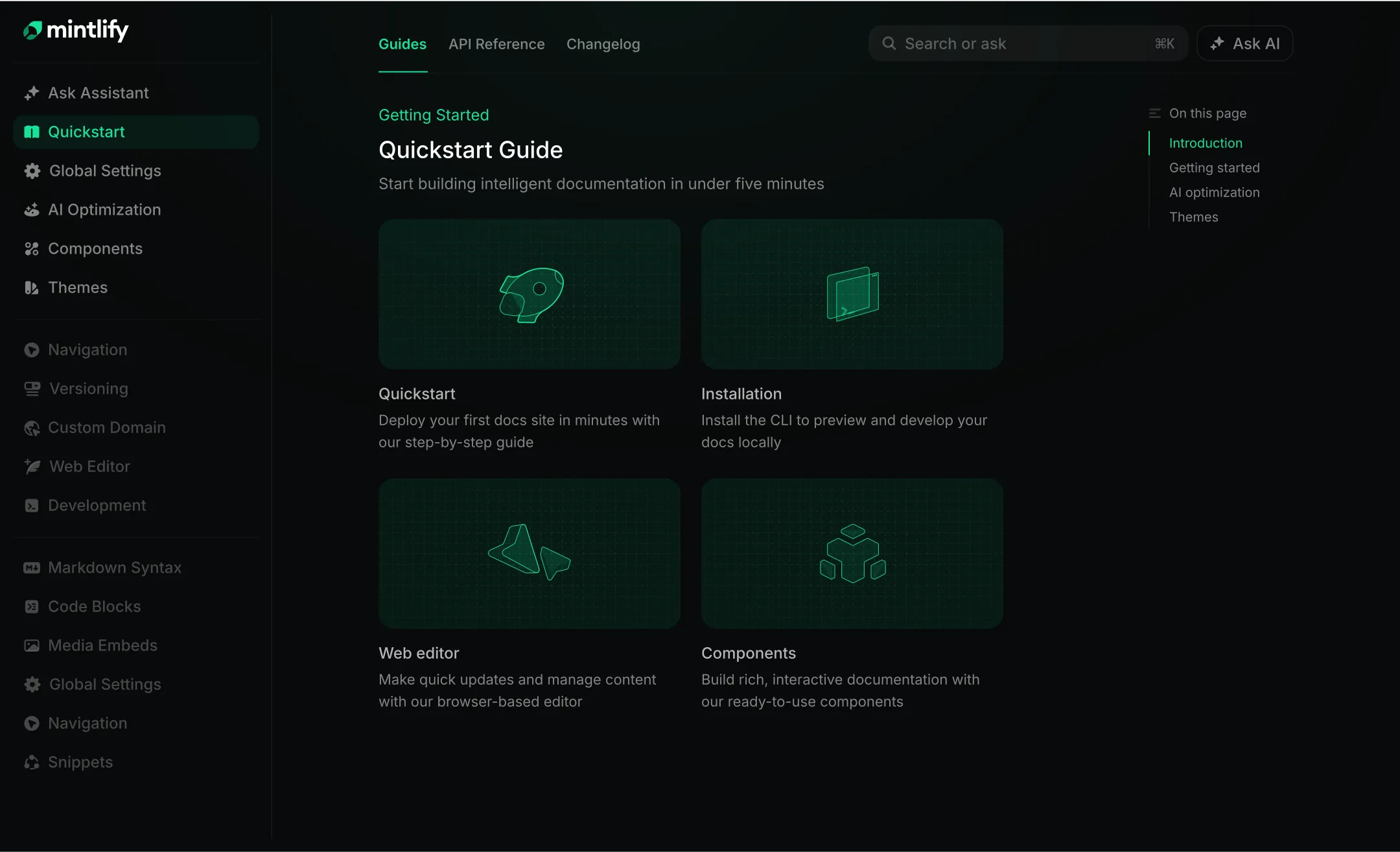
On Product Hunt, Mintlify received 433 upvotes on launch day in June 2022 (ranked #1 daily) and 388 upvotes for the Assistant launch in 2025, maintaining a perfect 5.0 average across 70 reviews. The most frequently praised attribute in reviews is "beautiful design" (23 mentions), followed by "easy to use" (14 mentions) and "developer-friendly" (11 mentions). On Hacker News, the original YC launch thread (149 points, 55 comments) was largely positive, with users praising the clean output quality and GitHub-native workflow. The main technical critique raised on HN and in community channels is the $250/month Pro jump from the free tier — a significant leap for solo developers or small teams who need even one team collaboration feature. A separate HN thread from 2024 disclosed a GitHub token leak incident, which Mintlify addressed transparently, but it remains a footnote in the product's security history.
Mintlify uses a three-tier model. The free Hobby plan is genuinely functional for solo developers, but teams will almost always need Pro.
| Plan | Price | Key Inclusions |
|---|---|---|
| Hobby | $0/month | Full platform, custom domain, web editor, API playground, LLM optimizations — for 1 user |
| Pro | $250/month | Everything in Hobby + team invitations, AI Assistant (250 msgs/mo), preview deployments, password protection; 14-day free trial, no credit card required; extra seats at $20/seat/month |
| Enterprise | Custom | Everything in Pro + custom authentication, 99.99% uptime SLA, user permissions, SSO login, dedicated support SLA |
Best for: Developer-tools companies, API-first startups, and internal engineering teams who ship external or internal documentation as a first-class product. If your docs are a growth surface — the way Anthropic's, HubSpot's, or Coinbase's are — Mintlify's polish and AI tooling justify the Pro cost.
Not ideal for: Bootstrapped solo developers who need team features but can't absorb the $250/month price jump, or teams whose documentation is purely internal wikis (where Notion, Confluence, or Outline may be a better fit). If you're already comfortable with Docusaurus or Nextra and have engineering bandwidth to self-host, you can replicate most of the visual output for free.
Pros:
Cons:
GitBook offers a similar hosted documentation experience with stronger real-time collaboration and a lower entry-level team pricing — though its visual output is less polished than Mintlify's. Docusaurus is the self-hosted open-source alternative from Meta; it requires React knowledge and hosting setup but gives teams full control with zero ongoing cost. Readme.io is the incumbent for API documentation specifically, with more mature API explorer tooling but a dated design compared to Mintlify.
For developer-tools companies and API-first products where documentation quality directly affects developer trust and conversion, Mintlify is the best-in-class choice at 82/100. The AI-native features (MCP server generation, LLMs.txt, agentic documentation updates) are genuinely ahead of the competition in 2026. The one significant barrier is pricing: the free tier is generous for solo work, but teams will face an all-or-nothing $250/month decision. If your documentation is a product, pay it. If it's an afterthought, look at Docusaurus or GitBook first.
llms.txt file for your documentation and an MCP (Model Context Protocol) server endpoint, making your docs natively queryable by AI coding assistants like Cursor, Claude Code, and GitHub Copilot.Developer ToolsType-safe HTML templating language for Go with compile-time safety
 Developer Tools
Open-source API key management and rate limiting platform for modern developers
 Developer Tools
Open-source low-code platform for building internal business applications
 Developer Tools
Git-friendly open-source API client for REST, GraphQL, and gRPC
ServiceNow and Accenture Launch Forward Deployed Engineering Program to Scale Agentic AI in the Enterprise (May 6, 2026)
At Knowledge 2026, ServiceNow and Accenture announced a joint forward deployed engineering program that drops co-located engineer pods into customer environments to ship agentic AI workflows natively on the ServiceNow AI Platform — with access to 300+ pre-built agent skills and the AI Control Tower as the governance backbone.
May 7, 2026
ReFiBuy Raises $13.6M Seed to Help Brands Get Recommended by AI Shopping Agents (May 5, 2026)
ReFiBuy, the Raleigh-based agentic commerce platform from ChannelAdvisor founder Scot Wingo, closed an oversubscribed $13.6M seed led by NewRoad Capital Partners on May 5, 2026 — betting that the next billion-dollar e-commerce moat is being chosen by ChatGPT, Claude and Perplexity.
May 7, 2026
OpenAI Replaces ChatGPT's Default Model With GPT-5.5 Instant — 52.5% Fewer Hallucinations, 30% Shorter Answers (May 5, 2026)
OpenAI on May 5 swapped GPT-5.3 Instant for the new GPT-5.5 Instant as ChatGPT's default model, claiming 52.5% fewer hallucinated claims on high-stakes prompts and 30% more concise answers. The model also rolls into the API as chat-latest and adds personalization from Gmail and past chats for Plus and Pro web users.
May 7, 2026
Is this product worth it?
Built With
Compare with other tools
Open Comparison Tool →