 Productivity
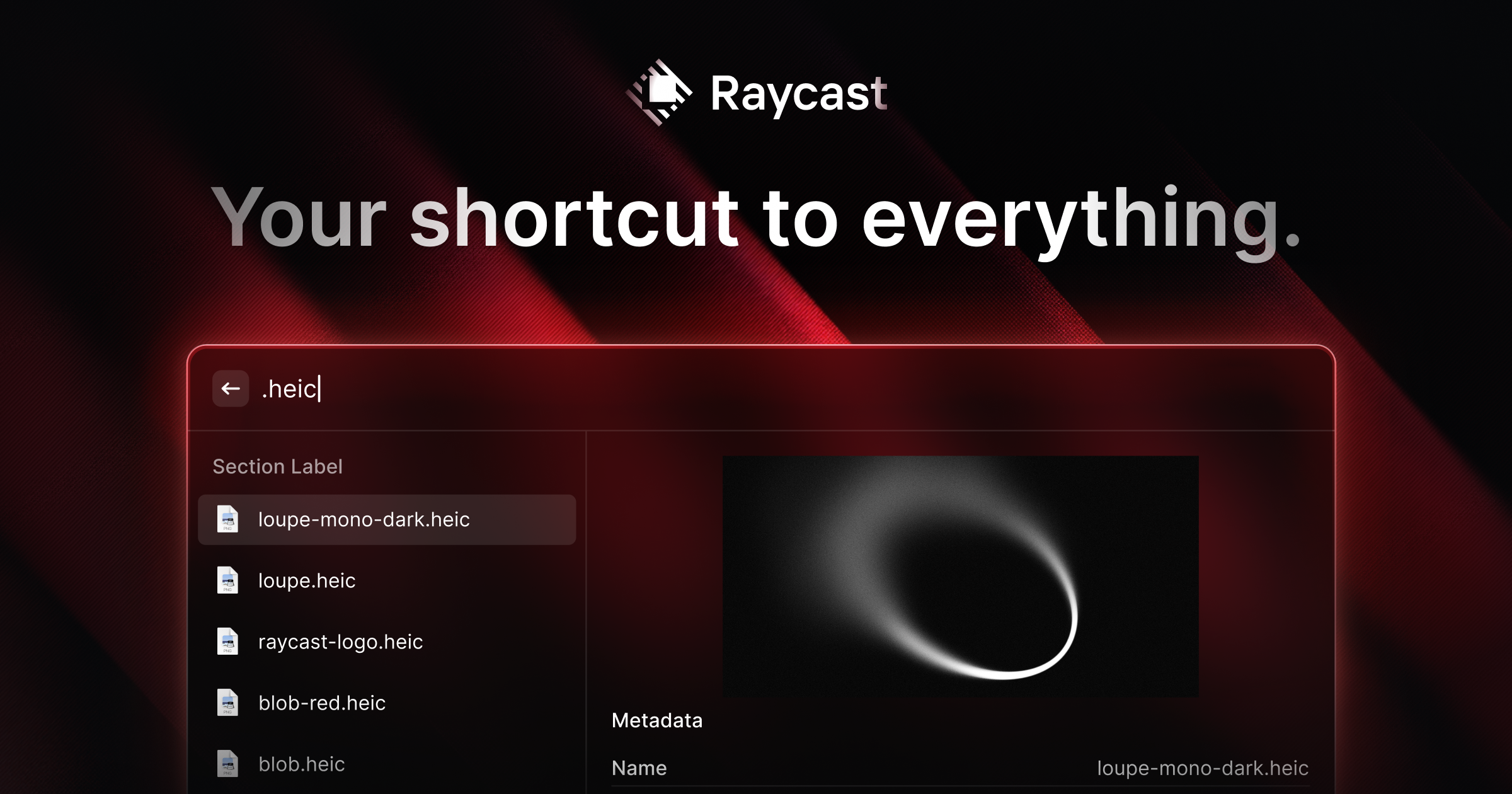
Raycast
Powerful macOS launcher and productivity platform — 7.3K GitHub stars for extensions
Memos is a free, MIT-licensed self-hosted note-taking app that runs as a single ~20MB Go binary and gives you a Twitter-style Markdown timeline you fully own. It is the lightest serious option for capture-first journaling and dev TILs.
Memos is an open-source, self-hosted note-taking tool built around a Twitter-like timeline for fast Markdown capture, shipped as a single ~20MB Go binary. We rate it 83/100 — the best self-hosted choice for anyone who wants quick, dated, fully-owned micro-notes without the weight of Notion, Obsidian, or Joplin.
Memos was started in and is now maintained by the usememos organization. The main usememos/memos repo has crossed 59,100+ stars and 4,300+ forks, making it one of the most popular self-hosted productivity projects on GitHub. It is MIT-licensed and funded through GitHub Sponsors plus a small set of corporate sponsors (Warp, TestMu AI, SSD Nodes).
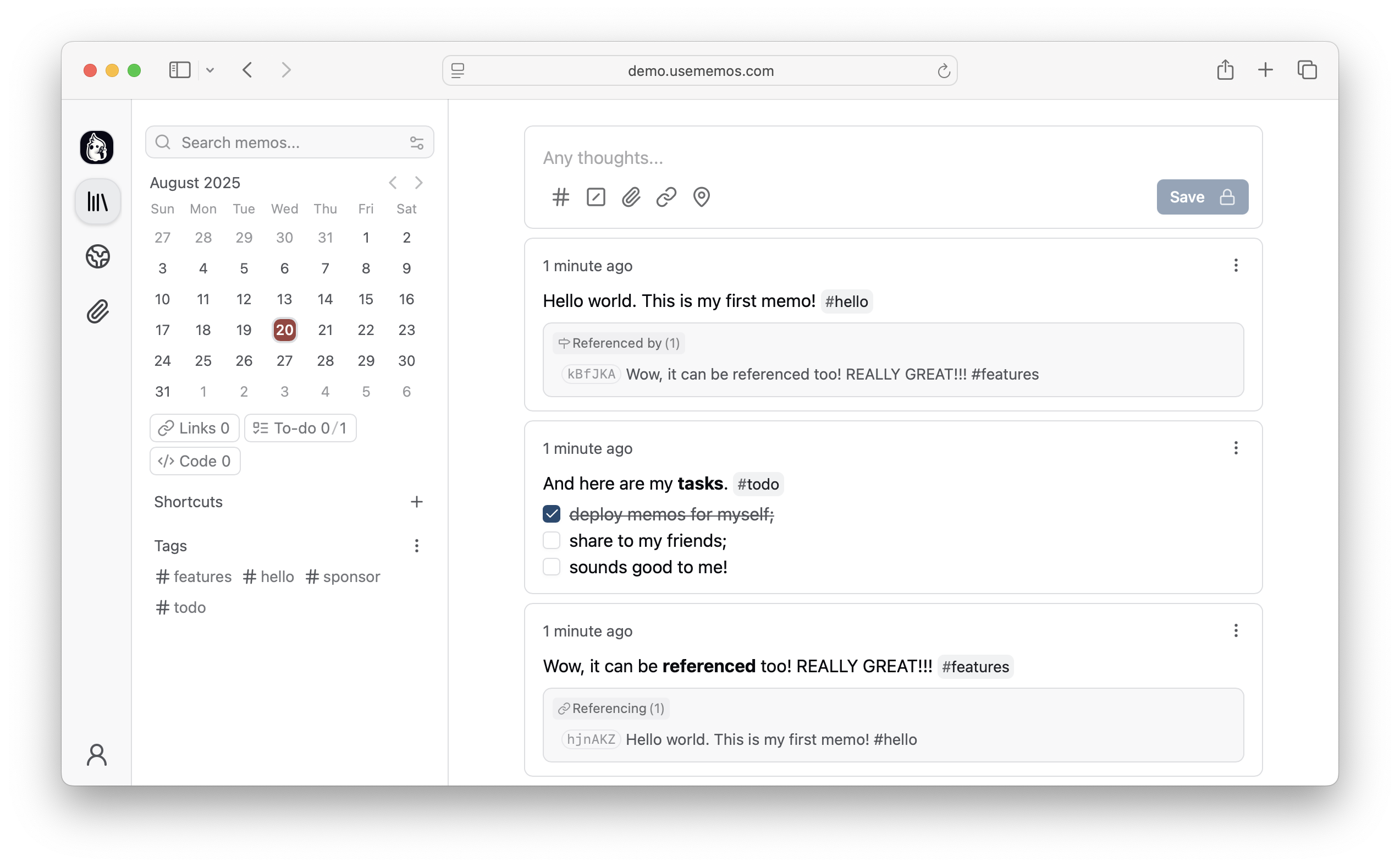
Where Notion, Obsidian, and Joplin assume you want folders and workspaces, Memos assumes the opposite: every note is a short Markdown post on a chronological timeline, tagged with hashtags and findable by full-text search. The result is a personal microblog — closer to a Twitter feed for one person than to a wiki — running on a server you control.
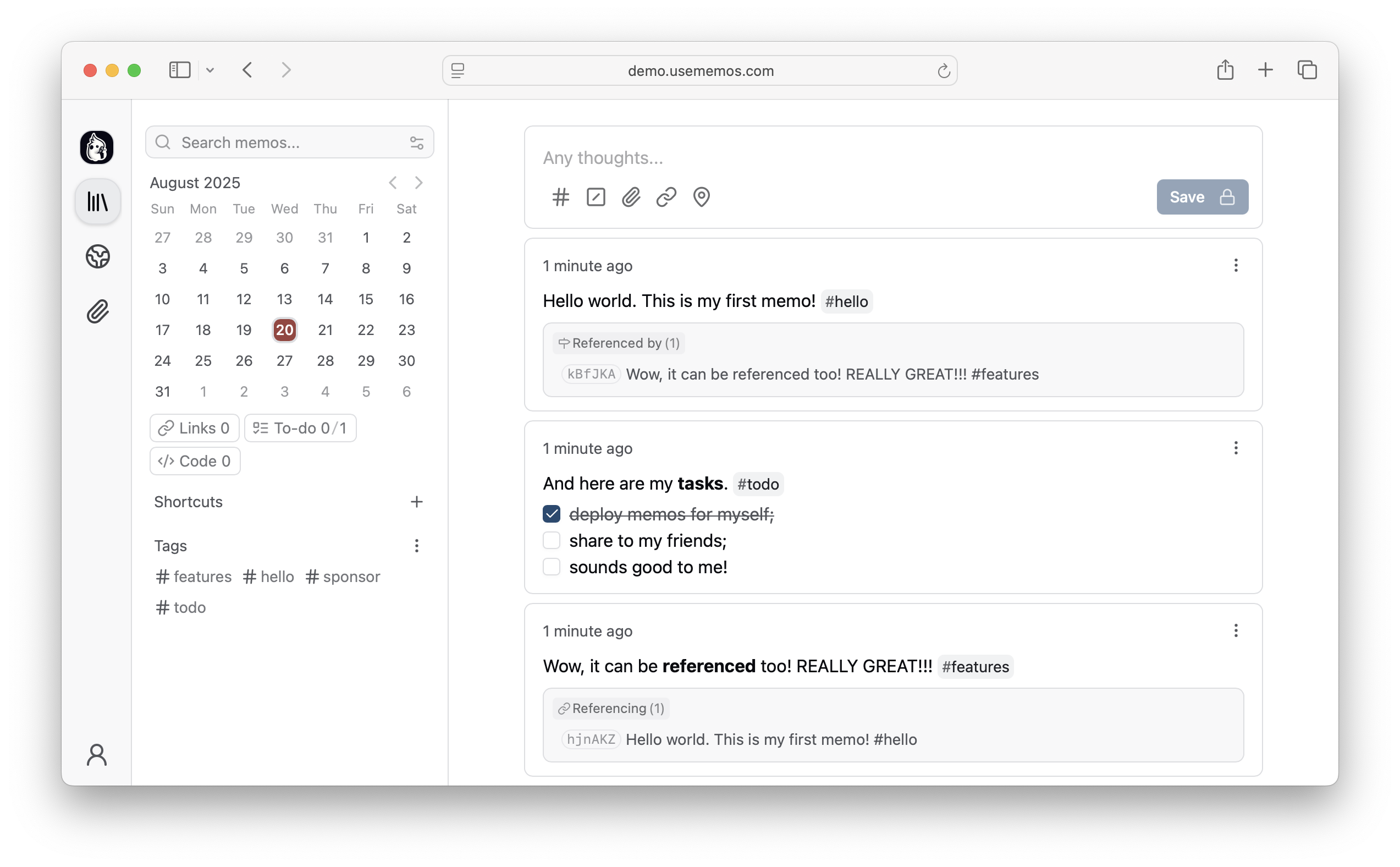
neosmemo/memos:stable); one docker run on port 5230 and you are online with SQLite by default.#tag, memo-to-memo references, instant full-text search, pinned memos, and visibility scopes (private, workspace, public).
On Reddit's r/selfhosted, Memos is one of the most consistently recommended apps when someone asks for a "self-hosted Twitter-style note-taker" or a lightweight Joplin alternative — top threads call out the small footprint, the speed of capture, and that it just works inside a single Docker container. The original Show HN thread picked up over 300 points, with commenters praising it as a refreshing alternative to bloated knowledge bases.
Independent reviewers echo the same picture. XDA-Developers called Memos their "new favorite" way to take notes after replacing Notion and Obsidian on a homelab; Peter Ries' blog and the xTom comparison of self-hosted note apps highlight how lightweight it feels next to Trilium or Outline. The recurring criticisms are equally consistent: Memos is intentionally narrow — there are no folders, no nested pages, and no graph view — so it is a poor fit for a multi-thousand-note second brain. A handful of GitHub issues also note that point releases occasionally ship breaking API changes that affect third-party clients, so production deployments should pin a specific version (e.g. neosmemo/memos:0.27).
Memos is completely free and open source. There is no paid plan, no cloud-hosted SaaS by the usememos team, and no telemetry. You only pay for the server you run it on.
| Plan | Price | Includes |
|---|---|---|
| Self-hosted (only plan) | $0 forever | Unlimited memos and users, all features, full source under the MIT license. You provide the server. |
Optional running cost: a tiny VPS from a provider like SSD Nodes or Hetzner can host Memos comfortably from $3–5/month. There is no official Memos Cloud — for managed hosting the community usually recommends Coolify, Railway, or PikaPods.
Best for: Self-hosters, indie developers, and privacy-minded users who want a Twitter-style personal log on their own infrastructure. Particularly strong for daily journaling, link/quote capture, dev TILs, reading lists, and dated micro-updates inside a small team.
Not ideal for: Teams that need wiki-style nested pages and rich permissions (use Outline or Notion), users who want a desktop graph view (use Obsidian or Logseq), or anyone unwilling to run a server — there is no managed hosted option.
Pros:
Cons:
Yes — if you want a self-hosted, capture-first note app and you are comfortable running a Docker container, Memos is currently the best-in-class option for that exact niche. We rate it 83/100: it loses points for the deliberately narrow data model and the lack of an official mobile app, but it earns its score through a tight scope, an aggressive feature pace, an excellent API, and a level of polish unusual for a free MIT-licensed project. If you want a Twitter for one and you do not want a SaaS to ever read your notes, install Memos.
ServiceNow and Accenture Launch Forward Deployed Engineering Program to Scale Agentic AI in the Enterprise (May 6, 2026)
At Knowledge 2026, ServiceNow and Accenture announced a joint forward deployed engineering program that drops co-located engineer pods into customer environments to ship agentic AI workflows natively on the ServiceNow AI Platform — with access to 300+ pre-built agent skills and the AI Control Tower as the governance backbone.
May 7, 2026
ReFiBuy Raises $13.6M Seed to Help Brands Get Recommended by AI Shopping Agents (May 5, 2026)
ReFiBuy, the Raleigh-based agentic commerce platform from ChannelAdvisor founder Scot Wingo, closed an oversubscribed $13.6M seed led by NewRoad Capital Partners on May 5, 2026 — betting that the next billion-dollar e-commerce moat is being chosen by ChatGPT, Claude and Perplexity.
May 7, 2026
OpenAI Replaces ChatGPT's Default Model With GPT-5.5 Instant — 52.5% Fewer Hallucinations, 30% Shorter Answers (May 5, 2026)
OpenAI on May 5 swapped GPT-5.3 Instant for the new GPT-5.5 Instant as ChatGPT's default model, claiming 52.5% fewer hallucinated claims on high-stakes prompts and 30% more concise answers. The model also rolls into the API as chat-latest and adds personalization from Gmail and past chats for Plus and Pro web users.
May 7, 2026
Is this product worth it?
Built With
Compare with other tools
Open Comparison Tool →