 AI Tools
Aider
AI pair programming in your terminal—free, open-source, any LLM
Mastra is an open-source TypeScript framework for building production AI agents and workflows. Built by the team behind Gatsby, it ships agents, graph workflows, RAG, evals, and a local studio in one cohesive package.
Mastra is an open-source TypeScript AI agent framework that bundles agents, workflows, RAG, memory, evals, and observability into a single coherent stack — built by the team behind Gatsby. We rate it 86/100 — the most polished and ergonomic option for JavaScript and TypeScript teams shipping LLM agents to production.
Mastra is a Node.js framework for building AI agents and agentic workflows in TypeScript. It was created by Sam Bhagwat, Smith Maru, and Abhi Aiyer — the same team that founded Gatsby — and incubated at Y Combinator. The repository was first published on , the project went public in October 2024, and the team shipped the long-awaited v1.0 release in January 2026. By that point Mastra had crossed 22,000 GitHub stars and roughly 300,000 weekly npm downloads.
The pitch is simple: most agent frameworks (LangChain, LlamaIndex, CrewAI) were born in Python and ported reluctantly to JavaScript. Mastra was designed TypeScript-first from day one, so types flow end to end and the API feels native to the Node.js, Next.js, and Vercel-style ecosystem rather than a translation layer.
.then(), .branch(), and .parallel() for deterministic orchestration when you do not want the model deciding control flow.npm create mastra@latest, start the dev server, and a local UI at http://localhost:4111 lets you chat with agents, replay traces, and inspect workflow state interactively.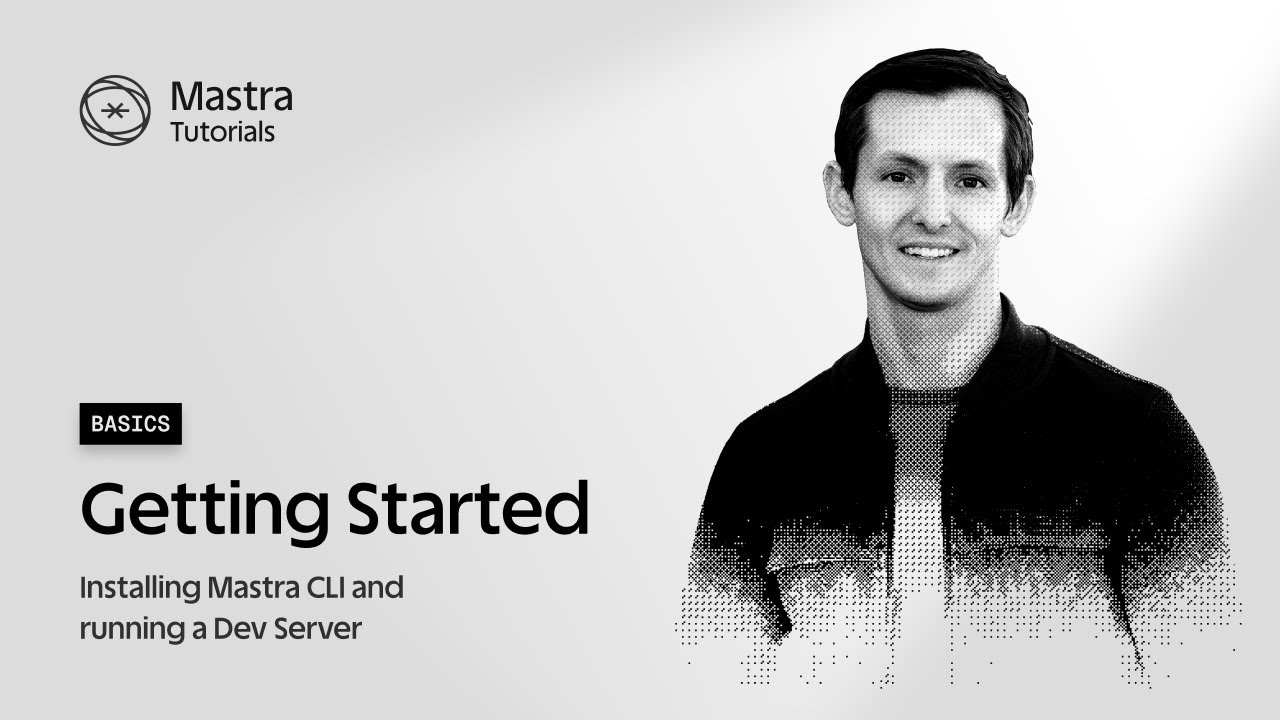
On Hacker News and r/LocalLLaMA, the recurring praise is the developer experience: end-to-end TypeScript types, fast cold starts, and a studio that actually surfaces what the agent did. Independent benchmarks circulating in early 2026 reported P95 latency of ~1,240ms versus ~2,450ms for LangChain, a build-time of 18 hours versus 41 hours on a comparable RAG agent, and lower error rates (5.8% vs 8.9%) — numbers worth treating as directional rather than gospel, but they match the ergonomic story users tell.
The honest complaints are also consistent. Several breaking changes between v0.3 and v0.4 (notably the workflow API rewrite) burned early adopters, and integration coverage is much narrower than LangChain's hundreds of connectors — Mastra ships closer to 50–60. Python-shop teams also note that the TypeScript-only stance creates a real coordination cost when ML engineers think in notebooks.
The framework itself is fully open source under Apache 2.0. Mastra Cloud is the optional managed deployment layer, and the public pricing page lists three tiers:
| Plan | Price | Key Limits |
|---|---|---|
| Starter | $0 | Unlimited users and deployments, 100,000 observability events, 24 hours of CPU uptime, 10 GB egress |
| Teams | $250 per team / month | Multiple teams, custom SSO, SOC 2 documentation, 250 hours of CPU time, 100 GB egress |
| Enterprise | Custom | RBAC, support SLA, dedicated support engineer, custom CPU and egress |
Add-ons are billed à la carte: $10 per 1M model tokens, $10 per 100,000 observability events, $100 per additional project, and $10 per GB of extra egress.
Best for: TypeScript and JavaScript teams shipping production LLM features inside Next.js, Node.js, or React stacks; founders building agentic SaaS who want types, evals, and tracing without gluing five libraries together; engineers who want an MCP server with one decorator instead of a sidecar.
Not ideal for: Python-first AI teams with existing LangChain, LlamaIndex, or DSPy infrastructure; projects that depend on the long tail of LangChain integrations Mastra has not yet wrapped; teams that cannot tolerate any further API churn before v1.x stabilizes.
Pros:
localhost:4111 gives you a real playground and trace viewer without paying for SaaS.Cons:
Langfuse covers tracing and evals but does not give you agents or workflows. LangChain.js still has the broadest integration catalog, at the cost of a heavier and more Python-shaped API. Vercel's AI SDK is lighter and great for chat UIs, but stops short of Mastra's workflow engine, memory, and MCP authoring story.
If you are writing TypeScript and you want to ship an LLM agent or agentic workflow to production this quarter, Mastra is the most coherent option on the market in 2026. The framework rewards teams who pick one stack and commit to it; it is less suited to polyglot AI shops that already lean on Python tooling. We rate it 86/100 — held back from the 90s only by the still-young integration catalog and the API churn that preceded v1.0, both of which look likely to improve through 2026.
ee/ directory uses a separate Mastra Enterprise License for production use.ServiceNow and Accenture Launch Forward Deployed Engineering Program to Scale Agentic AI in the Enterprise (May 6, 2026)
At Knowledge 2026, ServiceNow and Accenture announced a joint forward deployed engineering program that drops co-located engineer pods into customer environments to ship agentic AI workflows natively on the ServiceNow AI Platform — with access to 300+ pre-built agent skills and the AI Control Tower as the governance backbone.
May 7, 2026
ReFiBuy Raises $13.6M Seed to Help Brands Get Recommended by AI Shopping Agents (May 5, 2026)
ReFiBuy, the Raleigh-based agentic commerce platform from ChannelAdvisor founder Scot Wingo, closed an oversubscribed $13.6M seed led by NewRoad Capital Partners on May 5, 2026 — betting that the next billion-dollar e-commerce moat is being chosen by ChatGPT, Claude and Perplexity.
May 7, 2026
OpenAI Replaces ChatGPT's Default Model With GPT-5.5 Instant — 52.5% Fewer Hallucinations, 30% Shorter Answers (May 5, 2026)
OpenAI on May 5 swapped GPT-5.3 Instant for the new GPT-5.5 Instant as ChatGPT's default model, claiming 52.5% fewer hallucinated claims on high-stakes prompts and 30% more concise answers. The model also rolls into the API as chat-latest and adds personalization from Gmail and past chats for Plus and Pro web users.
May 7, 2026
Is this product worth it?
Built With
Compare with other tools