 AI Tools
Aider
AI pair programming in your terminal—free, open-source, any LLM
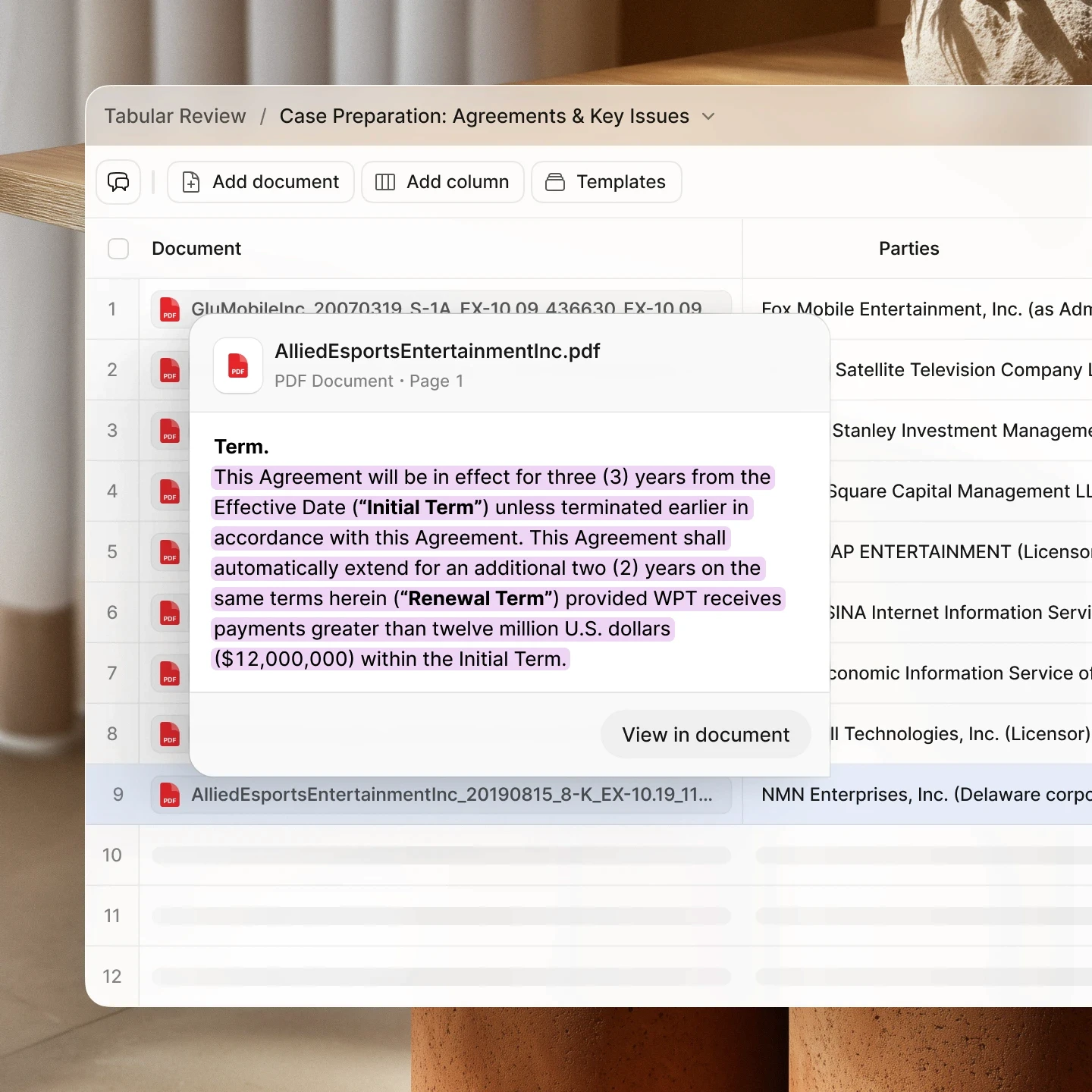
Legora is the AI workspace for lawyers, combining Tabular Review, agentic Workflows, Legal Research, and native Word integration. Used by 800+ law firms in 50+ markets, it cuts document review from 20 hours to under two.
Legora is an AI-powered workspace built exclusively for legal professionals — combining document review, research, drafting, and team collaboration in a single platform. We rate it 80/100 — an outstanding tool for mid-size to large law firms and in-house legal teams that can justify the enterprise price tag, but far out of reach for smaller practices or solo attorneys.
Legora was founded in 2023 (originally as "Leya") by Max Junestrand, Sigge Labor, and August Erséus in Stockholm, Sweden. The company rebranded to Legora in 2025, and in closed a $550 million Series D round led by Accel at a $5.55 billion valuation — tripling its valuation from the $1.8 billion Series C just six months prior. Backed by Y Combinator, Benchmark, Bessemer Venture Partners, General Catalyst, Menlo Ventures, and Salesforce Ventures, Legora is one of the fastest-growing legal AI companies in history, now used by 800 law firms and legal teams across 50+ markets in under two years.
The platform is built on Anthropic's Claude models and is specifically engineered for the high-stakes, citation-critical demands of professional legal work — where hallucinations and missed clauses carry six-figure consequences. Unlike generic AI assistants, Legora integrates directly into document management systems (iManage, SharePoint) and Microsoft Word, meeting lawyers in their existing workflows.
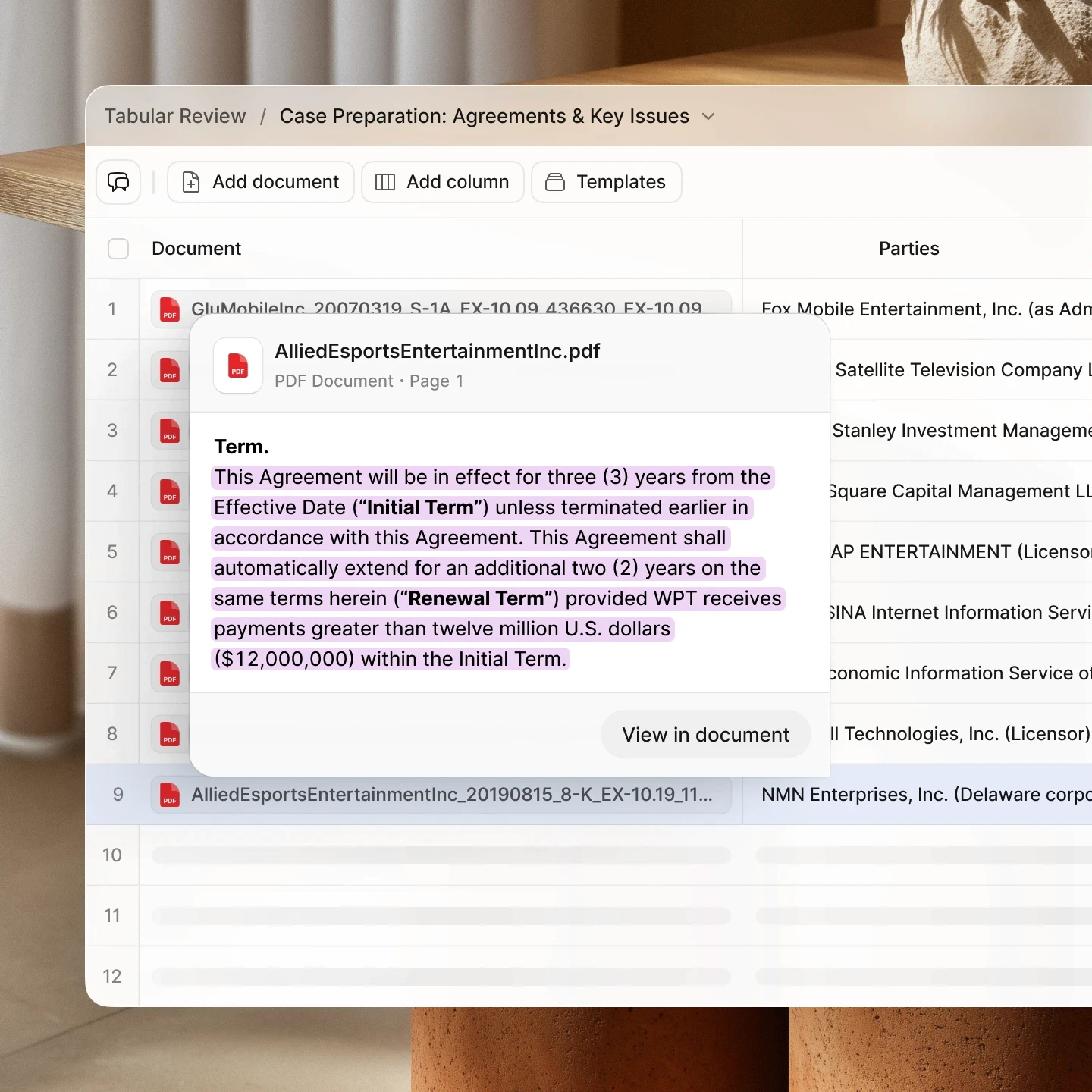
Across 267 aggregated reviews, Legora earns 84% positive sentiment. Jennifer McBride, Legal Director at Bird & Bird, said: "With the advanced data extraction capabilities of Tabular Review, we get to an initial view much faster and are able to focus our time on deeper thinking and problem solving." An in-house legal leader at a major pharma company gave a 10/10 NPS and praised the team for shipping "impressive features at an incredible rate."
The recurring criticisms are consistent: enterprise pricing creates a hard barrier for smaller firms (minimum $30,000/year is frequently cited as prohibitive), and the onboarding and training requirements are non-trivial. A notable complaint from legal professionals on forums is that citation accuracy, while strong, still requires human verification — and the consequences of missing one in litigation are severe. Competitors like Harvey draw similar criticism, suggesting this is an industry-wide limitation of current LLM technology rather than a Legora-specific failure.
Legora does not publish pricing on its website — prospective customers must request a demo. Based on multiple confirmed reports, pricing starts at $3,000 per user per year, with a minimum commitment of 10 seats. This means the minimum annual contract value is $30,000. There is no free tier and no self-serve trial.
| Plan | Price | Key Terms |
|---|---|---|
| Enterprise | $3,000/user/year | Minimum 10 seats ($30,000/year minimum). Full platform access including Tabular Review, Workflows, Legal Research, Word integration, and Portal. |
Legora competes directly with Harvey AI, which operates a similar enterprise-only, contact-for-pricing model. GC AI, LegalOn, and Spellbook offer more accessible entry points for smaller teams.
Best for: Mid-size to large law firms (AmLaw 200 and below), in-house legal teams at enterprises, and legal operations professionals handling high volumes of contract review, due diligence, or discovery. The ROI case is strong when teams are regularly reviewing 500+ documents per matter or replacing $1,200/hour outside counsel with internal work.
Not ideal for: Solo attorneys, small boutique firms with fewer than 10 attorneys, or any practice that cannot justify a $30,000+ annual commitment. Budget-conscious teams should evaluate Spellbook, GC AI, or even Microsoft Copilot for Legal.
Pros:
Cons:
Harvey AI ($3,500+/user/year) is Legora's closest competitor — similar enterprise focus, similar pricing opacity, but with deeper integration into litigation workflows and stronger traction at elite US law firms. Spellbook targets transactional lawyers with a more accessible entry point and a focus on contract drafting inside Word. Microsoft Copilot for Legal is the budget alternative for firms already in the Microsoft 365 ecosystem, though it lacks legal-specific training and citation verification.
If your firm handles high-volume document review, due diligence, or contract analysis — and you can justify $30,000+ annually — Legora is almost certainly the best-in-class solution available today. The Tabular Review engine alone has delivered documented ROI across hundreds of firms, and the Workflows feature is moving the product from a smart assistant to a genuine legal process automation platform. We rate it 80/100: outstanding technology, with pricing that limits its addressable market to larger organizations.
ServiceNow and Accenture Launch Forward Deployed Engineering Program to Scale Agentic AI in the Enterprise (May 6, 2026)
At Knowledge 2026, ServiceNow and Accenture announced a joint forward deployed engineering program that drops co-located engineer pods into customer environments to ship agentic AI workflows natively on the ServiceNow AI Platform — with access to 300+ pre-built agent skills and the AI Control Tower as the governance backbone.
May 7, 2026
ReFiBuy Raises $13.6M Seed to Help Brands Get Recommended by AI Shopping Agents (May 5, 2026)
ReFiBuy, the Raleigh-based agentic commerce platform from ChannelAdvisor founder Scot Wingo, closed an oversubscribed $13.6M seed led by NewRoad Capital Partners on May 5, 2026 — betting that the next billion-dollar e-commerce moat is being chosen by ChatGPT, Claude and Perplexity.
May 7, 2026
OpenAI Replaces ChatGPT's Default Model With GPT-5.5 Instant — 52.5% Fewer Hallucinations, 30% Shorter Answers (May 5, 2026)
OpenAI on May 5 swapped GPT-5.3 Instant for the new GPT-5.5 Instant as ChatGPT's default model, claiming 52.5% fewer hallucinated claims on high-stakes prompts and 30% more concise answers. The model also rolls into the API as chat-latest and adds personalization from Gmail and past chats for Plus and Pro web users.
May 7, 2026
Is this product worth it?
Built With
Compare with other tools
Open Comparison Tool →