 Productivity
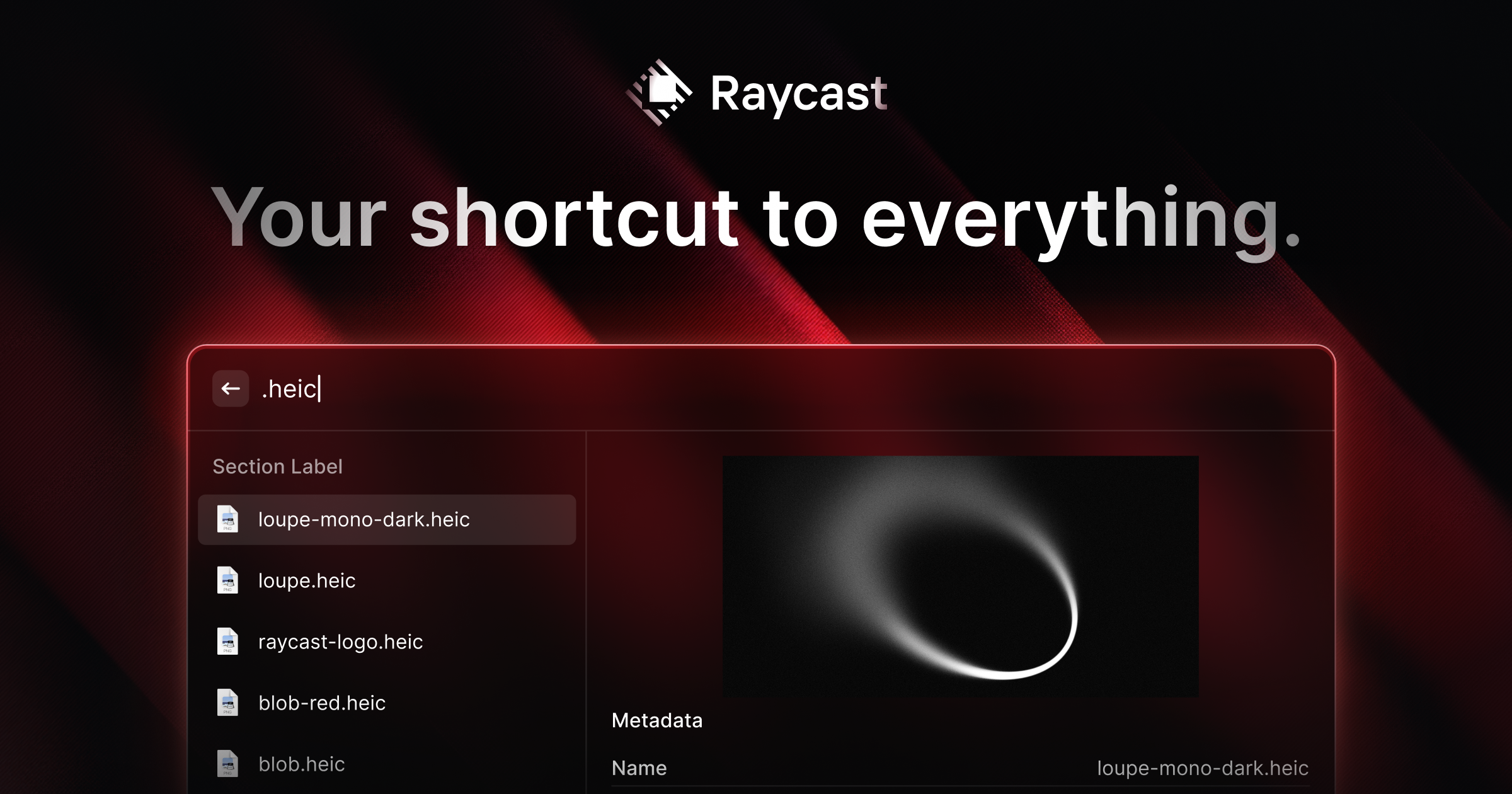
Raycast
Powerful macOS launcher and productivity platform — 7.3K GitHub stars for extensions
Kagi is a $5/month-and-up paid search engine with no ads, deep customization, and a built-in multi-model AI Assistant. It is the single best upgrade most heavy searchers can make in 2026.
Kagi Search is a paid, ad-free search engine that lets you pin, boost, downrank, or block any domain and ships with a multi-model AI Assistant in every plan. We rate it 87/100 — if you actually care about search quality and don't mind paying $5–$25/month, Kagi is the biggest upgrade you can make to your daily browsing in 2026.
Kagi is a member-funded, ad-free search engine founded by Vladimir Prelovac and launched publicly in . The product is built around a simple economic bet: if you pay for search directly, there is no advertiser to optimize for, no surveillance profile to build, and the company's incentives align with yours. Kagi has grown from a closed beta to 50,000+ paying members as of June 2025 and continues to publish detailed, public year-in-review reports from its headquarters in Palo Alto with an engineering hub in Belgrade.
Behind the search bar, Kagi blends its own web index with results from Google, Marginalia, Mojeek, Brave, and curated "non-commercial" sources. On top of that it layers tools most competitors treat as separate products: Kagi Summarizer, Kagi Translate, Kagi News, Kagi Maps, an image/video search, and the Kagi Assistant with access to Claude, GPT-5, Gemini, and open-weights models — all behind one subscription.
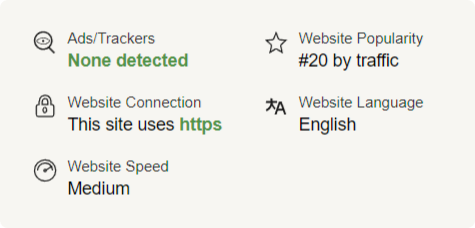
kagi.com/summarizer; Translate, which went viral in for its "LinkedIn Speak" mode, now runs natively on iOS and Android.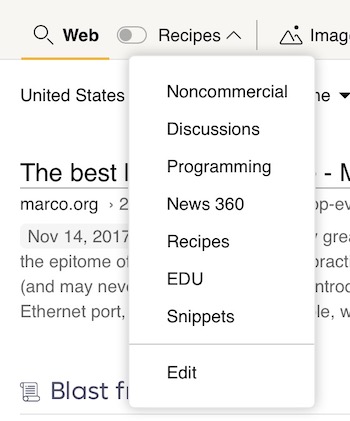
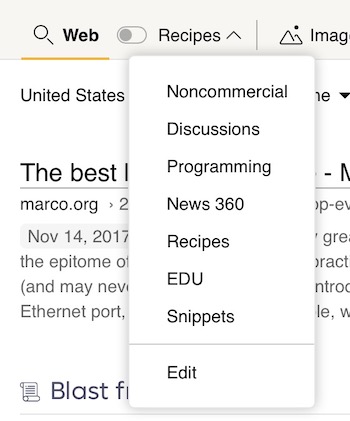
Sentiment on Hacker News, r/kagi, r/degoogle, and r/privacy is unusually warm for a paid product. The most upvoted HN threads consistently describe Kagi as "what Google used to feel like in 2010" and point to the uprank/downrank controls as a killer feature. Reddit's r/selfhosted crowd has largely moved on from DuckDuckGo to Kagi, citing that the ability to nuke Pinterest, Quora, and AI-generated blog spam is worth the monthly fee alone.
The honest complaints are specific and worth weighing. Price is the first — $10/month for Professional is steep when Google is free, and the Ultimate plan at $25/month (the one with premium AI models) lands higher than a standalone ChatGPT Plus subscription. Several HN commenters note that the index still leans on Google for fallback results, which makes Kagi vulnerable if Google's API terms change. Orion has also had a rocky 1.0; a recurring Reddit gripe is that extension compatibility is uneven and release cadence is slower than Arc or Brave. Support, by contrast, is almost universally praised — it is not unusual to get a same-day reply from Prelovac himself on the Kagi Feedback forum.
Kagi has four individual tiers plus Family and Team plans. Annual billing saves 10%, and the "Fair Pricing" policy carries unused monthly search credits forward automatically.
| Plan | Price | Key Limits |
|---|---|---|
| Trial | Free | 100 searches + 100 standard AI interactions, one-time |
| Starter | $5/month | 300 searches/month + 300 standard AI interactions |
| Professional | $10/month | Unlimited searches, unlimited Summarizer and Translate, Kagi Assistant with standard models |
| Ultimate | $25/month | Everything in Professional + Kagi Assistant with flagship Claude, GPT-5, and Gemini models, plus Research mode |
| Family | $25/month | Up to 6 Professional seats, parental controls |
| Team | From $19/seat/month | SSO, admin console, centralized billing |
PayPal and Bitcoin (via OpenNode) are supported in addition to cards. There is no public referral or affiliate program in 2026 — Kagi explicitly avoids those — but members do get Kagi Specials discounts with privacy partners like Ente, Fastmail, Windscribe, Addy.io, and Notesnook.
Best for: knowledge workers, developers, researchers, and journalists who run 50+ searches a day and are tired of fighting SEO spam and AI-generated listicles. Privacy-conscious users who already pay for Fastmail, 1Password, or a VPN will feel right at home. Power users who love configurability — lenses, custom CSS, blocked domains — will get more value out of Kagi in a week than they will out of Google in a year.
Not ideal for: casual searchers who run a handful of queries a day (Starter's 300 searches is plenty, but the $10 Professional tier is the sweet spot and hard to justify at low volume); users who rely heavily on Google-specific features like Maps reviews, Flights, or Shopping; and price-sensitive users in regions where $10/month is a meaningful expense — for those, DuckDuckGo and Brave Search remain solid free options.
Pros:
Cons:
DuckDuckGo is the default free, private search engine — weaker result quality than Kagi but zero cost and a solid iOS/Android experience. Brave Search has its own independent index and a free tier, with optional AI summaries; it is the closest spiritual competitor to Kagi on the free side. Perplexity is a different product category — it is an AI answer engine, not a classic 10-blue-links search engine — but heavy Kagi users often run the two side by side. If you want an open-source self-hosted path, SearXNG aggregates other engines' results with no tracking, at the cost of no native ranking intelligence.
Yes — for the right user. If you search more than a few dozen times a day and the quality of those results affects your work, Kagi's $10/month Professional plan pays for itself in recovered time within the first week. The combination of lenses, per-domain controls, an honest business model, and a built-in multi-model AI Assistant is not available anywhere else at any price. We score Kagi 87/100: docked a few points for the Starter plan's tight search cap, the partial Google dependency, and an Orion browser that still needs a year to reach parity with Arc or Brave. For anyone who has quietly accepted that Google search is worse than it was in 2015, Kagi is the simplest, most effective fix in 2026.
ProductivityPowerful macOS launcher and productivity platform — 7.3K GitHub stars for extensions
 Productivity
Local-first, Markdown-native note-taking with a graph view and 2,000+ community plugins
 Productivity
Open-source AirDrop alternative for any device — 80k GitHub stars, end-to-end encrypted, zero internet required.
 Productivity
Self-hosted document management with OCR, auto-tagging and full-text search in 100+ languages
ServiceNow and Accenture Launch Forward Deployed Engineering Program to Scale Agentic AI in the Enterprise (May 6, 2026)
At Knowledge 2026, ServiceNow and Accenture announced a joint forward deployed engineering program that drops co-located engineer pods into customer environments to ship agentic AI workflows natively on the ServiceNow AI Platform — with access to 300+ pre-built agent skills and the AI Control Tower as the governance backbone.
May 7, 2026
ReFiBuy Raises $13.6M Seed to Help Brands Get Recommended by AI Shopping Agents (May 5, 2026)
ReFiBuy, the Raleigh-based agentic commerce platform from ChannelAdvisor founder Scot Wingo, closed an oversubscribed $13.6M seed led by NewRoad Capital Partners on May 5, 2026 — betting that the next billion-dollar e-commerce moat is being chosen by ChatGPT, Claude and Perplexity.
May 7, 2026
OpenAI Replaces ChatGPT's Default Model With GPT-5.5 Instant — 52.5% Fewer Hallucinations, 30% Shorter Answers (May 5, 2026)
OpenAI on May 5 swapped GPT-5.3 Instant for the new GPT-5.5 Instant as ChatGPT's default model, claiming 52.5% fewer hallucinated claims on high-stakes prompts and 30% more concise answers. The model also rolls into the API as chat-latest and adds personalization from Gmail and past chats for Plus and Pro web users.
May 7, 2026