 Developer Tools
Unkey
Open-source API key management and rate limiting platform for modern developers
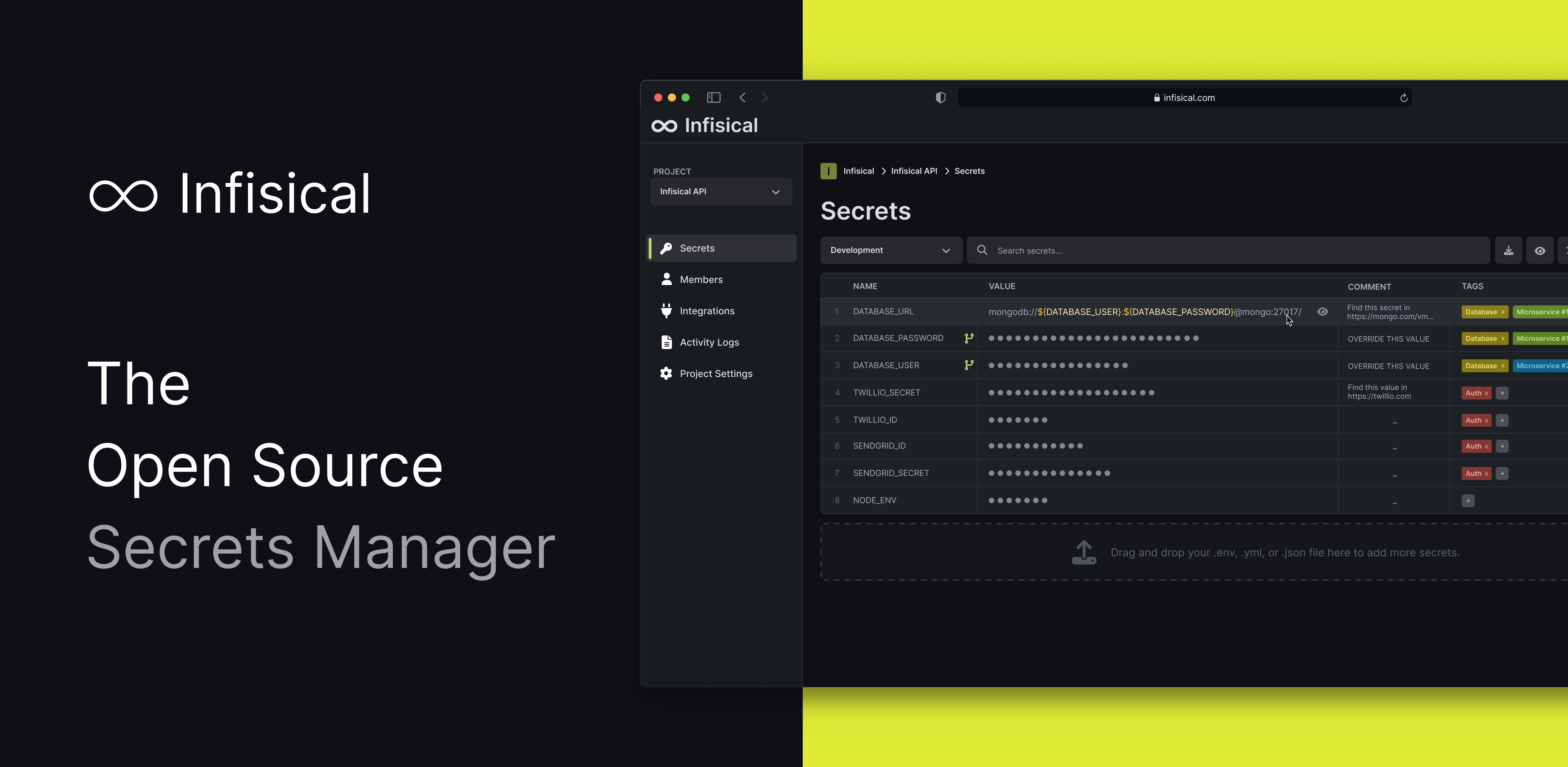
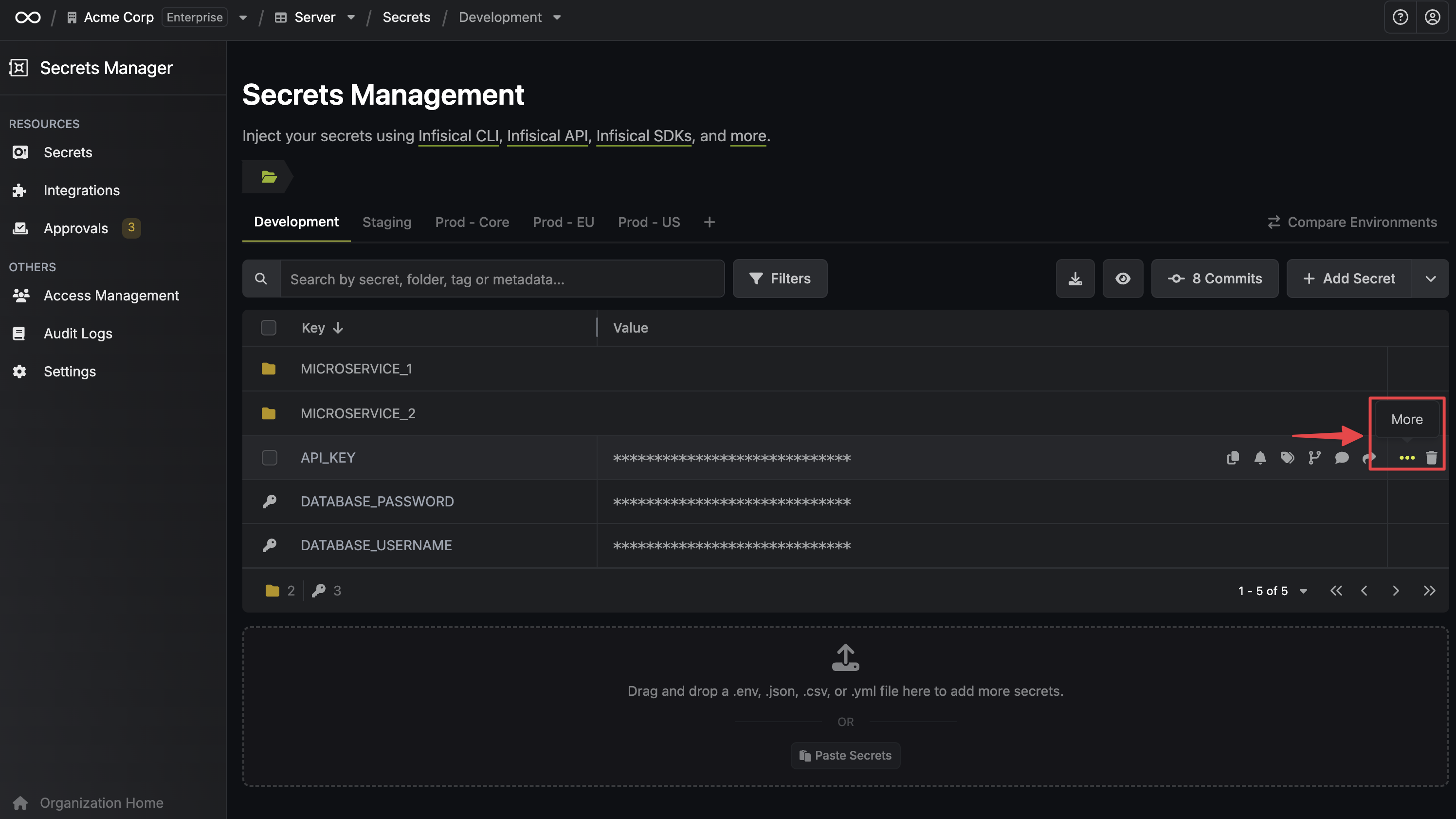
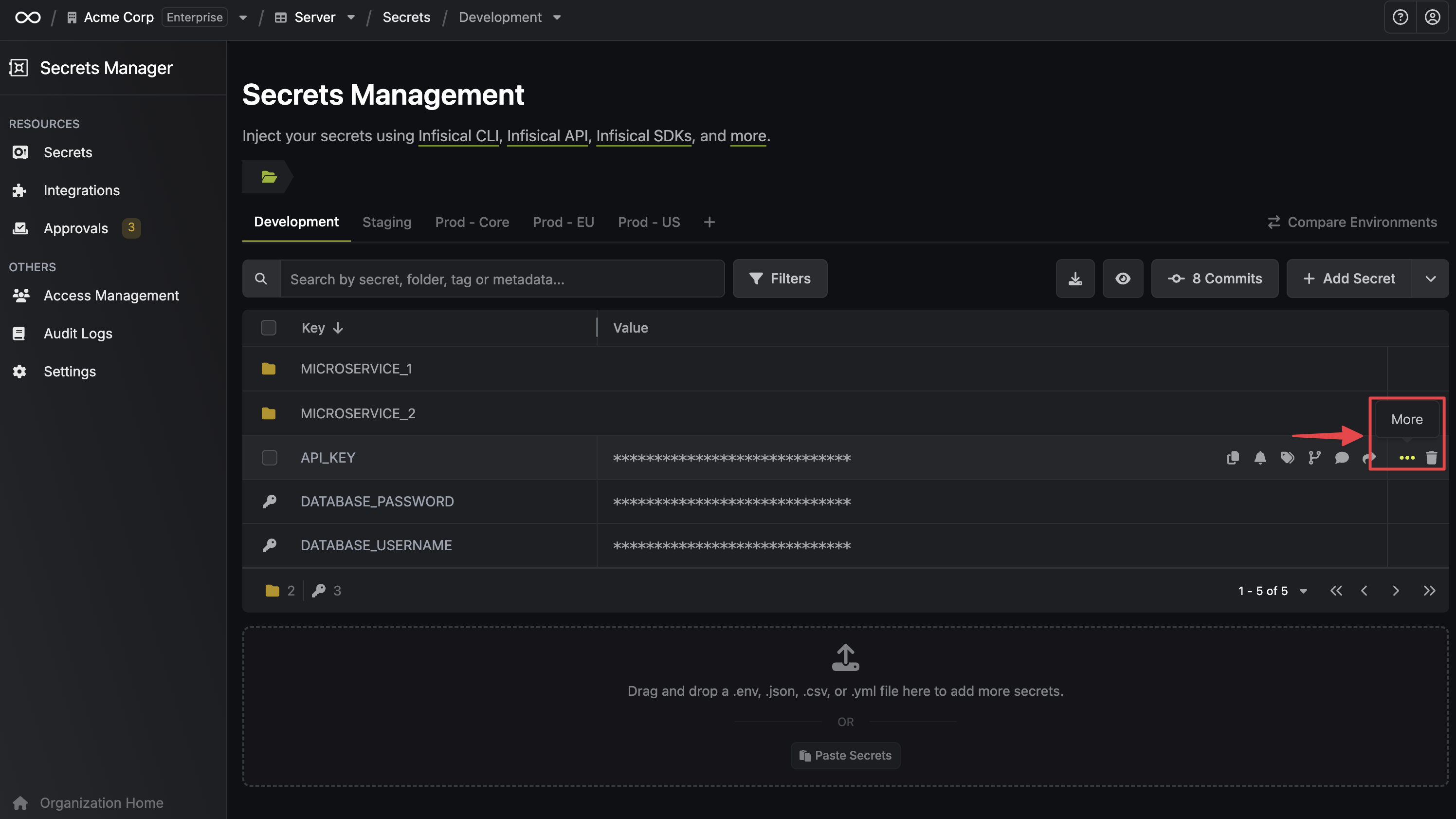
Infisical is the open-source secrets management platform that centralizes API keys, database credentials, and configuration across your team and infrastructure. With 25,600+ GitHub stars, SOC2/HIPAA compliance, and a generous free tier, it's a top-tier alternative to HashiCorp Vault and Doppler.
Infisical is an open-source, all-in-one platform for managing application secrets, certificates, and privileged access across your team and infrastructure. We rate it 82/100 — an excellent choice for developers and security-conscious teams who want the power of HashiCorp Vault without the complexity, or Doppler without the closed-source lock-in.
Infisical was founded by engineers who previously worked at AWS and Figma, where they personally experienced the chaos of secret sprawl — teams copying .env files in Slack, rotating credentials manually, and losing track of who had access to what. They launched Infisical in via a Show HN post, went through Y Combinator's W23 batch, raised a $2.8M seed round in July 2023, and followed with a $16M Series A led by Elad Gil in February 2025. As of March 2026, the GitHub repository has 25,600+ stars and runs on version v0.159.1.
The core premise is simple: instead of pasting secrets into environment variables or committing them to Git, you store them in Infisical and inject them automatically into your development, CI/CD, and cloud workflows. Trusted by organizations including Hugging Face, LG, Volkswagen, Hinge Health, and HeyGen, Infisical has evolved well beyond a basic secrets vault into a full platform covering secrets, certificates (PKI), and privileged access management (PAM).
On Hacker News, the multiple Show HN threads for Infisical drew consistently positive reception — commenters praised the team's speed in shipping features and their responsiveness to community feedback. One recurring theme: developers who were previously managing .env files across Slack or 1Password say Infisical "just works" for their pipeline integrations. On Product Hunt, early users highlighted the one-line CLI injection for Node.js projects and the clean dashboard UI as standout strengths.
On the critical side, enterprise users on Slashdot and SourceForge note that some advanced compliance features (dynamic secrets, LDAP, HSM support) are gated behind the Enterprise tier with custom pricing — meaning mid-sized teams may hit a pricing wall before they need a full enterprise contract. The free tier's 5-identity limit is also a common pain point for small startups that grow quickly.
| Plan | Price | Key Limits & Inclusions |
|---|---|---|
| Free | $0/month | Up to 5 identities, 3 projects, 3 environments, 10 integrations, CLI/API/SDK, secret scanning, community Slack support |
| Pro | $18/month per identity | 12 projects, 12 environments, 50 integrations, secret versioning, point-in-time recovery, RBAC, secret rotation, SAML SSO, IP allowlisting, 90-day audit log retention, priority support |
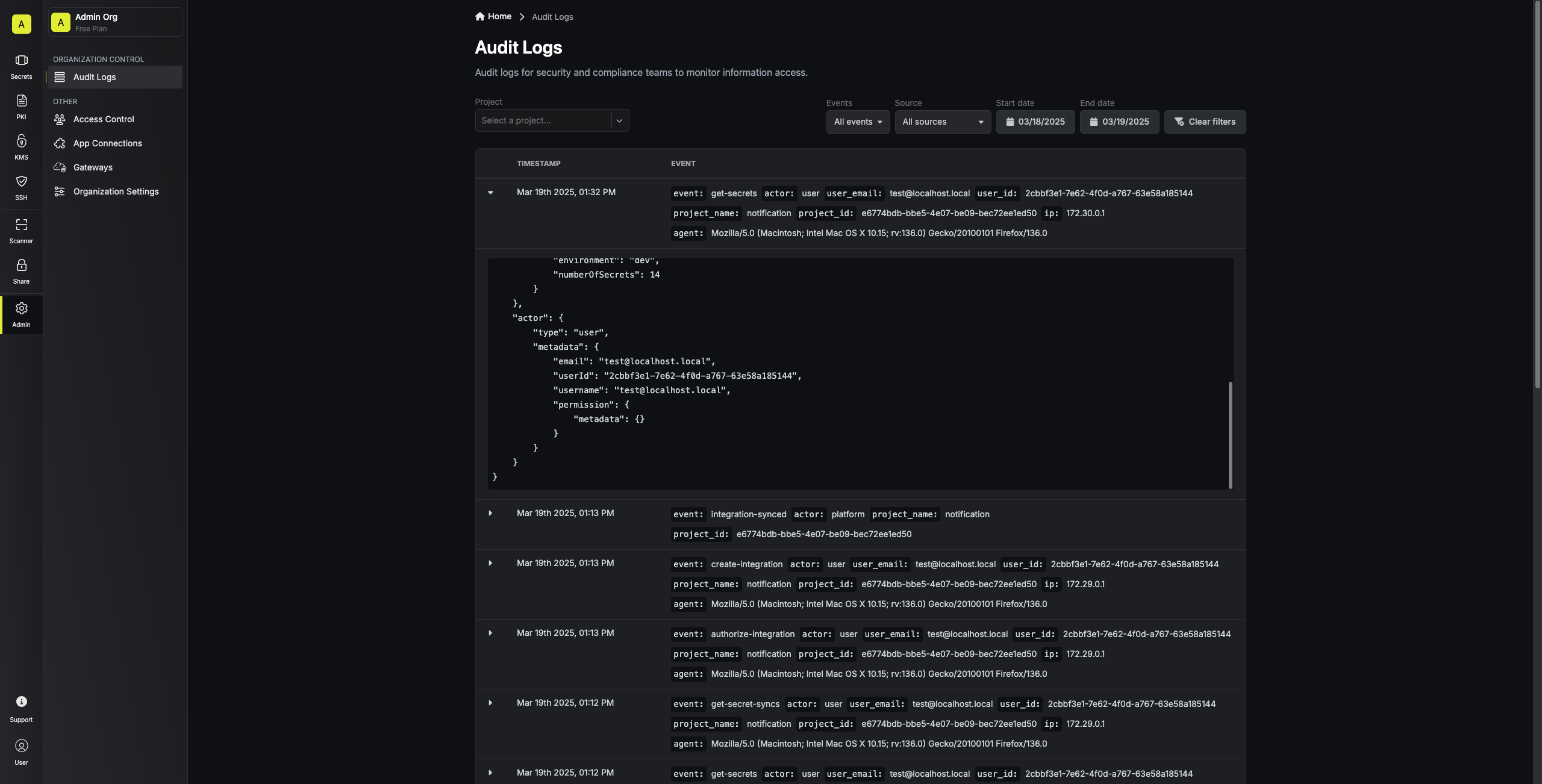
| Enterprise | Custom | Dynamic secrets, dedicated infrastructure, SCIM, LDAP, KMS/HSM, AI Security Advisor, approval workflows, custom audit log retention, 99.99% SLA, dedicated support engineer |
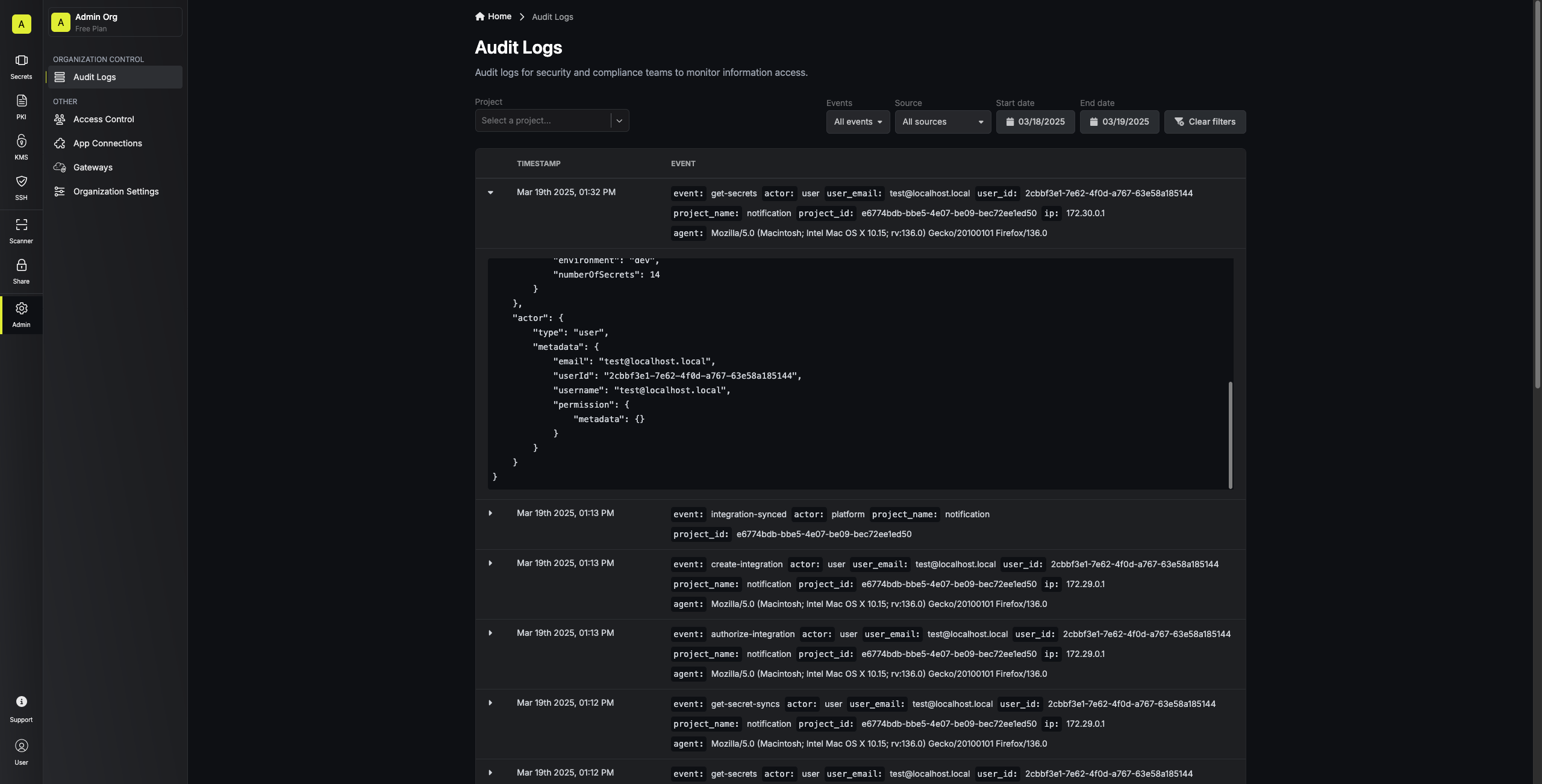
Infisical also offers a self-hosted option under the MIT license at no cost, with commercial add-ons available for enterprise features. For teams that need the full platform without cloud dependency, this is a compelling differentiator over closed-source competitors.
Best for: Engineering teams of 2–50 who are outgrowing shared .env files or password managers for secrets. Particularly strong for teams already using Node.js, Python, or Go who want CLI-first secret injection. Also excellent for security-conscious teams that want SOC2/HIPAA compliance and full audit trails without paying HashiCorp Vault's complexity tax. Self-hosters who want full control over their secrets infrastructure will appreciate the MIT-licensed core.
Not ideal for: Very large enterprises with strict HSM requirements will need the Enterprise tier (custom pricing). Teams that only need basic env variable management for a solo project may find the free tier's 5-identity limit frustrating, though it's generous enough for most small teams.
Pros:
Cons:
Doppler is the most direct competitor — a closed-source, cloud-only secrets manager with a polished DX. Doppler starts at $6/user/month and lacks self-hosting, but has a simpler setup for teams that don't need PKI or PAM. HashiCorp Vault (now BSL licensed) is the enterprise gold standard but notoriously complex to operate — Infisical's pitch is essentially "Vault's capabilities without Vault's operational overhead." AWS Secrets Manager is excellent if you're all-in on AWS ($0.40/secret/month) but creates vendor lock-in and has no self-hosted option.
For most engineering teams, yes — Infisical is worth it. The free tier is genuinely useful for small teams, the Pro plan at $18/identity/month is competitive for what you get, and the open-source self-hosted option provides an escape hatch that no other major secrets manager offers at this feature level. The platform has matured significantly since its 2022 launch: it's now a comprehensive security platform covering secrets, certificates, and privileged access in one dashboard. We rate it 82/100 — docking points for the pricing jump between free and Pro tiers, and Enterprise-only dynamic secrets. But for the vast majority of teams, Infisical is our recommended starting point for secrets management in 2026.
Developer ToolsOpen-source API key management and rate limiting platform for modern developers
 Developer Tools
Open-source low-code platform for building internal business applications
 Developer Tools
Type-safe HTML templating language for Go with compile-time safety
 Developer Tools
Git-friendly open-source API client for REST, GraphQL, and gRPC
ServiceNow and Accenture Launch Forward Deployed Engineering Program to Scale Agentic AI in the Enterprise (May 6, 2026)
At Knowledge 2026, ServiceNow and Accenture announced a joint forward deployed engineering program that drops co-located engineer pods into customer environments to ship agentic AI workflows natively on the ServiceNow AI Platform — with access to 300+ pre-built agent skills and the AI Control Tower as the governance backbone.
May 7, 2026
ReFiBuy Raises $13.6M Seed to Help Brands Get Recommended by AI Shopping Agents (May 5, 2026)
ReFiBuy, the Raleigh-based agentic commerce platform from ChannelAdvisor founder Scot Wingo, closed an oversubscribed $13.6M seed led by NewRoad Capital Partners on May 5, 2026 — betting that the next billion-dollar e-commerce moat is being chosen by ChatGPT, Claude and Perplexity.
May 7, 2026
OpenAI Replaces ChatGPT's Default Model With GPT-5.5 Instant — 52.5% Fewer Hallucinations, 30% Shorter Answers (May 5, 2026)
OpenAI on May 5 swapped GPT-5.3 Instant for the new GPT-5.5 Instant as ChatGPT's default model, claiming 52.5% fewer hallucinated claims on high-stakes prompts and 30% more concise answers. The model also rolls into the API as chat-latest and adds personalization from Gmail and past chats for Plus and Pro web users.
May 7, 2026
Is this product worth it?
Built With
Compare with other tools
Open Comparison Tool →