 Developer Tools
Templ
Type-safe HTML templating language for Go with compile-time safety
HyperDX is the open-source Datadog alternative: session replay, logs, traces and metrics in one place, on ClickHouse, for $0.40 per GB. Acquired by ClickHouse in 2025.
HyperDX is an open-source observability platform that bundles session replays, logs, traces, metrics and errors into one fast, correlated UI on top of ClickHouse and OpenTelemetry. We rate it 87/100 — for engineering teams paying Datadog-shaped bills who still want session replay, distributed traces and error tracking in a single tool, HyperDX is the most credible open-source option in 2026, especially now that ClickHouse owns it and is backing the cloud product.
HyperDX is a developer-first observability stack. The repo's first commit landed on , founded by Michael Shi (formerly developer-experience lead at Mezmo / LogDNA) and Warren Lin. In , HyperDX was acquired by ClickHouse and rebranded internally as ClickStack — but the product still ships as hyperdxio/hyperdx on GitHub under the MIT license, and the cloud at hyperdx.io continues to onboard new customers.
The pitch is simple: most teams pay Datadog or Splunk five- and six-figure monthly bills for observability that is split across three or four different products (logs, APM, RUM, error tracking). HyperDX collapses that into a single OpenTelemetry-native UI where a session replay, the backend trace it triggered, the log lines emitted by that request and the error it threw are all linked together — and the storage backend is ClickHouse, which is why pricing can land at $0.40 per GB instead of the per-host, per-user math everyone hates.
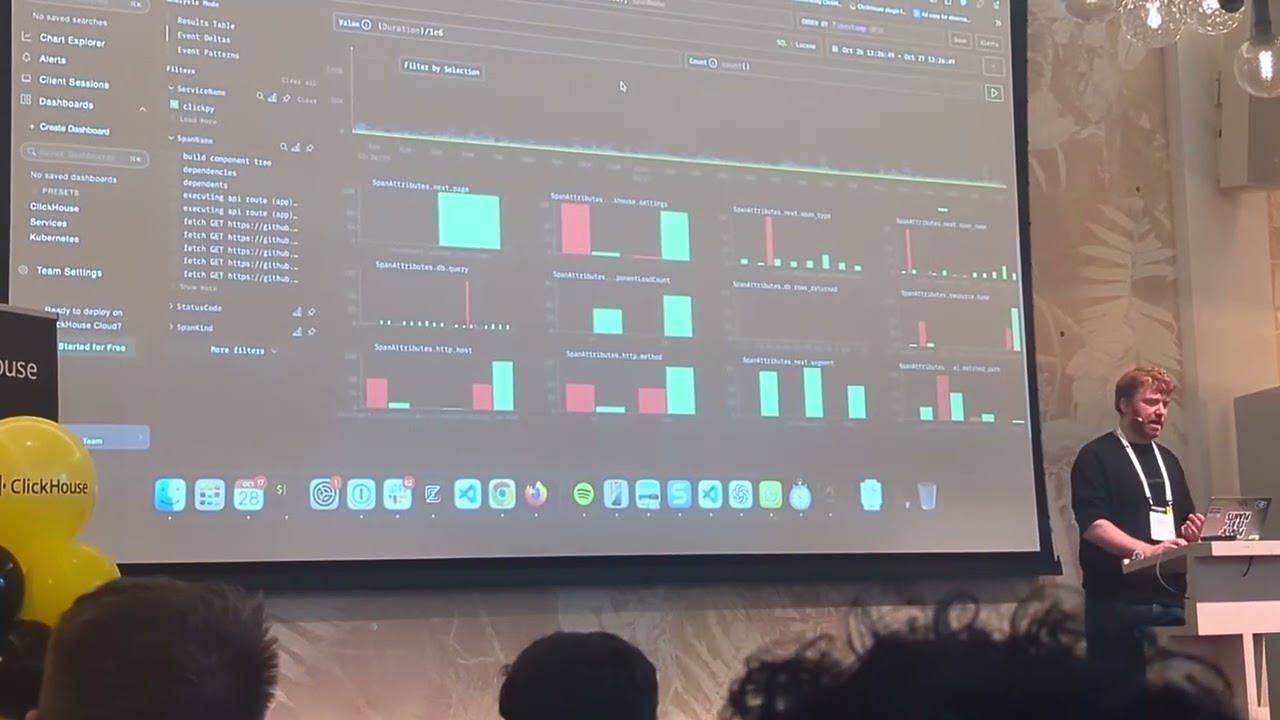
docker-compose up brings up the full stack on your own infrastructure; or use HyperDX Cloud if you don't want to operate ClickHouse yourself.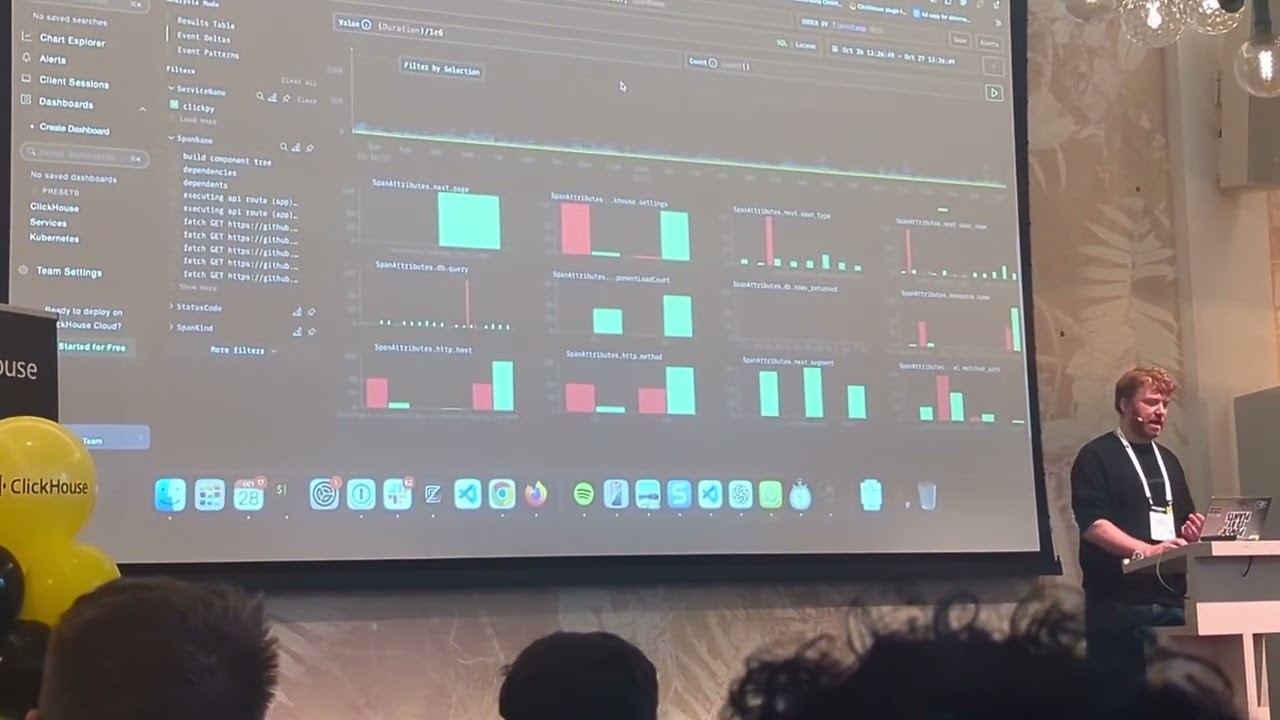
Sentiment on HyperDX is unusually warm for an observability tool. The original Show HN thread in drew comments from Bugsnag and Datadog veterans calling it the "obvious open-source answer" to fragmented APM stacks, and a follow-up Hacker News thread in 2025 has multiple users saying "I like and use HyperDX in production and like it a lot" — including the team behind Inferable, who reported their observability bill dropped roughly 10× moving off Datadog.
On Product Hunt, reviewers consistently praise three things: the speed of the UI, the fact that session replay is built-in (not a separate $$$ product), and the OTel-native instrumentation. Recurring complaints are honest ones: dashboards are still simpler than Grafana's, the metrics product is the youngest part of the platform and lags behind logs and traces, and self-hosting requires you to run ClickHouse — fine if you already do, a real lift if you don't. A few teams on r/devops also note that mobile session replay coverage is thinner than on the web side.
HyperDX Cloud is usage-based, not per-host or per-seat. The published tiers are:
| Plan | Price | Key Limits |
|---|---|---|
| Free | $0/month | 3 GB ingest/month, 3-day retention, 1 user — useful for evaluation |
| Starter | $20/month | 50 GB ingest/month, 30-day retention, unlimited users; overage at $0.40/GB and $0.40 per 100 DPM (data points per minute) for metrics |
| Self-hosted | $0 | Full MIT-licensed product on your own infrastructure — bring your own ClickHouse and storage |
For comparison, Datadog APM commonly lands at $31 per host per month before logs, RUM or session replay are added — HyperDX's combined price is typically 5–10× lower for similar coverage, which is the entire point of the product.
Best for: Series A through Series C engineering teams already drowning in a five-figure Datadog bill; OSS-friendly platform teams that want session replay correlated with backend traces; teams already running ClickHouse for analytics who can absorb the storage layer; SRE teams that want to standardize on OpenTelemetry without locking into a proprietary agent.
Not ideal for: Enterprise security teams that need SOC 2 Type II + FedRAMP + HIPAA across every observability pillar today (Datadog and Splunk still win on that breadth), or solo developers running one Heroku app where free Sentry plus Vercel logs is already enough.
Pros:
Cons:
The most-cited 2026 alternatives are SigNoz, the other major OTel-native open-source platform with stronger metrics and weaker session replay; OpenObserve, a Rust-based logs-and-traces tool with attractive storage costs but no session replay; Axiom, a hosted observability data lake with great log search but no full session replay; and of course Datadog, the commercial incumbent that does everything HyperDX does plus much more, at 5–10× the cost.
Yes — for the right team. If you're paying Datadog-shaped bills for an observability stack that still feels fragmented, HyperDX is the most credible open-source replacement on the market in 2026. The acquisition by ClickHouse, the genuine MIT license, the OTel-native ingestion and the $0.40-per-GB cloud pricing add up to a tool that's hard to ignore. The two real caveats are that metrics and dashboards are still less mature than the rest of the stack, and that self-hosting means operating ClickHouse — but for most teams, the math still works out strongly in HyperDX's favour. We rate it 87/100.
ServiceNow and Accenture Launch Forward Deployed Engineering Program to Scale Agentic AI in the Enterprise (May 6, 2026)
At Knowledge 2026, ServiceNow and Accenture announced a joint forward deployed engineering program that drops co-located engineer pods into customer environments to ship agentic AI workflows natively on the ServiceNow AI Platform — with access to 300+ pre-built agent skills and the AI Control Tower as the governance backbone.
May 7, 2026
ReFiBuy Raises $13.6M Seed to Help Brands Get Recommended by AI Shopping Agents (May 5, 2026)
ReFiBuy, the Raleigh-based agentic commerce platform from ChannelAdvisor founder Scot Wingo, closed an oversubscribed $13.6M seed led by NewRoad Capital Partners on May 5, 2026 — betting that the next billion-dollar e-commerce moat is being chosen by ChatGPT, Claude and Perplexity.
May 7, 2026
OpenAI Replaces ChatGPT's Default Model With GPT-5.5 Instant — 52.5% Fewer Hallucinations, 30% Shorter Answers (May 5, 2026)
OpenAI on May 5 swapped GPT-5.3 Instant for the new GPT-5.5 Instant as ChatGPT's default model, claiming 52.5% fewer hallucinated claims on high-stakes prompts and 30% more concise answers. The model also rolls into the API as chat-latest and adds personalization from Gmail and past chats for Plus and Pro web users.
May 7, 2026
Is this product worth it?
Built With
Compare with other tools
Open Comparison Tool →