
 Developer Tools
Templ
Type-safe HTML templating language for Go with compile-time safety
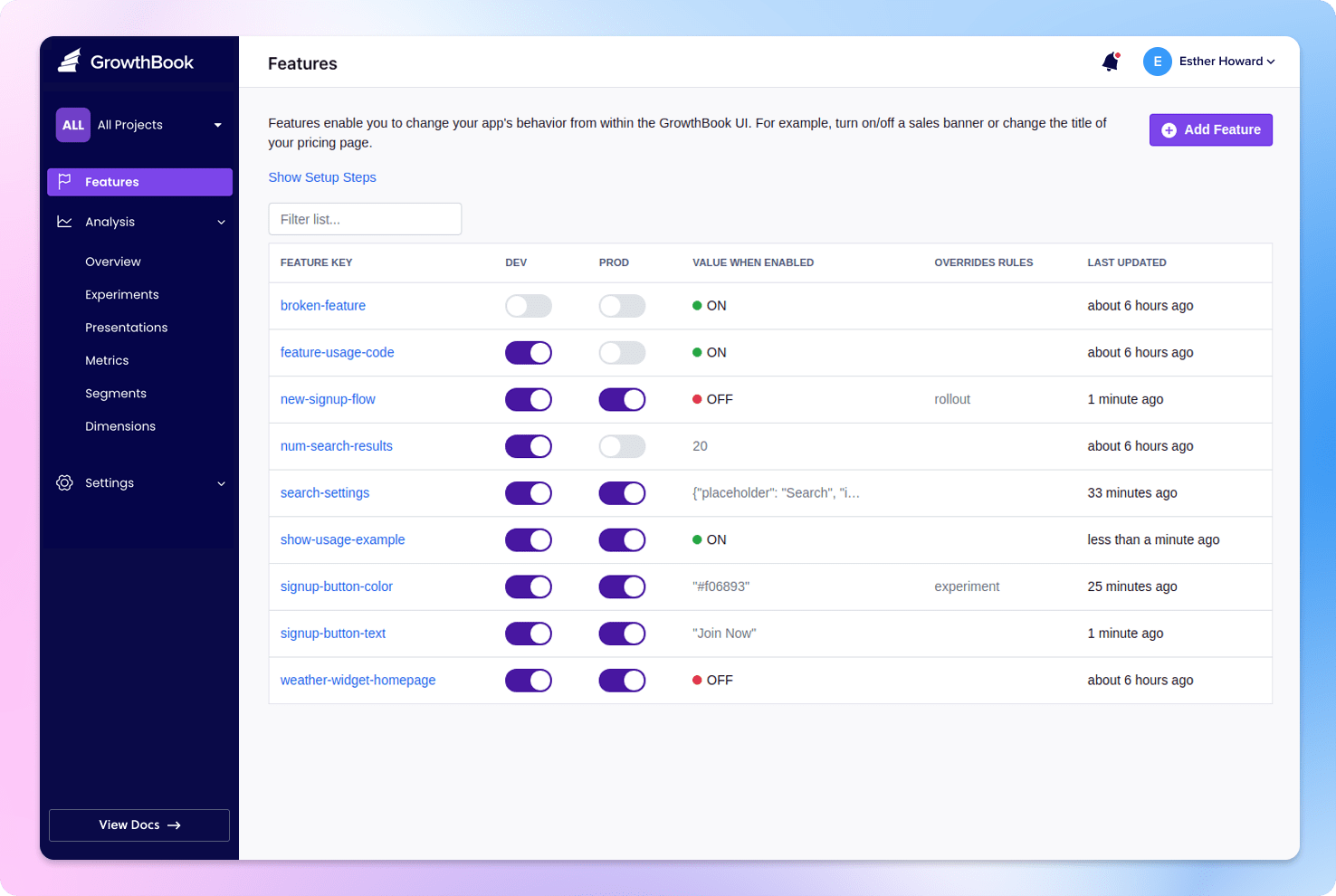
GrowthBook is the open-source warehouse-native feature flagging and experimentation platform from YC W22 alumni Jeremy Dorn and Graham McNicoll. Self-hosting is free and unlimited; cloud Pro starts at $40/user/month and unlocks CUPED, Bayesian and sequential stats.
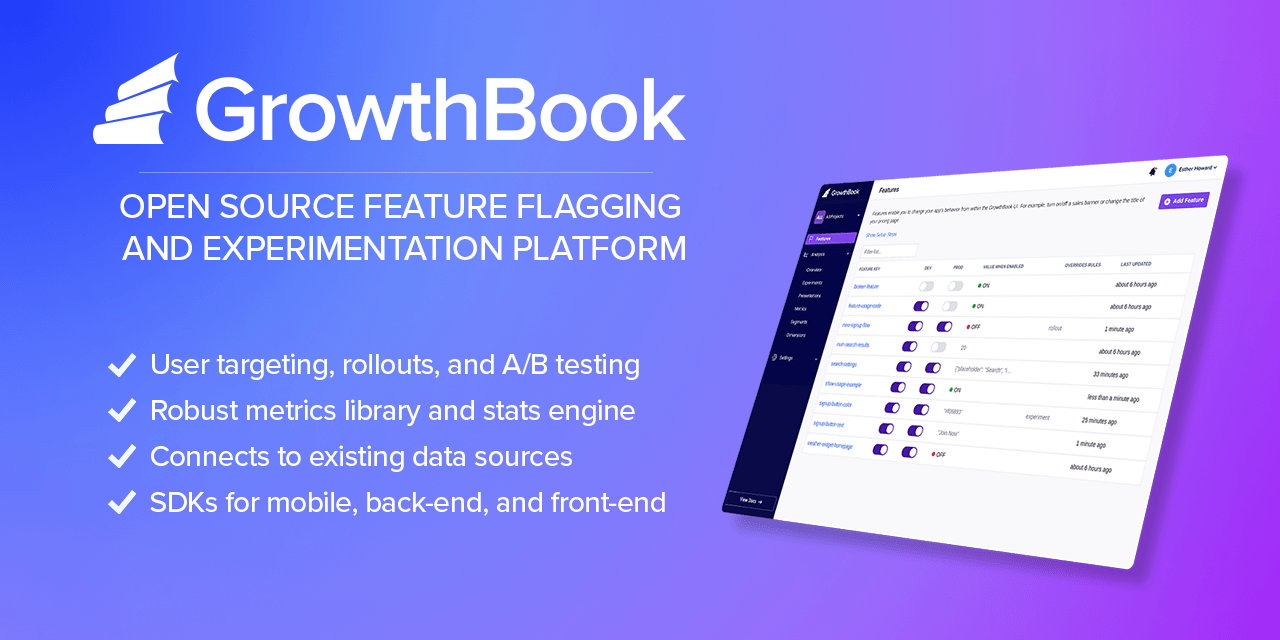
GrowthBook is an open-source, warehouse-native platform that combines feature flags, A/B testing and product analytics in a single tool that you can either self-host for free or run on GrowthBook Cloud. We rate it 84/100 — if you already trust your data warehouse and you want a serious experimentation engine without LaunchDarkly-tier pricing, GrowthBook is one of the best deals in the category.
GrowthBook was founded in 2020 by Jeremy Dorn (CTO) and Graham McNicoll (CEO, previously CTO at Education.com), went through Y Combinator's Winter 2022 batch, and raised a Series A on , bringing total funding to roughly $23.1M from investors including Khosla Ventures and Y Combinator. As of , the growthbook/growthbook repository has crossed 7,700 GitHub stars, and the company says GrowthBook is now used by 3,000+ companies.
The thesis is simple: most teams already have a clean source of truth for their metrics — their data warehouse — so an experimentation tool should query that warehouse directly instead of forcing teams to re-emit events into a vendor's pipeline. GrowthBook plugs into BigQuery, Snowflake, Databricks, Redshift, ClickHouse, Postgres and seven more sources, runs SQL-defined metrics on your own data, and never copies that data out. The latest stable release, v4.3.0, shipped on .
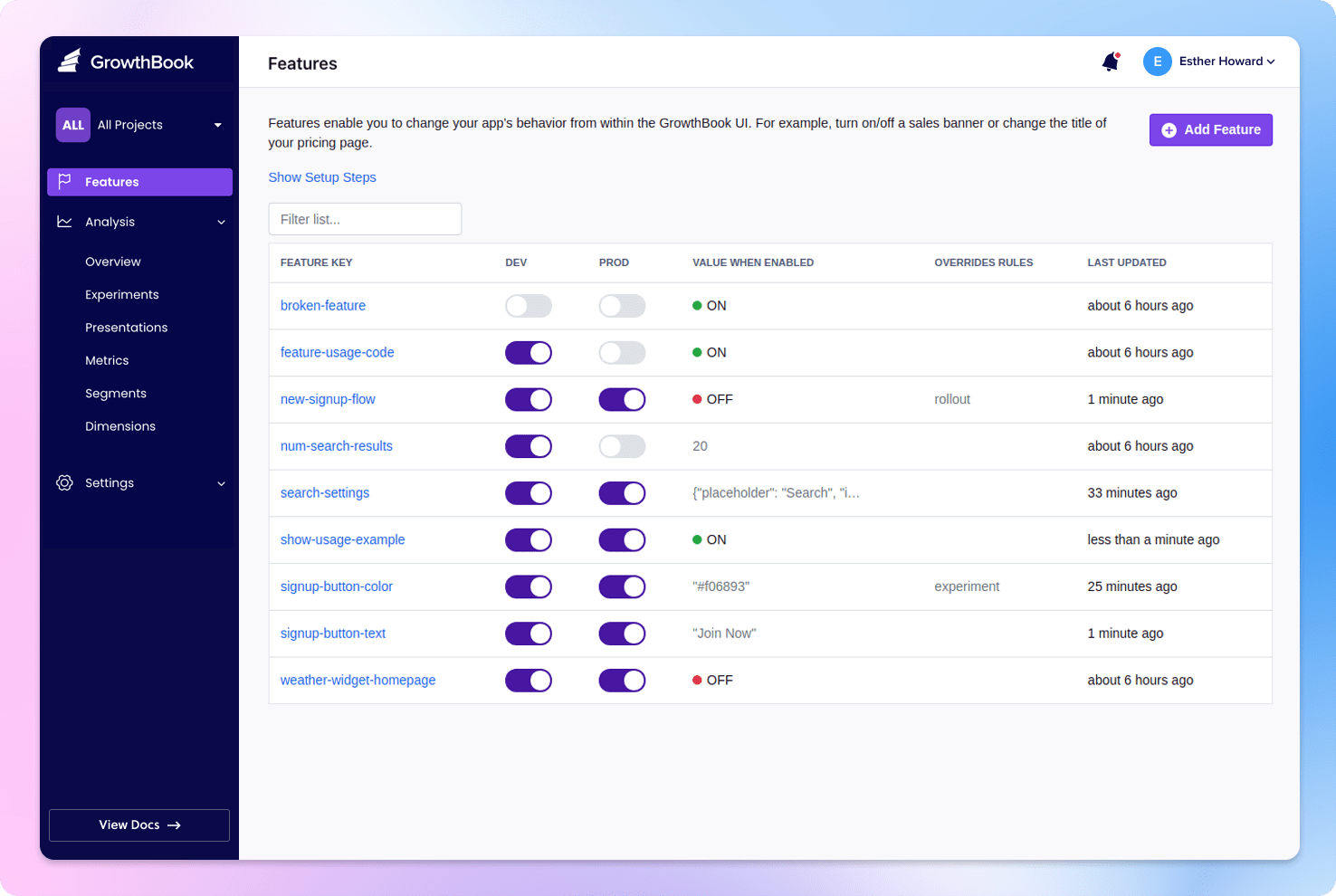
On G2 and Product Hunt, the recurring praise is around three things: the open-source license (teams can fork or self-host with zero per-seat tax), the warehouse-native architecture (no need to ship sensitive product events to a third party), and unusually fast hands-on support from the founding team. The recurring complaints are equally consistent: documentation is dense and gets lost in cross-references, the UI can feel intimidating to non-technical PMs, and SDK setup — especially around streaming vs. fetch-and-cache configurations — takes more reading than most teams expect on day one. Hacker News threads tend to compare GrowthBook favourably against LaunchDarkly on cost (multiple commenters report 5x savings after migrating) but note that LaunchDarkly's enterprise compliance and observability integrations remain ahead.
GrowthBook offers a generous free tier on cloud and unlimited free self-hosting, with paid tiers gated mostly on stats features and team-management controls.
| Plan | Price | Key Limits |
|---|---|---|
| Self-Hosted Open Source | $0 | Unlimited users, unlimited flags and experiments, MIT-licensed core |
| Cloud Starter | $0 | Up to 3 users, unlimited flags and experiments on GrowthBook Cloud |
| Cloud Pro | $40/user/month | Up to 50 users; unlocks CUPED, sequential testing, visual editor, advanced stats |
| Enterprise | Contact sales | Guardrail metrics, holdouts, custom roles, SSO, audit logs, dedicated support |
Best for: Engineering and product teams that already use a modern data warehouse, want their experimentation platform to read from it directly, and either need to self-host for compliance reasons or are tired of paying $75+/seat to LaunchDarkly. It is also a strong choice for solo developers and small startups, because the Cloud Starter and self-hosted tiers are genuinely free and feature-complete.
Not ideal for: Non-technical product teams that want a one-click visual editor and zero SQL, very large enterprises that need deep ServiceNow / Terraform / Datadog automation, or teams without a data warehouse at all.
Pros:
Cons:
The closest commercial competitor is LaunchDarkly — richer enterprise plumbing and streaming-first SDKs, but several times the seat cost and no full self-host option. Statsig sits in the same warehouse-native experimentation lane and has aggressive free pricing for startups, while PostHog bundles feature flags and experiments inside a broader product analytics suite that may double as your replacement for Mixpanel. Flagsmith and Unleash are honest open-source feature-flag-only alternatives if you don't need experimentation at all.
GrowthBook is the right pick when you already invest in a modern data stack and your bottleneck is an honest experimentation engine that doesn't charge per active user. Solo developers and bootstrapped startups can live on the free tier indefinitely. Mid-sized teams will find the $40/user Pro tier dramatically cheaper than LaunchDarkly while keeping a more credible stats engine. Where GrowthBook still loses ground is in enterprise compliance plumbing and in handholding for non-technical users — if either of those is your top concern, you'll want to evaluate LaunchDarkly or Statsig in parallel. We rate it 84/100 for being the best price-to-power ratio in the warehouse-native experimentation category in 2026.
Developer ToolsType-safe HTML templating language for Go with compile-time safety
 Developer Tools
Open-source API key management and rate limiting platform for modern developers
 Developer Tools
Open-source low-code platform for building internal business applications
 Developer Tools
Git-friendly open-source API client for REST, GraphQL, and gRPC
ServiceNow and Accenture Launch Forward Deployed Engineering Program to Scale Agentic AI in the Enterprise (May 6, 2026)
At Knowledge 2026, ServiceNow and Accenture announced a joint forward deployed engineering program that drops co-located engineer pods into customer environments to ship agentic AI workflows natively on the ServiceNow AI Platform — with access to 300+ pre-built agent skills and the AI Control Tower as the governance backbone.
May 7, 2026
ReFiBuy Raises $13.6M Seed to Help Brands Get Recommended by AI Shopping Agents (May 5, 2026)
ReFiBuy, the Raleigh-based agentic commerce platform from ChannelAdvisor founder Scot Wingo, closed an oversubscribed $13.6M seed led by NewRoad Capital Partners on May 5, 2026 — betting that the next billion-dollar e-commerce moat is being chosen by ChatGPT, Claude and Perplexity.
May 7, 2026
OpenAI Replaces ChatGPT's Default Model With GPT-5.5 Instant — 52.5% Fewer Hallucinations, 30% Shorter Answers (May 5, 2026)
OpenAI on May 5 swapped GPT-5.3 Instant for the new GPT-5.5 Instant as ChatGPT's default model, claiming 52.5% fewer hallucinated claims on high-stakes prompts and 30% more concise answers. The model also rolls into the API as chat-latest and adds personalization from Gmail and past chats for Plus and Pro web users.
May 7, 2026
Is this product worth it?
Built With
Compare with other tools
Open Comparison Tool →