
 Developer Tools
Templ
Type-safe HTML templating language for Go with compile-time safety
GitButler is a modern Git client with virtual branches, stacked branches, and a CLI built for AI agents. Created by GitHub co-founder Scott Chacon, it ships free for individuals and just raised $17M from a16z.
GitButler is a modern Git-based version control client built around virtual branches, stacked commits, and AI-native workflows. We rate it 83/100 — it is the most opinionated and pleasant Git GUI we have used in years, and the right tool for any developer juggling more than one in-flight branch at a time.
GitButler was founded in 2023 by Scott Chacon — co-founder of GitHub and author of Pro Git — together with Kiril Videlov. It is a free desktop application written in Tauri with a Svelte and TypeScript front end and a Rust backend, available on macOS, Windows, and Linux. The same Rust core ships as a drop-in CLI called but, so the GUI and terminal share one engine.
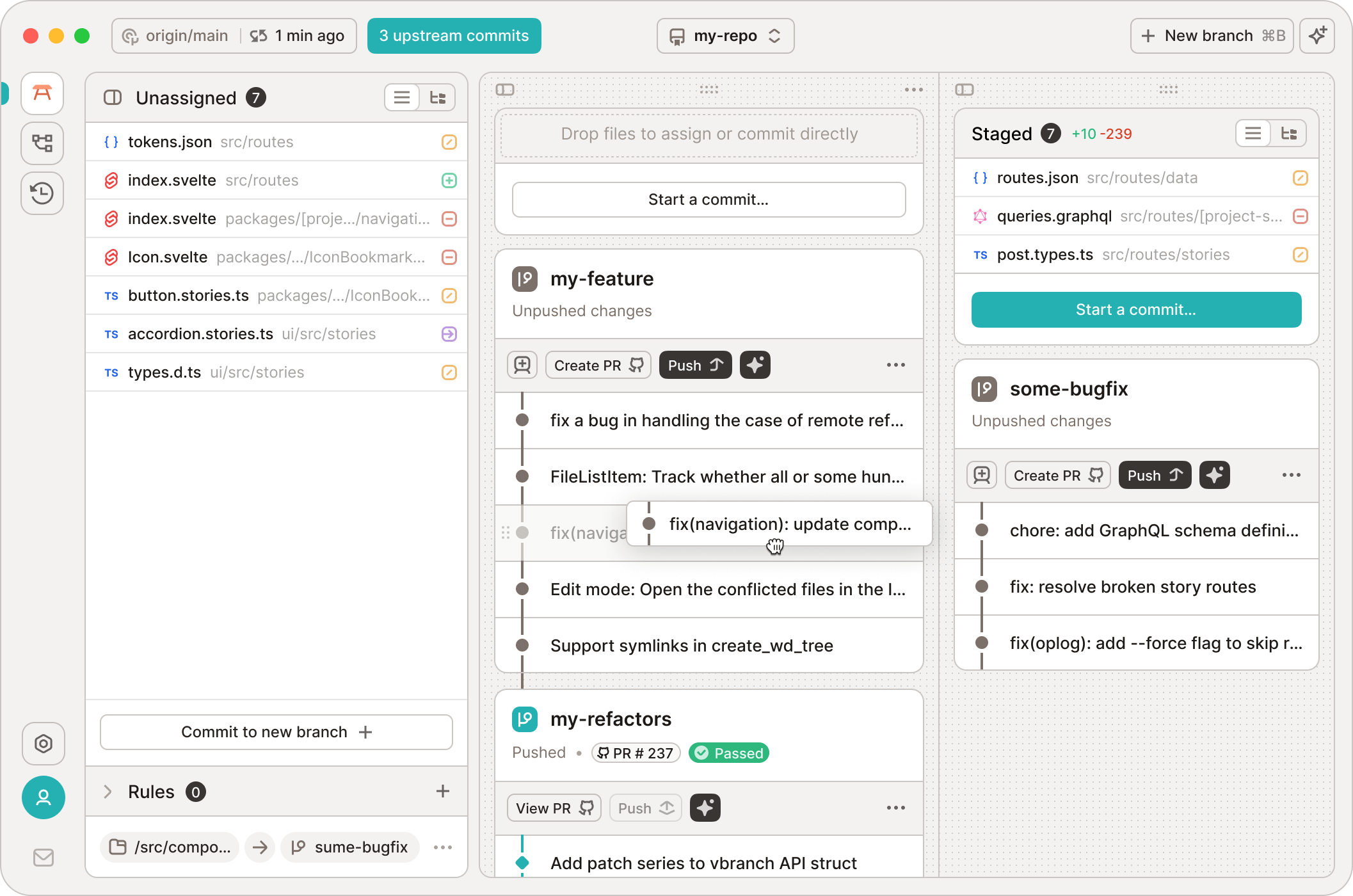
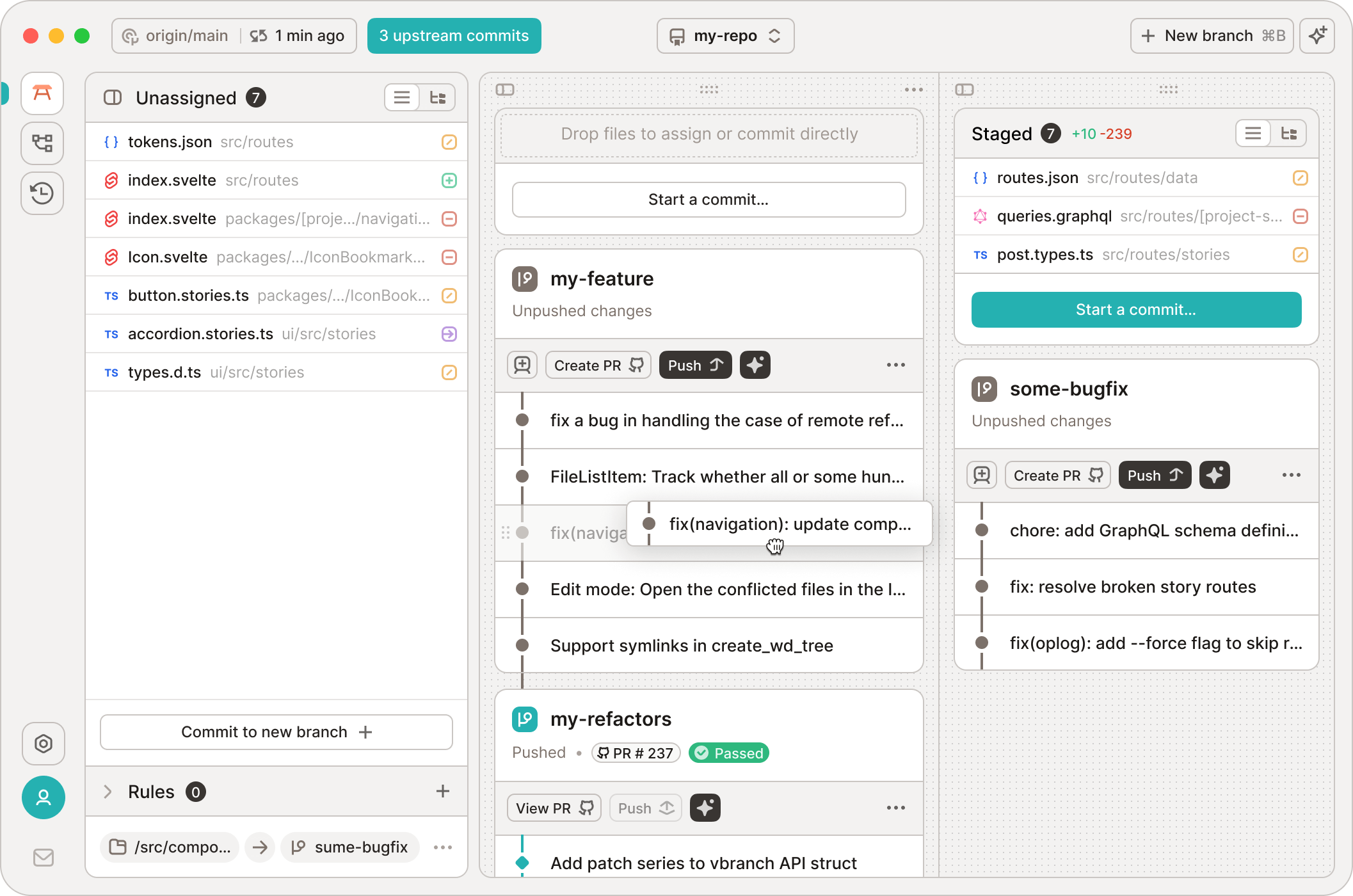
The pitch is simple: vanilla Git forces you to pick one branch at a time and pay a stash-or-commit tax every time you switch. GitButler replaces that with virtual branches — visible kanban-style lanes where uncommitted changes are assigned to multiple branches at once, all applied to your working directory simultaneously. On the company raised a $17M Series A led by a16z, with Fly Ventures and A Capital participating, to scale this idea into the default version-control layer for AI-driven development.
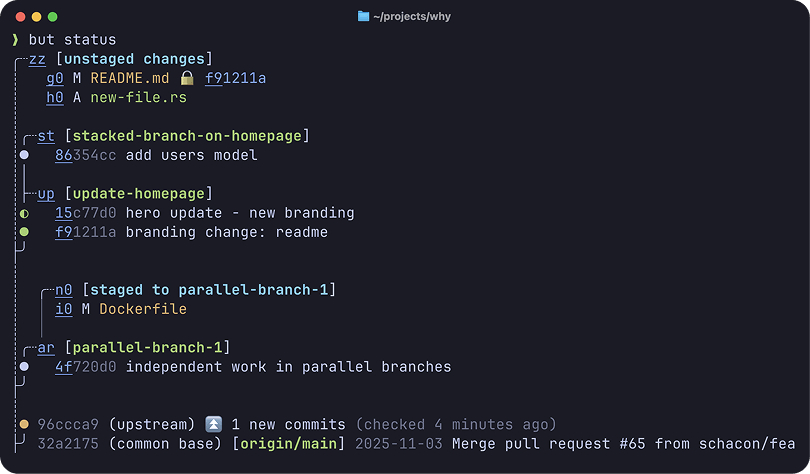
but commands. The README is blunt about it: "Forget about rebase -i, you don't need it anymore."reflog spelunking.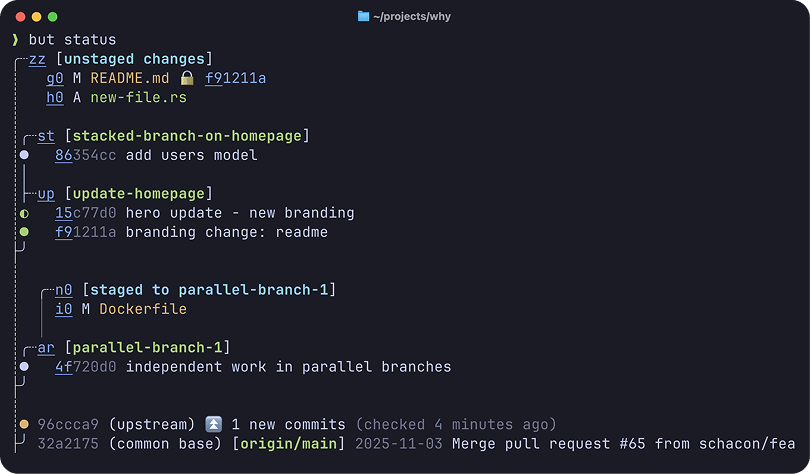
but CLI is the same Rust engine that powers the GUI — useful for scripting and remote machines where you cannot run the desktop app.Sentiment is split, and the split is informative. On Product Hunt and developer blogs, virtual branches are widely praised as "the missing layer" above Git — one Product Hunt reviewer called it the "best git experience ever" and several engineers writing two-week diaries report that they stopped stashing entirely after switching. The drag-and-drop commit composition and the undo timeline get specific praise even from skeptics.
The complaints are also specific. The Hacker News thread that followed the funding announcement was unusually critical: developers raised real concerns about pre-commit hooks being installed without explicit approval, automated AI commits inadvertently capturing secrets in immutable Git history, and confusion over the auto-generated branch names. The fair-source license — which becomes MIT after two years but explicitly forbids competitive forks until then — also drew pushback from the open-source-purist crowd. None of these are dealbreakers, but they are the kind of friction that comes with any opinionated, young product.
GitButler is currently free for individual use across macOS, Windows, and Linux, with no seat caps, no repo limits, and no AI usage meter on the personal tier. A paid team plan with collaborative review and admin controls is on the public roadmap but had not shipped at the time of writing.
| Plan | Price | Key Limits |
|---|---|---|
| Individual | $0 | Full GUI, but CLI, virtual and stacked branches, AI tooling, forge integration |
| Team (coming) | TBA | Patch-based collaborative review, organization controls, audit logs |
Best for: Solo developers and small teams who routinely juggle multiple in-flight branches, anyone running parallel AI coding agents who needs each agent on its own isolated branch in one working directory, and engineers who have given up on git rebase -i as a daily workflow.
Not ideal for: Teams with strict policies that disallow client-side modifications to commit history, repos with long-running monolithic feature branches where virtual branches add little value, or organizations that require a fully OSI-approved license today rather than two years from a release.
Pros:
git rebase --onto chain into a reliable drag-and-drop operation.Cons:
Jujutsu (jj): An open-source Git-compatible VCS from Google with a similar "every change is reversible" philosophy, but command-line only and a steeper conceptual leap. Graphite: A stacked-PR workflow built on top of GitHub with a strong web UI; better for teams that live in PRs, weaker for local branch juggling. GitHub Desktop / Sourcetree / Fork: Traditional Git GUIs with checkout-then-commit semantics — fine if you only ever work on one branch at a time, but they offer none of GitButler's parallel-branch model. We have a separate review of Lazygit for the keyboard-driven crowd.
For any developer who routinely has more than one feature in flight, or who runs Claude Code or Cursor agents and wants them to stop stomping on each other's changes, GitButler is the most coherent answer on the market today. It is free, polished, runs on every desktop OS, and has a credible long-term sponsor. The legitimate concerns are around the security defaults of its hooks and the fair-source license — both fixable, neither showstoppers. We rate it 83/100: very good, with the caveat that you should read the security docs before pointing it at a repo full of production secrets.
but CLI runs on the same platforms and is the same Rust engine that powers the GUI.ServiceNow and Accenture Launch Forward Deployed Engineering Program to Scale Agentic AI in the Enterprise (May 6, 2026)
At Knowledge 2026, ServiceNow and Accenture announced a joint forward deployed engineering program that drops co-located engineer pods into customer environments to ship agentic AI workflows natively on the ServiceNow AI Platform — with access to 300+ pre-built agent skills and the AI Control Tower as the governance backbone.
May 7, 2026
ReFiBuy Raises $13.6M Seed to Help Brands Get Recommended by AI Shopping Agents (May 5, 2026)
ReFiBuy, the Raleigh-based agentic commerce platform from ChannelAdvisor founder Scot Wingo, closed an oversubscribed $13.6M seed led by NewRoad Capital Partners on May 5, 2026 — betting that the next billion-dollar e-commerce moat is being chosen by ChatGPT, Claude and Perplexity.
May 7, 2026
OpenAI Replaces ChatGPT's Default Model With GPT-5.5 Instant — 52.5% Fewer Hallucinations, 30% Shorter Answers (May 5, 2026)
OpenAI on May 5 swapped GPT-5.3 Instant for the new GPT-5.5 Instant as ChatGPT's default model, claiming 52.5% fewer hallucinated claims on high-stakes prompts and 30% more concise answers. The model also rolls into the API as chat-latest and adds personalization from Gmail and past chats for Plus and Pro web users.
May 7, 2026
Is this product worth it?
Built With
Compare with other tools
Open Comparison Tool →