 Design
Screen Studio
Professional macOS screen recorder with automatic zoom and cursor smoothing
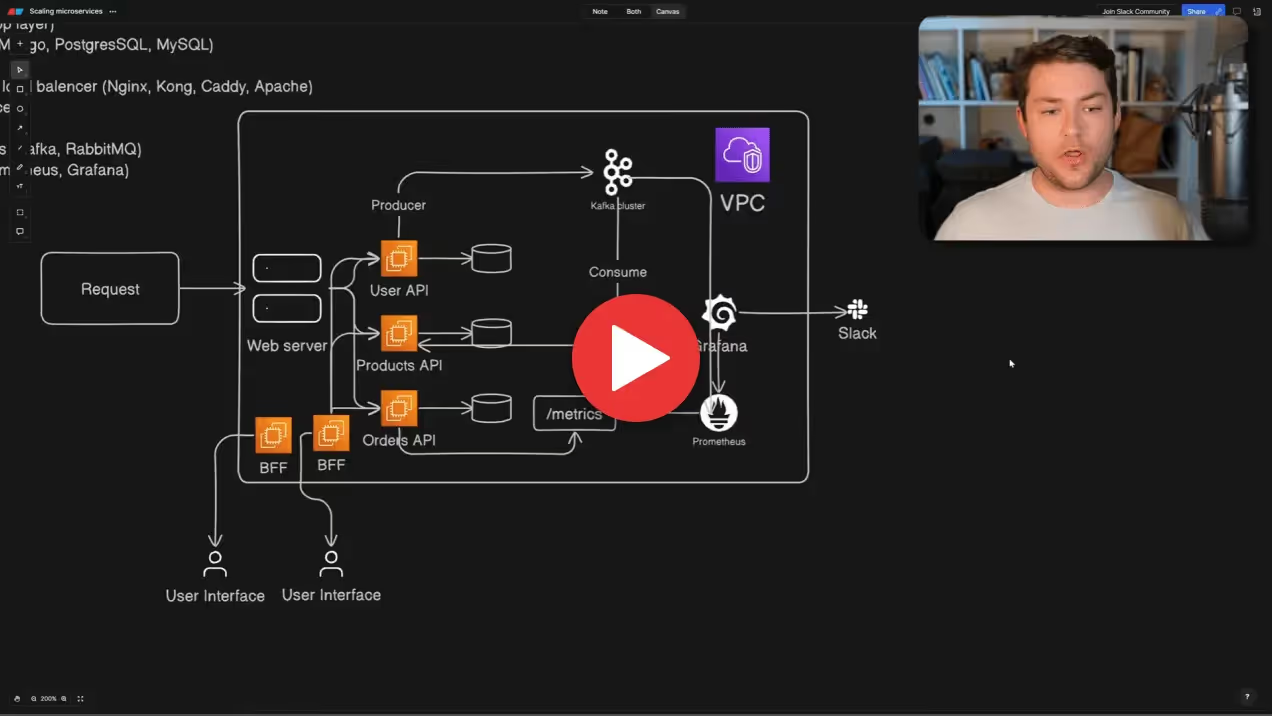
Eraser is an AI-first diagramming and docs tool built for engineering teams. With diagram-as-code, GitHub-native integration, and an AI that turns prompts into architecture diagrams, it has become a go-to for technical design.
Eraser is an AI-first diagramming and docs tool built for engineering teams who think in flowcharts, sequence diagrams, and cloud architecture maps. We rate it 84/100 — an excellent pick for software teams that want diagrams to live next to code rather than rotting inside Confluence.
Eraser is a web-based canvas + markdown notes app aimed squarely at developers, founded in 2021 by Shin Kim (formerly chief of staff to investor Elad Gil). The product launched out of stealth in and crossed one million users not long after, then went deeper on AI in with a free sidecar called DiagramGPT — that single tool now drives roughly 30% of all Eraser sign-ups according to its founder.
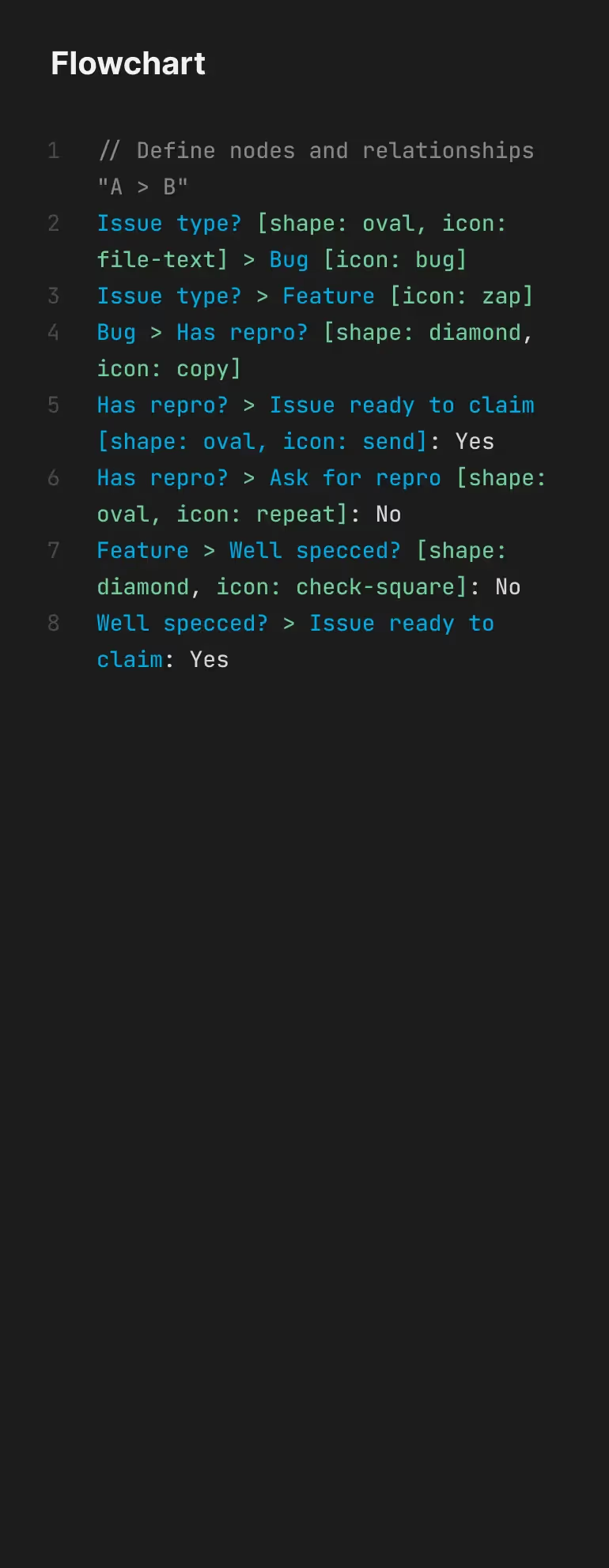
The pitch is simple: most engineering teams either fight Lucidchart, draw in Figma, or skip diagrams entirely. Eraser treats diagrams as code (a markdown-like syntax called diagram-as-code), pairs that with an AI that converts prose or codebase context into structured drawings, and ships a two-way GitHub integration so design docs can be reviewed in pull requests. Total disclosed funding is around $6.75M across seed and follow-on rounds.


Sentiment on Product Hunt and Reddit is mostly positive but specific. The most upvoted theme is speed: developers consistently report producing a usable diagram in roughly a tenth of the time it would take in Lucidchart or draw.io, with case studies on Eraser's own site claiming 10× to 20× improvements. Diagram-as-code gets praise from engineers who already version-control their docs.
The recurring complaints are equally consistent. The mobile web app is functional for viewing but painful for editing, the AI sometimes invents component names that do not exist in the supplied context, and the diagram catalog is narrow — there is no native mind-map, Gantt, or BPMN type yet. A few Reddit threads in r/devops note that the free tier's 5-AI-diagram limit gets used up quickly when learning the tool.
| Plan | Price | Key Limits |
|---|---|---|
| Free | $0/month | 3 files, 5 AI diagrams, 7-day version history, unlimited guests |
| Starter | $15/user/mo (annual) or $20 monthly | Unlimited files, 40 AI diagrams, 90-day history, private files, 20 custom icons |
| Business | $45/user/mo (annual) or $60 monthly | 250 AI diagrams, unlimited history, SAML SSO, 100 custom icons, reference diagrams |
| Enterprise | Contact sales | Unlimited AI, flexible deployments, customer success manager, ACH/wire |
The Starter plan is the sweet spot for indie developers and small teams; Business is priced where most engineering orgs will land thanks to SSO being gated to that tier.
Best for: Software engineers, staff/principal engineers writing RFCs, platform teams documenting service architectures, and any engineering org running "docs as code" with PR-based reviews.
Not ideal for: Project managers who need Gantt charts or mind maps, mobile-first users, or teams that want a general whiteboard for fully freeform brainstorming — tldraw or FigJam fit better there.
Pros:
Cons:
Excalidraw is the open-source freeform whiteboard if you want everything to look hand-drawn and don't need AI. tldraw is the most ambitious infinite-canvas tool right now, with its own AI features. Mermaid (free, embedded in GitHub) is the no-cost diagram-as-code option for teams that don't need a UI. Eraser sits above all three in polish and engineering-team focus, but its closed-source core and per-seat pricing are real trade-offs.
For an engineering team that writes design docs and ships them in pull requests, Eraser is one of the best paid bets in 2026 — the AI is accurate enough to save real time, and the diagram-as-code format means your team's diagrams won't decay into screenshots. Solo developers can stay on the Free plan or use the public DiagramGPT for one-off generations. Skip it if you need mind-maps, mobile editing, or a generalist whiteboard. Our final score: 84/100.
ServiceNow and Accenture Launch Forward Deployed Engineering Program to Scale Agentic AI in the Enterprise (May 6, 2026)
At Knowledge 2026, ServiceNow and Accenture announced a joint forward deployed engineering program that drops co-located engineer pods into customer environments to ship agentic AI workflows natively on the ServiceNow AI Platform — with access to 300+ pre-built agent skills and the AI Control Tower as the governance backbone.
May 7, 2026
ReFiBuy Raises $13.6M Seed to Help Brands Get Recommended by AI Shopping Agents (May 5, 2026)
ReFiBuy, the Raleigh-based agentic commerce platform from ChannelAdvisor founder Scot Wingo, closed an oversubscribed $13.6M seed led by NewRoad Capital Partners on May 5, 2026 — betting that the next billion-dollar e-commerce moat is being chosen by ChatGPT, Claude and Perplexity.
May 7, 2026
OpenAI Replaces ChatGPT's Default Model With GPT-5.5 Instant — 52.5% Fewer Hallucinations, 30% Shorter Answers (May 5, 2026)
OpenAI on May 5 swapped GPT-5.3 Instant for the new GPT-5.5 Instant as ChatGPT's default model, claiming 52.5% fewer hallucinated claims on high-stakes prompts and 30% more concise answers. The model also rolls into the API as chat-latest and adds personalization from Gmail and past chats for Plus and Pro web users.
May 7, 2026
Is this product worth it?
Built With
Compare with other tools