 Developer Tools
Templ
Type-safe HTML templating language for Go with compile-time safety
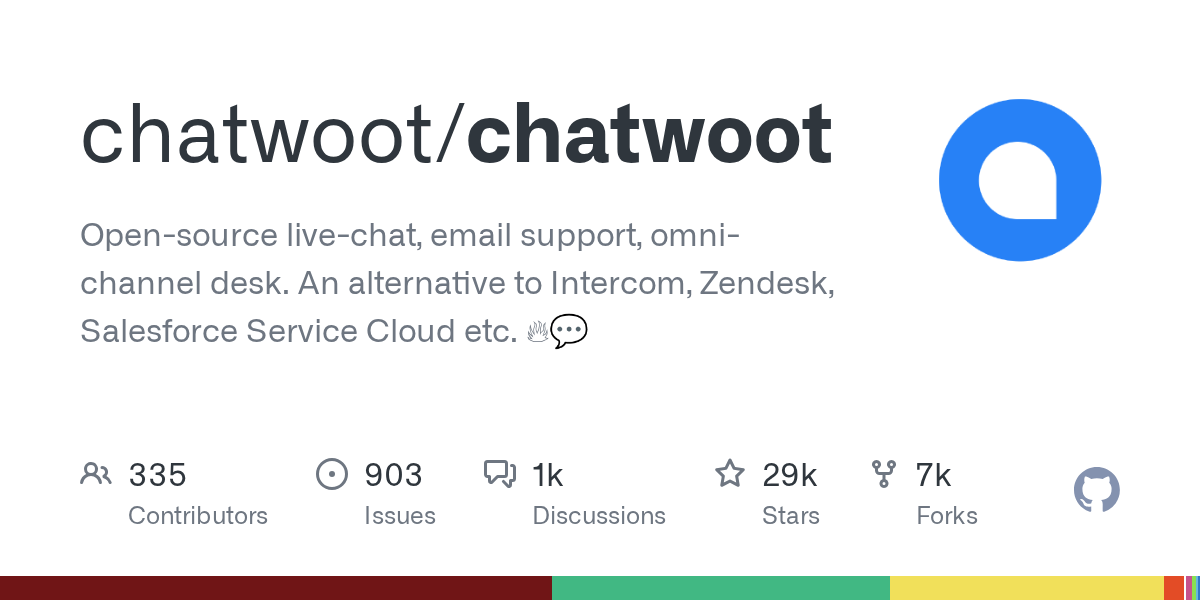
Chatwoot is an open-source, self-hostable customer support platform with an omnichannel inbox and Captain AI agent. We rate it 86/100 — the most mature MIT-licensed alternative to Intercom and Zendesk if you can run a Rails + Postgres stack.
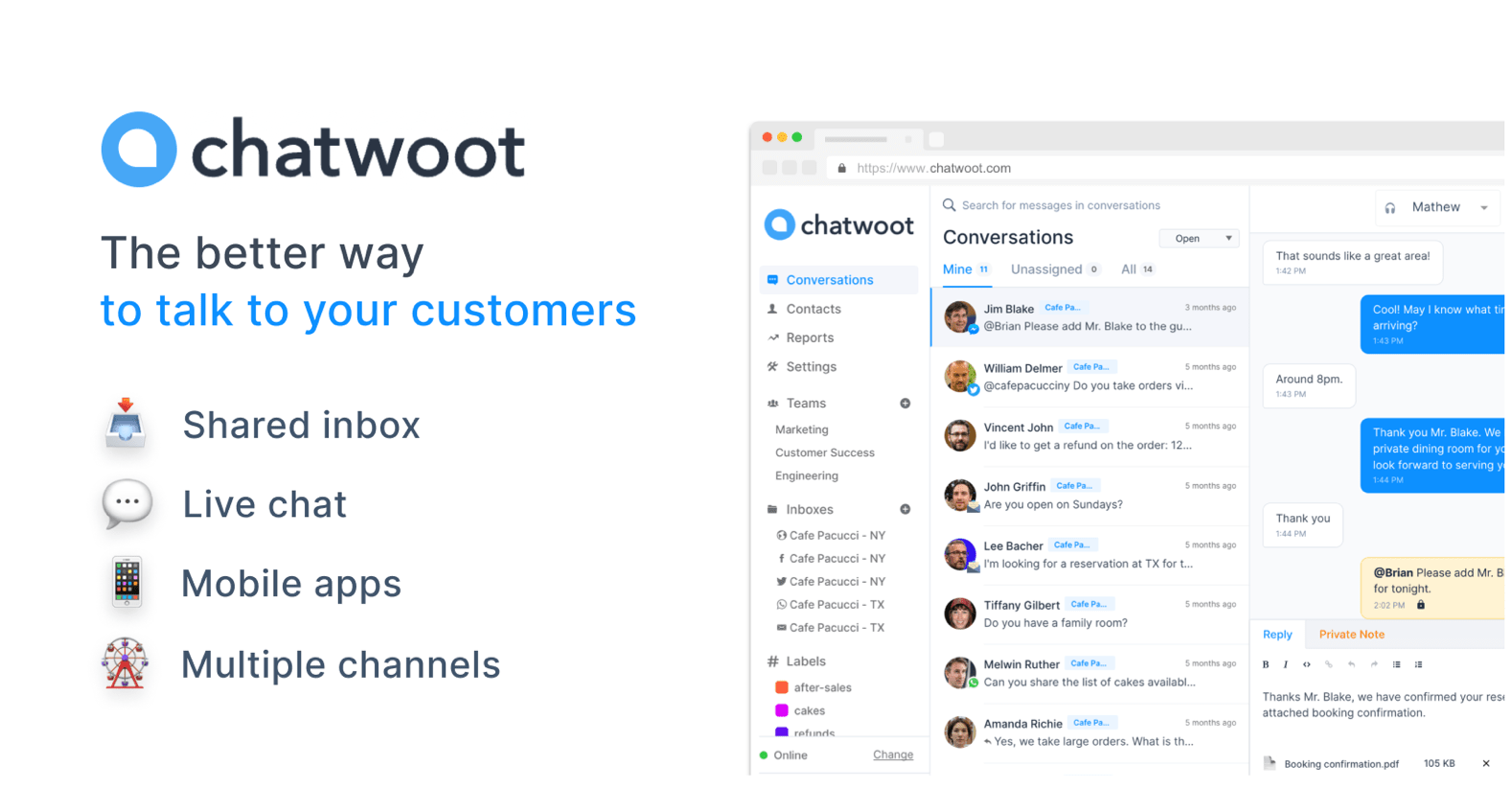
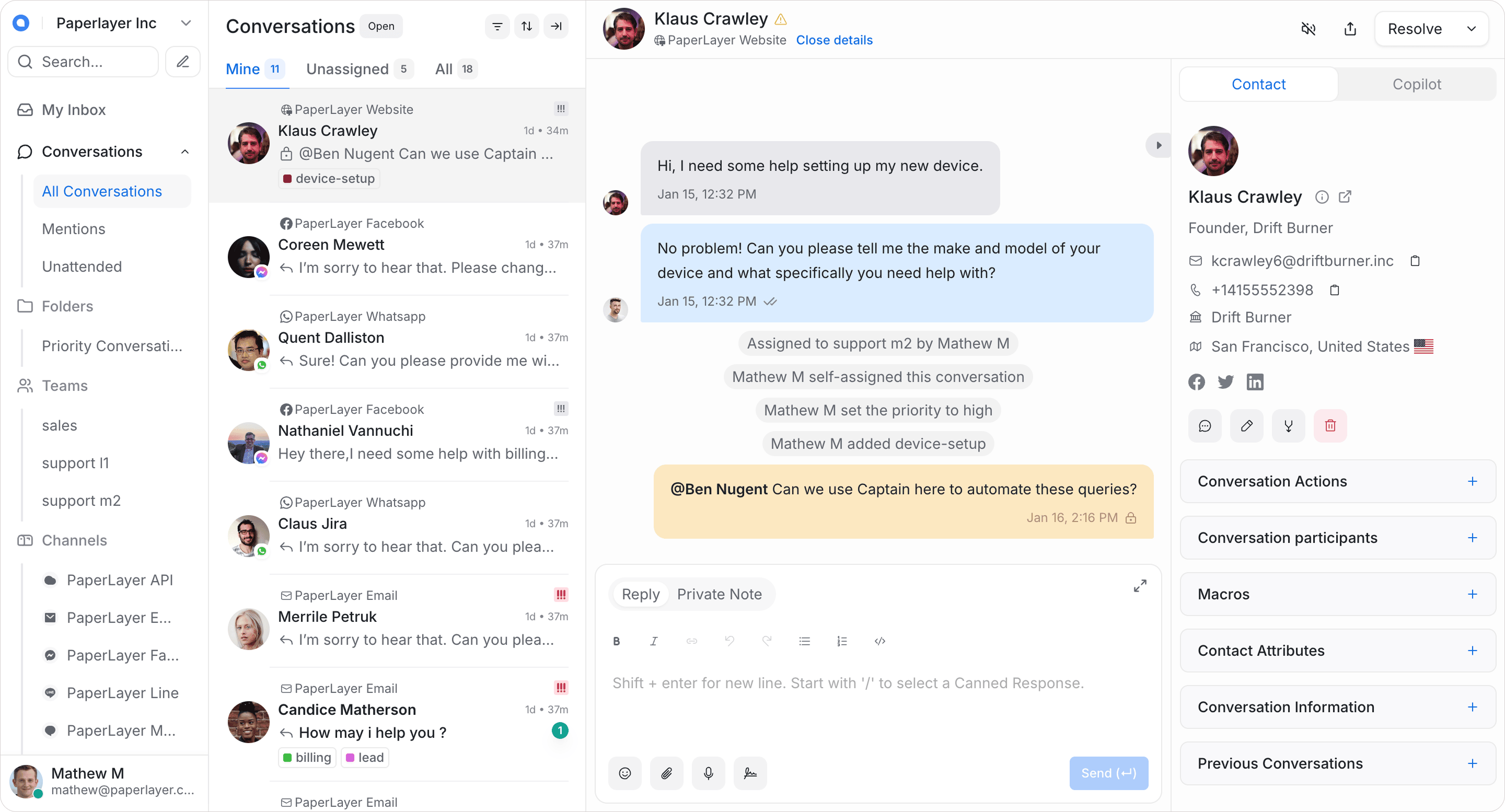
Chatwoot is an open-source, self-hostable customer support platform that unifies live chat, email, WhatsApp, Instagram, Facebook, Telegram, SMS and more into a single agent inbox — with a built-in AI agent called Captain. We rate it 86/100 — the most mature MIT-licensed alternative to Intercom and Zendesk in 2026, if you have the engineering muscle to run Rails and Postgres or are happy paying for the hosted cloud.
Chatwoot is built by Chatwoot Inc., a remote-first company co-founded by Pranav Raj S. and Sony Mathew. The project's GitHub repo at chatwoot/chatwoot was made public on and has since crossed 28,800 GitHub stars and 7,000 forks. The project's own website reports more than 50,000 self-hosted production installations and 15,000+ paying organizations.
The product is built on Ruby on Rails with a Vue.js frontend, ships as a Docker image, and is fully MIT-licensed for the core. The latest release at time of writing is v4.13.0, shipped on . There is also a managed cloud at app.chatwoot.com with a free Hacker tier, plus a paid Enterprise edition that adds SSO, audit logs and Captain AI credits on top of the open-source core.

Sentiment across Hacker News, Reddit's r/selfhosted and Product Hunt is broadly positive but pragmatic. The Show HN thread for Chatwoot 4.0 praised the team for shipping a real open-source Intercom alternative rather than a thin wrapper, and reviewers consistently call out the omnichannel inbox, Slack integration and the cost savings versus Intercom or Zendesk as the biggest wins.
The recurring complaints are equally consistent. Self-hosters on Reddit report stability problems under heavy load — one user described their installation as "the Chatwoot that fell constantly" — and note that keeping a production Chatwoot running smoothly often demands a dedicated DevOps engineer who knows Rails, Sidekiq and Postgres. Others on Product Hunt and the eesel AI review describe Captain as serviceable for FAQ deflection but behind tools like Intercom Fin or Ada when it comes to deeper knowledge ingestion and autonomous workflows. A small but persistent thread of bug reports flags an "agents stuck offline" issue after disconnects that has yet to be fully resolved.
Chatwoot has two tracks: a permissively-licensed self-hosted edition that is free forever, and a managed cloud with four tiers. Cloud pricing is per agent, billed annually, and includes a 15-day free trial:
| Plan | Price | Key Limits |
|---|---|---|
| Hacker | $0/agent/month | Up to 2 agents, 500 conversations/month, live-chat channel only, 30-day data retention. |
| Startups | $19/agent/month | Unlimited conversations, all channels, 300 Captain AI credits, help center, 1-year retention. |
| Business | $39/agent/month | Adds teams, automation rules, custom attributes, 500 Captain credits, 2-year retention. |
| Enterprise | $99/agent/month | Adds SSO/SAML, audit logs, agent capacity, 800 Captain credits, 3-year retention. |
Self-hosted Community is unlimited agents, unlimited conversations and unlimited channels — you simply pay your own infrastructure bill.
Best for: SMBs and mid-market support teams that want Intercom-style omnichannel chat without Intercom-style pricing, agencies running support for multiple clients on a single self-hosted install, and engineering-led teams that value data sovereignty and the freedom to fork and customize.
Not ideal for: Large enterprises that need best-in-class autonomous AI deflection (Intercom Fin, Ada or Decagon are stronger here), non-technical founders who don't want to babysit a Rails stack and can't afford the cloud, or teams whose support workflow is dominated by voice — Chatwoot's voice/IVR story is still thin compared with Talkdesk or Aircall.
Pros:
Cons:
The closest fully open-source alternative is Erxes, which has a broader CRM scope but a smaller community. Tiledesk is also Apache-licensed and leans more heavily on chatbot flows. On the commercial side, Intercom remains the gold standard for autonomous AI support but starts around $74/seat/month and gets expensive fast, while Zendesk and Freshdesk are stronger on ticketing and reporting but less developer-friendly. Doolpa's own reviews of Listmonk and Activepieces cover adjacent open-source ops tools that pair well with Chatwoot.
Yes, with caveats. If your team can either run a Rails + Postgres + Sidekiq deployment competently or is happy paying $19–99/agent for the cloud, Chatwoot is the most polished open-source customer support platform on the market in 2026 and quietly the cheapest path to a real omnichannel desk. If you need state-of-the-art autonomous AI deflection or a turn-key voice contact center, you'll get there faster with Intercom or Zendesk and pay accordingly. We rate it 86/100 — a clear "Very Good" — with the missing points sitting almost entirely on the AI and self-host operations side.
ServiceNow and Accenture Launch Forward Deployed Engineering Program to Scale Agentic AI in the Enterprise (May 6, 2026)
At Knowledge 2026, ServiceNow and Accenture announced a joint forward deployed engineering program that drops co-located engineer pods into customer environments to ship agentic AI workflows natively on the ServiceNow AI Platform — with access to 300+ pre-built agent skills and the AI Control Tower as the governance backbone.
May 7, 2026
ReFiBuy Raises $13.6M Seed to Help Brands Get Recommended by AI Shopping Agents (May 5, 2026)
ReFiBuy, the Raleigh-based agentic commerce platform from ChannelAdvisor founder Scot Wingo, closed an oversubscribed $13.6M seed led by NewRoad Capital Partners on May 5, 2026 — betting that the next billion-dollar e-commerce moat is being chosen by ChatGPT, Claude and Perplexity.
May 7, 2026
OpenAI Replaces ChatGPT's Default Model With GPT-5.5 Instant — 52.5% Fewer Hallucinations, 30% Shorter Answers (May 5, 2026)
OpenAI on May 5 swapped GPT-5.3 Instant for the new GPT-5.5 Instant as ChatGPT's default model, claiming 52.5% fewer hallucinated claims on high-stakes prompts and 30% more concise answers. The model also rolls into the API as chat-latest and adds personalization from Gmail and past chats for Plus and Pro web users.
May 7, 2026
Is this product worth it?
Built With
Compare with other tools
Open Comparison Tool →