
 Hosting & Infrastructure
Pi-hole
Network-wide ad blocker and DNS sinkhole — kills ads on every device on your network without any client software
Bunny.net is a developer-friendly edge platform that bundles CDN, storage, video, DNS, and edge compute at pay-as-you-go prices that are routinely 4-10x cheaper than Cloudfront and Fastly. We rate it 86/100.
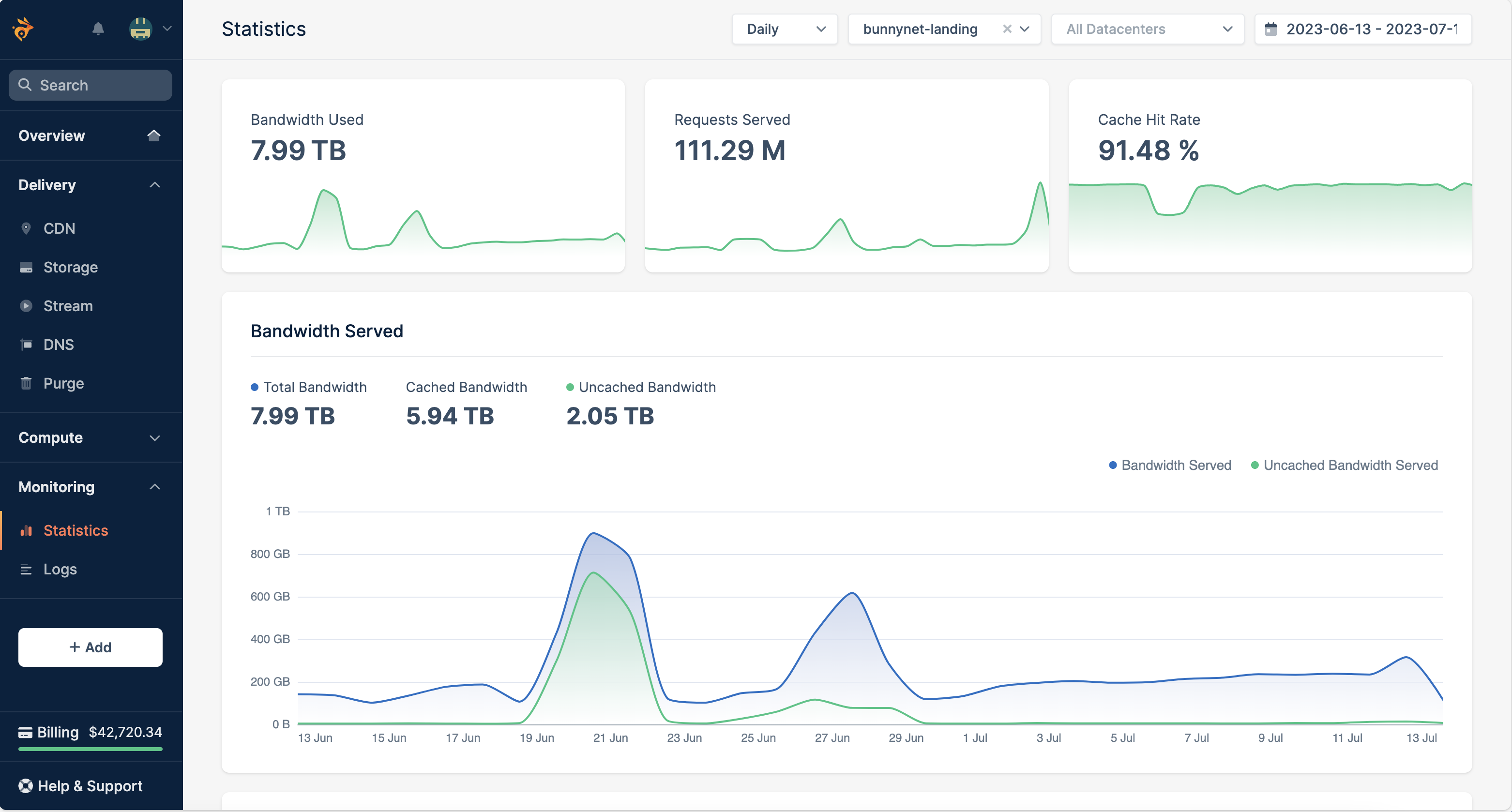
Bunny.net is a Slovenia-based global edge platform that bundles a 119 PoP CDN, edge storage, video streaming, DNS, edge scripting, and a SQLite-compatible database into a single pay-as-you-go account with a $1 monthly minimum. We rate it 86/100 — an excellent fit for indie developers, video-heavy sites, WordPress operators, and bandwidth-hungry projects that want CloudFront-class performance without CloudFront-class invoices.
Bunny.net launched in as BunnyCDN, founded by Dejan Grofelnik Pelzel under the parent company BunnyWay d.o.o. in Ljubljana, Slovenia. It was a single-product CDN for years, then rebranded to bunny.net in 2021 as it expanded into storage, streaming, and a wider edge platform. The company is bootstrapped, profitable, and now serves 85,000+ paying customers across a network the company markets at over 200 Tbps of capacity.
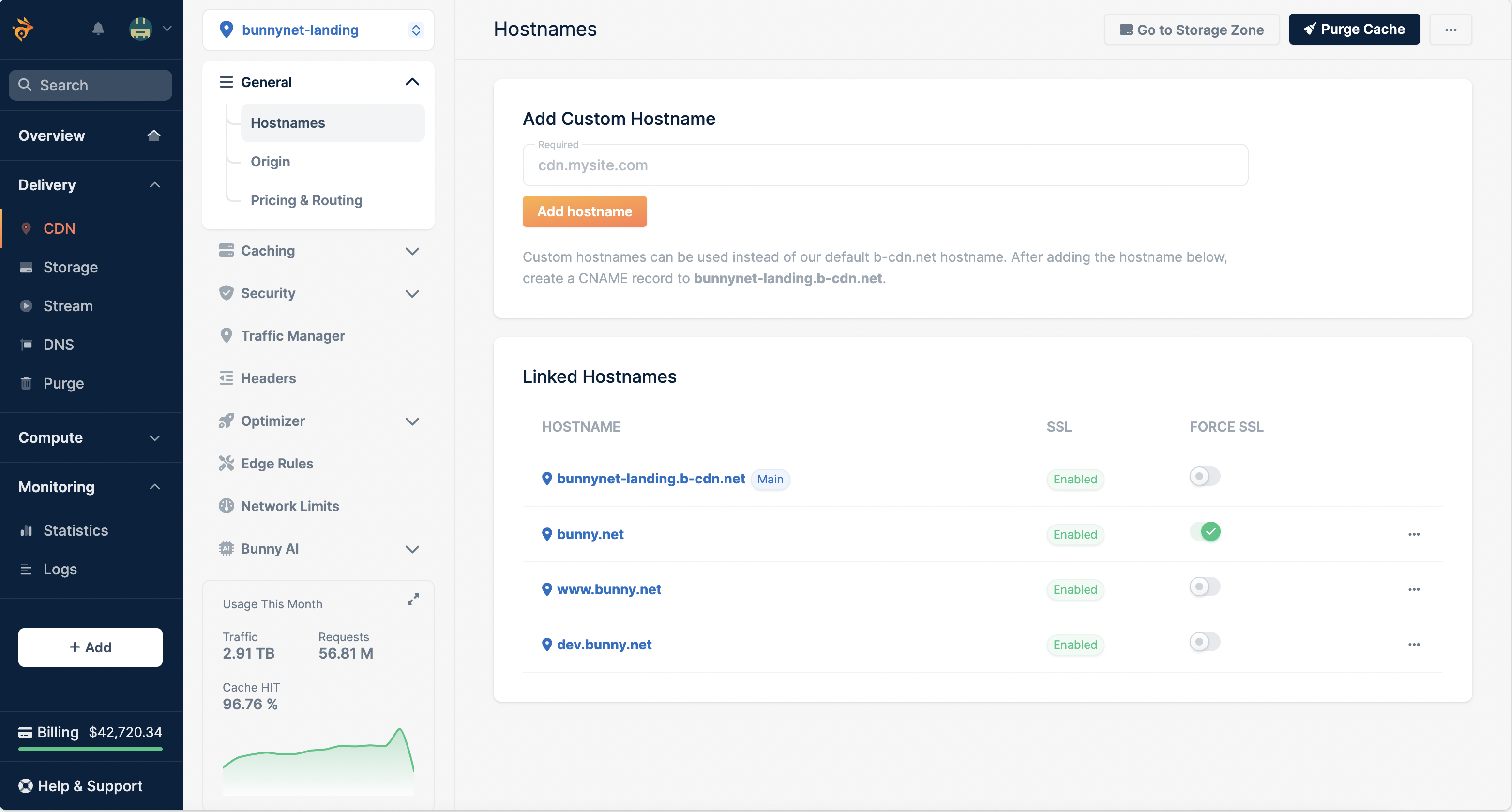
The pitch is unusually simple for the category: usage-based prices in plain dollars, every feature included on every account, no per-request fees, and a 14-day free trial that does not ask for a credit card. You point a Pull Zone at your origin, swap your DNS, and assets ship from the nearest of 119 edge locations — according to bunny.net's own benchmarking against CDNPerf data, with a worldwide median latency around 24 ms.
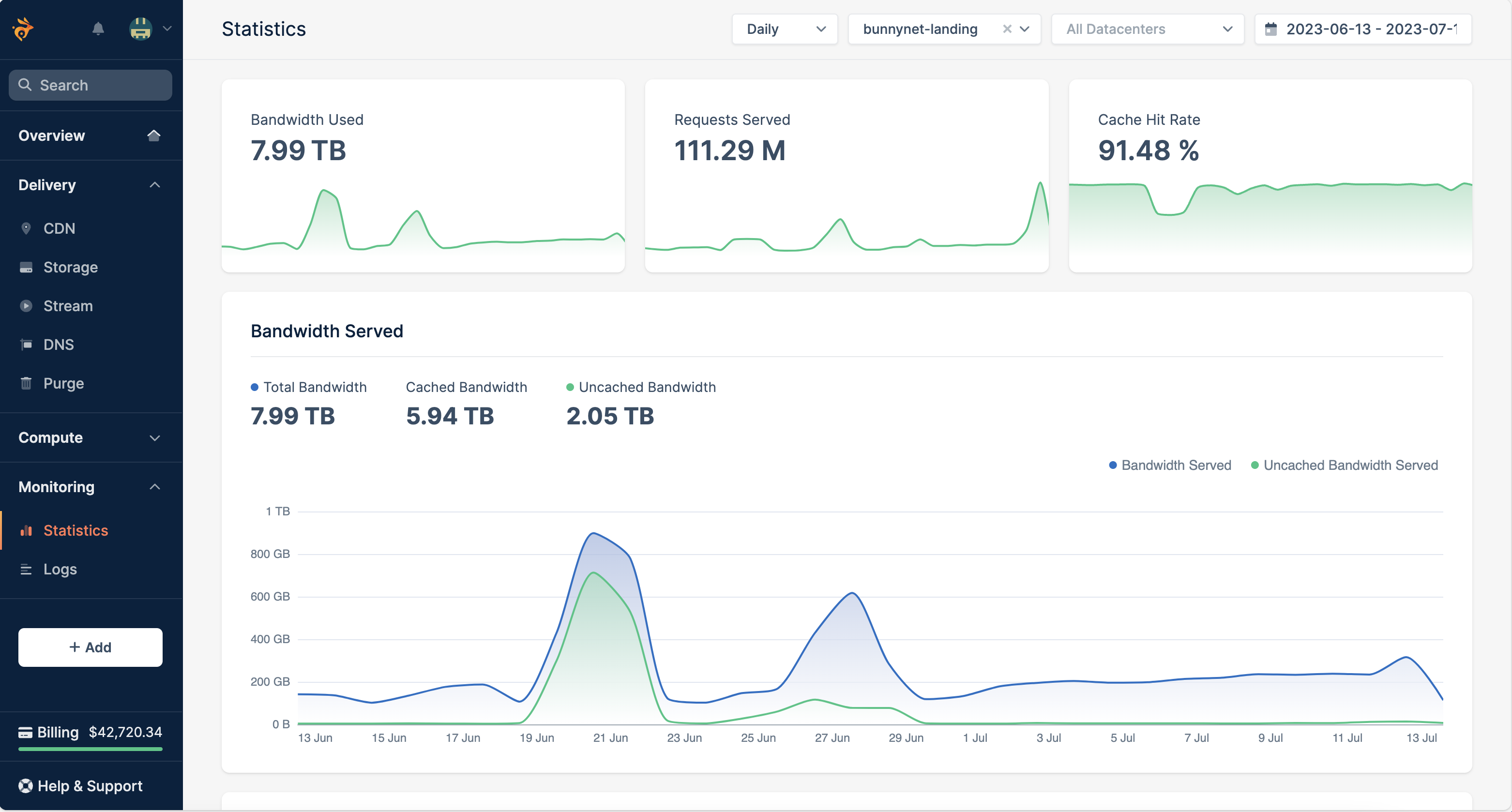
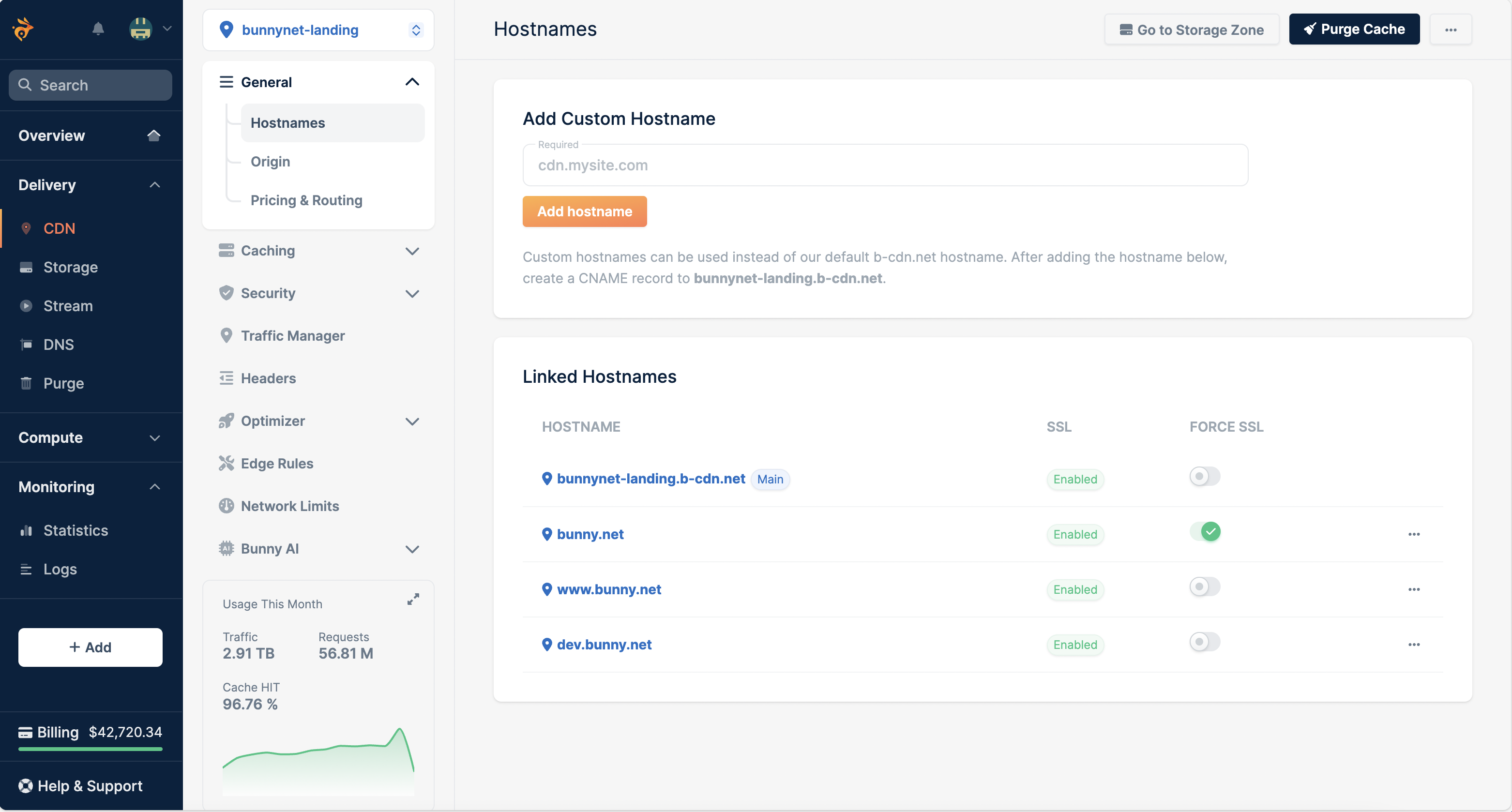
On Trustpilot, bunny.net averages around 4.9 stars from thousands of reviews — one of the highest CDN ratings on the platform. On G2 and SourceForge, the recurring praise lands on three points: predictable bills, a genuinely simple dashboard, and support that answers in minutes rather than days. On Reddit's r/webdev, r/selfhosted, and r/sysadmin, threads benchmarking BunnyCDN against Cloudflare's free plan and CloudFront keep coming back to the same conclusion — for paid tiers, bunny.net is hard to beat on price-per-byte.
The complaints are real and worth knowing before you sign up. The most cited issue is that Smart Cache does not cache HTML responses by default, which surprises operators who assume a CDN automatically front-pages everything — you have to build an Edge Rule to cache full pages. A few users on Reddit and Trustpilot have flagged slow first-segment HLS load times on Bunny Stream, especially in regions covered only by the Volume network. Documentation is improving but still trails Cloudflare's depth on the more advanced products like Edge Scripting and Magic Containers.
Bunny.net is fully usage-based with a $1 monthly minimum and a 14-day free trial that does not require a credit card.
| Service | Price | Notes |
|---|---|---|
| CDN Standard (Europe & NA) | $0.01/GB | 119 PoPs, regional pricing |
| CDN Standard (Asia & Oceania) | $0.03/GB | Same 119 PoP network |
| CDN Volume (global) | From $0.005/GB | Drops to $0.002/GB above 1 PB |
| Edge Storage (HDD) | $0.01/GB stored | Optional multi-region replication |
| Bunny Stream | $0.005/min encoded + delivery | HLS, AI transcribe, DRM optional |
| Magic Containers | From $0.0000125/sec | Pay only when running |
For real-world context, bunny.net's own pricing page shows 5 TB of Europe / North America CDN traffic costs roughly $50 on bunny.net versus $125 on CacheFly, $165 on CDN77, and $425+ on AWS CloudFront. There is no fixed-term contract, no commitment, and no per-request fee. Affiliate signups earn $20 per new paying customer (or $25 in Bunny credits if redeemed in-platform).
Best for: Indie developers, WordPress operators, bandwidth-heavy SaaS, video streaming sites, gaming and software distributors, and any team that wants global performance without an enterprise contract. The combination of CDN + Storage + Stream on one bill is especially strong for media-heavy startups.
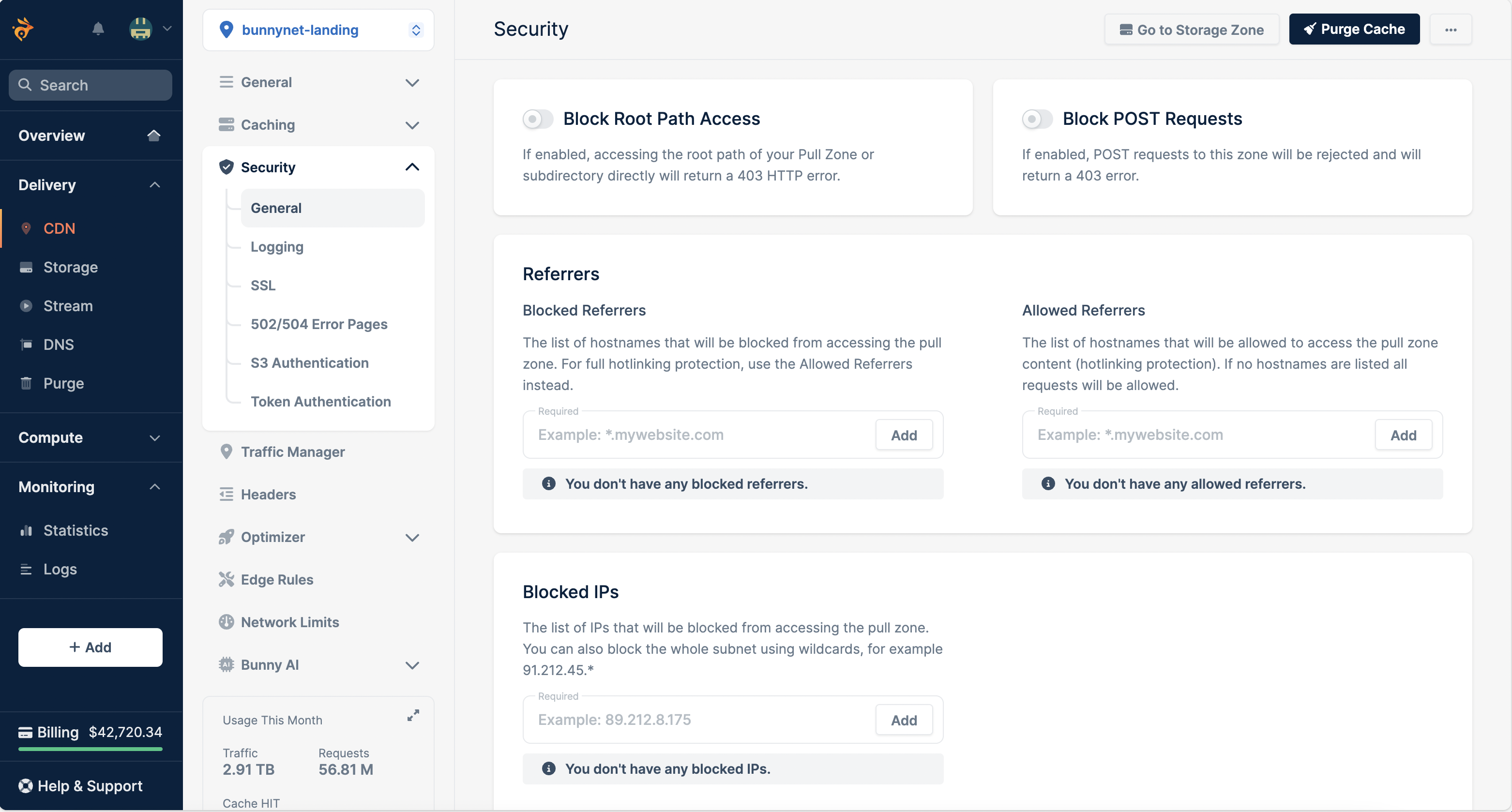
Not ideal for: Teams that need Cloudflare-grade Workers tooling and a deep ecosystem of integrations, Fortune 500s that require a named technical account manager and a 99.99% contractual SLA, or projects that depend heavily on full-page HTML caching out of the box without configuration.
Pros:
Cons:
The most common substitutes are Cloudflare (more features, generous free plan, but per-feature add-ons get expensive), Fastly (better for engineers who want VCL-level control and Compute@Edge, at significantly higher cost), and AWS CloudFront (deep AWS integration, but the pricing is roughly an order of magnitude higher and the dashboard is famously dense). For pure storage, Cloudflare R2 and Backblaze B2 are the closest peers to Bunny Storage.
Yes — for almost everyone running paid traffic at scale. Bunny.net delivers near-Fastly latency at a fraction of the cost, and the unified billing for CDN, storage, and video makes it a quietly competitive infrastructure pick for any team that does not need the largest-possible feature surface. We score it 86/100: the missing points are for the HTML caching default, occasional Stream startup latency, and documentation gaps on the newer products. If you have ever flinched at a CloudFront invoice, install bunny.net this afternoon and run it side-by-side — the trial is free.
ServiceNow and Accenture Launch Forward Deployed Engineering Program to Scale Agentic AI in the Enterprise (May 6, 2026)
At Knowledge 2026, ServiceNow and Accenture announced a joint forward deployed engineering program that drops co-located engineer pods into customer environments to ship agentic AI workflows natively on the ServiceNow AI Platform — with access to 300+ pre-built agent skills and the AI Control Tower as the governance backbone.
May 7, 2026
ReFiBuy Raises $13.6M Seed to Help Brands Get Recommended by AI Shopping Agents (May 5, 2026)
ReFiBuy, the Raleigh-based agentic commerce platform from ChannelAdvisor founder Scot Wingo, closed an oversubscribed $13.6M seed led by NewRoad Capital Partners on May 5, 2026 — betting that the next billion-dollar e-commerce moat is being chosen by ChatGPT, Claude and Perplexity.
May 7, 2026
OpenAI Replaces ChatGPT's Default Model With GPT-5.5 Instant — 52.5% Fewer Hallucinations, 30% Shorter Answers (May 5, 2026)
OpenAI on May 5 swapped GPT-5.3 Instant for the new GPT-5.5 Instant as ChatGPT's default model, claiming 52.5% fewer hallucinated claims on high-stakes prompts and 30% more concise answers. The model also rolls into the API as chat-latest and adds personalization from Gmail and past chats for Plus and Pro web users.
May 7, 2026
Is this product worth it?
Built With
Compare with other tools
Open Comparison Tool →