 Productivity
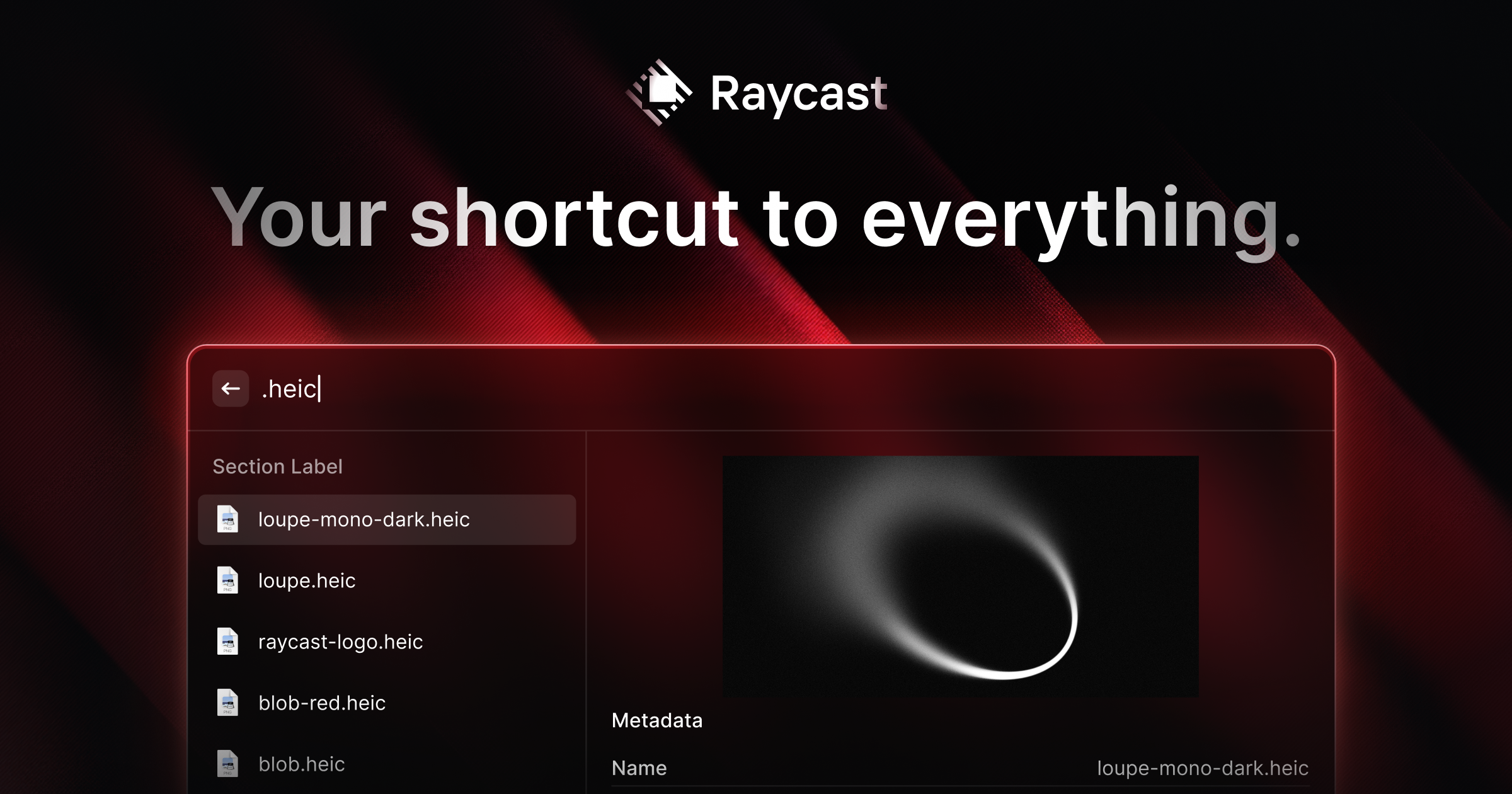
Raycast
Powerful macOS launcher and productivity platform — 7.3K GitHub stars for extensions
AFFiNE is the 67.6k-star open-source alternative to Notion and Miro that merges docs, whiteboards and databases into one local-first workspace. Self-hostable, privacy-focused, free — with a $6.75/mo Pro tier and a $499.99 Believer lifetime option.
AFFiNE is a privacy-first, local-first, open-source workspace that merges docs, whiteboards and databases into a single edgeless canvas — a direct alternative to Notion and Miro, now at v0.26.3 with 67,600+ GitHub stars. We rate it 80/100 — the most polished open-source "one app for everything" we have used in 2026, though the self-hosted edition still pulls a few features back behind the managed cloud.
AFFiNE (pronounced a-fine) is an all-in-one knowledge workspace built by Singapore-based Toeverything Pte. Ltd., founded in 2020 by CEO Jiachen He together with chief architect Wang Yifeng (long-time contributor to Slate and Yjs) and co-founders Yipei Wei, Yinan Long and Chi Zhang. The public repo first opened in mid-2022 and the project hit Product Hunt on with 1,069 upvotes and 233 comments.
The pitch is that Notion, Miro, Airtable and Trello each own one surface — pages, canvas, tables or boards — and switching between them breaks your train of thought. AFFiNE merges all four into one edgeless canvas built on BlockSuite, the company's CRDT-based editor engine. Every block — rich text, database, embed, shape, frame — lives on the same canvas, and the latest release (v0.26.3, shipped ) pushes the AI copilot deeper into the product.


Sentiment across Product Hunt, r/selfhosted and the GitHub issue tracker is positive but honest. Reviewers consistently praise the unified docs-plus-canvas experience, the local-first posture, and how fast Toeverything ships — the repo averages multiple releases a month. Product Hunt commenters call it "the open-source Notion+Miro we've been waiting for".
The recurring complaints are real. Multiple GitHub issues (e.g. #8763 and #7097) flag that the self-hosted instance still labels itself "AFFiNE Cloud" in the UI, that sync between the self-hosted server and the desktop client can fail silently, and that some AI and cloud-storage features are gated to Toeverything's managed cloud. Mobile apps are usable but lag behind the desktop, and exports lose block-level features that Markdown cannot represent.
AFFiNE has a permanent free tier plus an inexpensive Pro plan and a one-time lifetime option. Self-hosting is free.
| Plan | Price | Key Limits |
|---|---|---|
| Free (FOSS) | $0 forever | Core editor, local-first, self-host, 10 GB cloud storage, up to 3 collaborators per workspace |
| Pro | $6.75/month (annual) | 100 GB cloud storage, up to 10 members, 30-day version history, 100 MB file uploads, full AI credits |
| Team | $10/seat/month | Unlimited members, centralised admin, advanced permissions, SSO |
| Believer (lifetime) | $499.99 one-time | Pro features forever, no recurring fee |
| Self-host | $0 (infra only) | Full source, Docker Compose, $10–$40/mo of infrastructure |
Best for: Indie builders, small engineering or research teams, and privacy-sensitive users who want Notion-style docs plus a Miro-style canvas in one app — and who prefer owning their data or self-hosting. The $499.99 lifetime deal is genuinely compelling if you know you want to stay.
Not ideal for: Large enterprises that need mature SSO, fine-grained permissions and audit logs, or teams whose workflows rely on Notion's massive third-party template and integration ecosystem. Power-users looking for a "folder of Markdown files on disk" should still pick Obsidian.
Pros:
Cons:
The closest alternatives are Obsidian (Markdown-first, huge plug-in ecosystem, no native whiteboard), Notion (richer templates and integrations, closed-source, no true canvas), and AppFlowy (another open-source Notion alternative with a cleaner self-host story but weaker canvas). For pure whiteboarding, tldraw and Excalidraw remain best-in-class, but they are not knowledge bases.
In 2026 AFFiNE is the most ambitious open-source productivity tool we've reviewed — a genuine attempt to collapse docs, canvas and databases into one coherent workspace, not just three tabs pretending to be one. The self-hosted friction stops us from giving it a higher number, but the free tier is extremely usable, the $6.75/month Pro plan is fair, and the $499.99 Believer lifetime option is the kind of pricing you rarely see from a VC-funded startup. If you've been stuck paying Notion and Miro every month, AFFiNE is the first open alternative that doesn't feel like a compromise. Rating: 80/100.
ProductivityPowerful macOS launcher and productivity platform — 7.3K GitHub stars for extensions
 Productivity
Local-first, Markdown-native note-taking with a graph view and 2,000+ community plugins
 Productivity
Open-source AirDrop alternative for any device — 80k GitHub stars, end-to-end encrypted, zero internet required.
 Productivity
Self-hosted document management with OCR, auto-tagging and full-text search in 100+ languages
ServiceNow and Accenture Launch Forward Deployed Engineering Program to Scale Agentic AI in the Enterprise (May 6, 2026)
At Knowledge 2026, ServiceNow and Accenture announced a joint forward deployed engineering program that drops co-located engineer pods into customer environments to ship agentic AI workflows natively on the ServiceNow AI Platform — with access to 300+ pre-built agent skills and the AI Control Tower as the governance backbone.
May 7, 2026
ReFiBuy Raises $13.6M Seed to Help Brands Get Recommended by AI Shopping Agents (May 5, 2026)
ReFiBuy, the Raleigh-based agentic commerce platform from ChannelAdvisor founder Scot Wingo, closed an oversubscribed $13.6M seed led by NewRoad Capital Partners on May 5, 2026 — betting that the next billion-dollar e-commerce moat is being chosen by ChatGPT, Claude and Perplexity.
May 7, 2026
OpenAI Replaces ChatGPT's Default Model With GPT-5.5 Instant — 52.5% Fewer Hallucinations, 30% Shorter Answers (May 5, 2026)
OpenAI on May 5 swapped GPT-5.3 Instant for the new GPT-5.5 Instant as ChatGPT's default model, claiming 52.5% fewer hallucinated claims on high-stakes prompts and 30% more concise answers. The model also rolls into the API as chat-latest and adds personalization from Gmail and past chats for Plus and Pro web users.
May 7, 2026
Is this product worth it?
Built With
Compare with other tools
Open Comparison Tool →